US Blockade of Iranian Ports Draws Sharp Criticism from China as Regional Tensions Escalate in the Persian Gulf

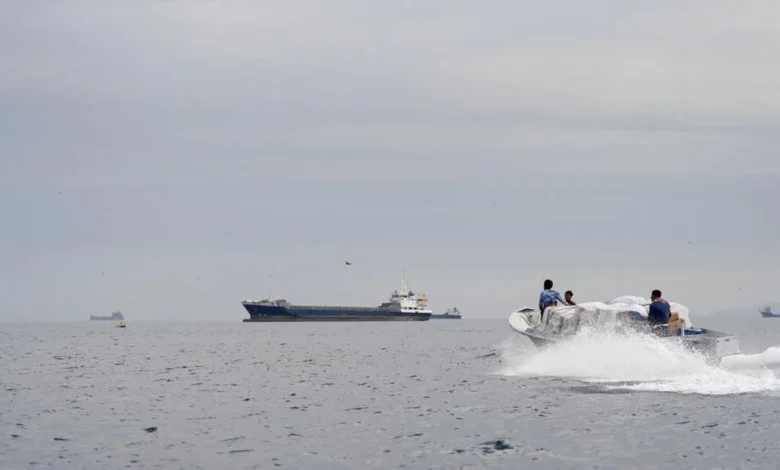
The government of the People’s Republic of China has formally denounced the United States’ decision to implement a naval blockade around Iranian ports, labeling the maneuver as both dangerous and irresponsible. This diplomatic friction follows a provocative directive from U.S. President Donald Trump, who issued a stern warning that any vessel attempting to dock at or depart from Iranian maritime facilities would face the risk of being intercepted or sunk by American naval forces. The escalation marks a significant departure from recent diplomatic efforts and threatens to plunge the Middle East into a renewed cycle of maritime conflict, with global energy markets bracing for the potential fallout.
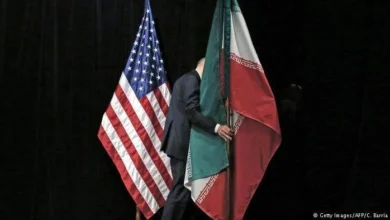
President Trump’s order for a comprehensive blockade targeting ships entering or leaving Iranian ports and coastal regions in the Gulf came in the wake of a collapse in peace negotiations over the weekend. Despite a previously brokered two-week ceasefire agreement intended to provide a window for diplomatic de-escalation, the United States moved forward with the blockade, which officially commenced at 14:00 GMT on Monday, April 13, 2026. The move has been interpreted by international observers as a "maximum pressure" tactic aimed at achieving through military posturing what could not be secured at the negotiating table.
Beijing’s Response: Condemnation of Irresponsible Tactics
In a press briefing held in Beijing on Tuesday, April 14, 2026, Chinese Foreign Ministry spokesperson Guo Jiakun expressed the Chinese government’s deep concern regarding the unilateral actions taken by Washington. According to Guo, the surge in U.S. military deployment and the imposition of targeted naval blockades serve only to aggravate existing tensions and systematically dismantle the fragile ceasefire that had been established just days prior.
"The United States is increasing its military footprint and taking targeted blockade actions that will only exacerbate tensions and undermine the already fragile ceasefire agreement," Guo stated during the briefing, as reported by Agence France-Presse (AFP). "This further endangers the security of shipping lanes through the Strait of Hormuz. This is a dangerous and irresponsible behavior that ignores the basic norms of international relations."
The Chinese government’s stance reflects its broader strategic interests in the region. As the world’s largest importer of crude oil and the primary purchaser of Iranian petroleum, China views any disruption to the Persian Gulf’s maritime corridors as a direct threat to its national energy security. Beijing has consistently advocated for a multi-polar approach to Middle Eastern security, often clashing with the U.S. preference for unilateral sanctions and military interventions.
The Strategic Significance of the Strait of Hormuz
To understand the gravity of the current blockade, one must look at the geography of the region. The Strait of Hormuz, a narrow waterway separating the Persian Gulf from the Gulf of Oman, is arguably the most important oil chokepoint in the world. Approximately 21 million barrels of oil pass through the strait daily, representing roughly 20% of global petroleum consumption.
Prior to the U.S. blockade, Iran had already taken the controversial step of closing the Strait of Hormuz to what it termed "enemy vessels." Under Teheran’s policy, only ships associated with nations deemed friendly—most notably China—were permitted passage. This selective closure was Iran’s primary leverage against Western sanctions. However, the new U.S. blockade seeks to flip the script by preventing even "friendly" vessels from reaching Iranian shores.
Market analysts suggest that the Trump administration’s blockade is designed with two primary objectives: first, to completely sever the remaining revenue streams flowing into the Iranian treasury, and second, to force Beijing’s hand. By creating a maritime environment where Chinese tankers cannot safely load Iranian oil, Washington hopes to pressure China into using its significant diplomatic influence to force Teheran to reopen the Strait of Hormuz to all international traffic.
A Timeline of Escalating Hostilities
The current crisis did not emerge in a vacuum but is the result of a rapid deterioration of regional stability over the first quarter of 2026.
- March 25, 2026: Diplomatic representatives from the U.S., Iran, and several European mediators meet in Muscat, Oman, to discuss a new maritime security framework.
- April 2, 2026: Negotiations stall over disagreements regarding the presence of U.S. carrier strike groups in the Gulf and Iran’s refusal to dismantle its coastal missile batteries.
- April 8, 2026: Under heavy international pressure, both Washington and Teheran agree to a 14-day "humanitarian ceasefire" to allow for a cooling-off period.
- April 11, 2026: Reports emerge of a breakdown in back-channel communications. President Trump signals a shift toward "direct action" to ensure the freedom of navigation.
- April 13, 2026 (14:00 GMT): The U.S. Navy’s Fifth Fleet begins enforcing a blockade of Iranian ports, including Bandar Abbas and the oil terminal at Kharg Island.
- April 14, 2026: China issues its formal condemnation, and President Xi Jinping begins emergency consultations with regional leaders.
Economic Repercussions and the Global Oil Market
The immediate impact of the blockade was felt on the global commodities exchanges. Within hours of the 14:00 GMT deadline on Monday, Brent crude prices surged by 7.5%, as traders factored in the risk of a total cessation of Iranian exports and the potential for a wider conflict. Shipping insurance premiums for vessels operating in the Persian Gulf have reportedly tripled, leading some commercial shipping lines to divert their fleets around the Cape of Good Hope, a significantly longer and more expensive route.
For China, the stakes are particularly high. Beijing has invested billions in Iranian energy infrastructure and relies on Iranian crude to fuel its industrial sectors. A prolonged blockade would force China to seek alternative, likely more expensive, sources of energy, potentially slowing its economic growth. Furthermore, the blockade disrupts the "Belt and Road Initiative" maritime routes that connect the Middle East to East Asian markets.
The Violation of Sovereignty: Iran’s Legal Standpoint
Iran’s response to the blockade has been one of fierce defiance. The Iranian Ambassador to the United Nations characterized the U.S. actions as a "grave violation" of Iranian sovereignty and a breach of the United Nations Charter. Under international law, a naval blockade is often considered an act of war, a point that Teheran has been quick to emphasize to the international community.
"The imposition of a blockade on a sovereign nation’s ports, particularly during a period when a ceasefire was supposed to be in effect, is an illegal act of aggression," the Ambassador stated in a letter to the UN Security Council. Iran has vowed to take "all necessary measures" to defend its territorial waters, raising fears of asymmetric warfare involving mine-laying, drone strikes, or fast-attack craft engagements in the narrow confines of the Gulf.
Diplomatic Efforts: China’s Role as a Regional Mediator
Amidst the escalating rhetoric, Chinese President Xi Jinping has attempted to position China as a voice of reason and a "constructive player" in the region. On Tuesday morning, President Xi met with the Crown Prince of Abu Dhabi, Sheikh Khaled bin Mohamed bin Zayed Al Nahyan, in Beijing. The UAE, like many of its neighbors, finds itself in a precarious position—caught between its security partnership with the United States and its economic ties with China and the need for regional stability.
During the meeting, President Xi urged all parties to respect the sovereignty of nations in the Gulf and the wider Middle East. He emphasized that military force and unilateral blockades are not viable solutions to complex geopolitical disputes. "Beijing will continue to play a constructive role in promoting peace talks and ensuring that the legitimate security concerns of all regional actors are addressed through dialogue rather than confrontation," Xi noted.
The meeting with Sheikh Khaled is significant because the UAE is one of the nations most directly impacted by the ongoing hostilities between the U.S.-Israel bloc and Iran. The Emirates serve as a major global shipping hub, and any prolonged conflict in the Strait of Hormuz would have devastating consequences for the ports of Jebel Ali and Khalifa.
Analysis: The Risk of Miscalculation
Military analysts warn that the current situation is ripe for miscalculation. A naval blockade requires constant vigilance and the potential use of lethal force to maintain its integrity. If a U.S. destroyer were to fire upon a Chinese-flagged tanker or an Iranian civilian vessel, the resulting escalation could be impossible to contain.
Furthermore, the blockade places the U.S. in a direct confrontational stance not just with Iran, but with China’s economic interests. In Washington, the move is seen as a necessary step to curb Iran’s regional influence and prevent it from using oil wealth to fund proxy groups. However, the international community is increasingly wary of the "politicization" of global trade routes.
The United Nations has called for an emergency session of the Security Council to address the blockade, though a meaningful resolution is unlikely given the veto power held by both the United States and China. For now, the world watches the waters of the Persian Gulf, where the arrival of every new tanker brings the potential for a spark that could ignite a global crisis.
Conclusion: Navigating a Fragile Peace
The U.S. blockade of Iranian ports represents a high-stakes gamble in the theater of international diplomacy. By bypassing traditional diplomatic channels and ignoring the recently established ceasefire, the Trump administration has signaled a preference for hard-power solutions. However, the sharp rebuke from China and the growing unease among Gulf states like the UAE suggest that the U.S. may find itself increasingly isolated in its approach.
As the 14:00 GMT deadline passes and the blockade becomes a physical reality on the high seas, the focus shifts to whether Iran will retaliate and how China will protect its energy interests. In a region where history is often written in oil and conflict, the coming days will determine whether the "dangerous and irresponsible" path currently being tread leads to a negotiated settlement or an all-out maritime war. The security of the global economy and the stability of the Middle East hang in the balance, dependent on the restraint of naval commanders and the wisdom of leaders in Washington, Teheran, and Beijing.