Socio Today
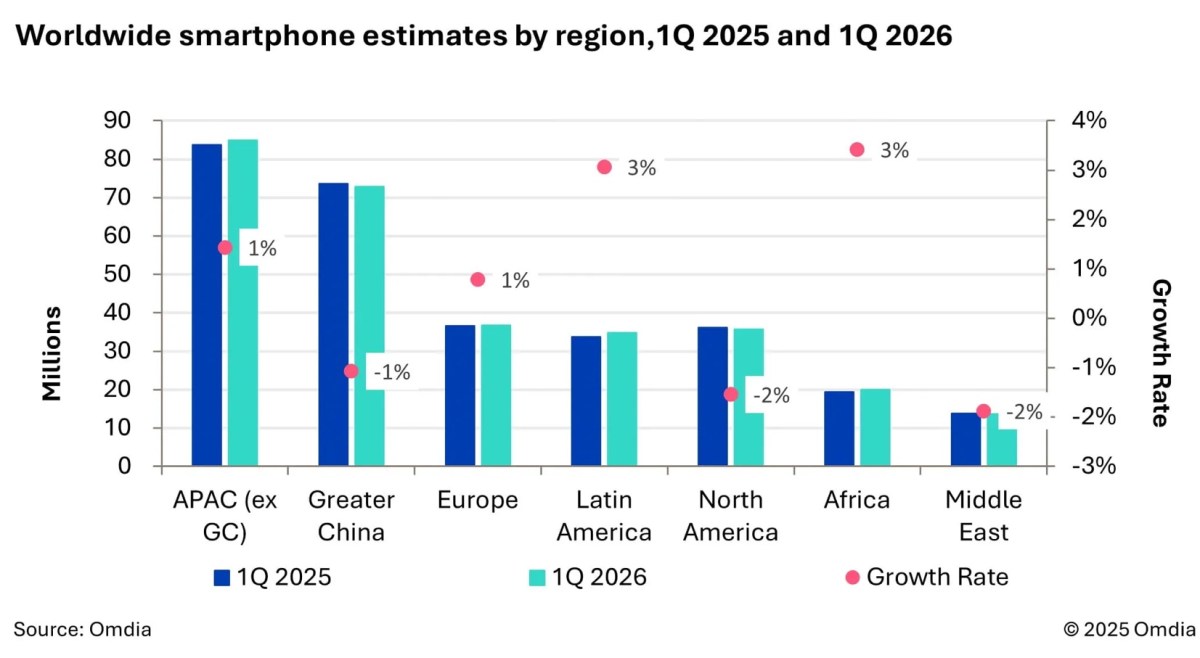
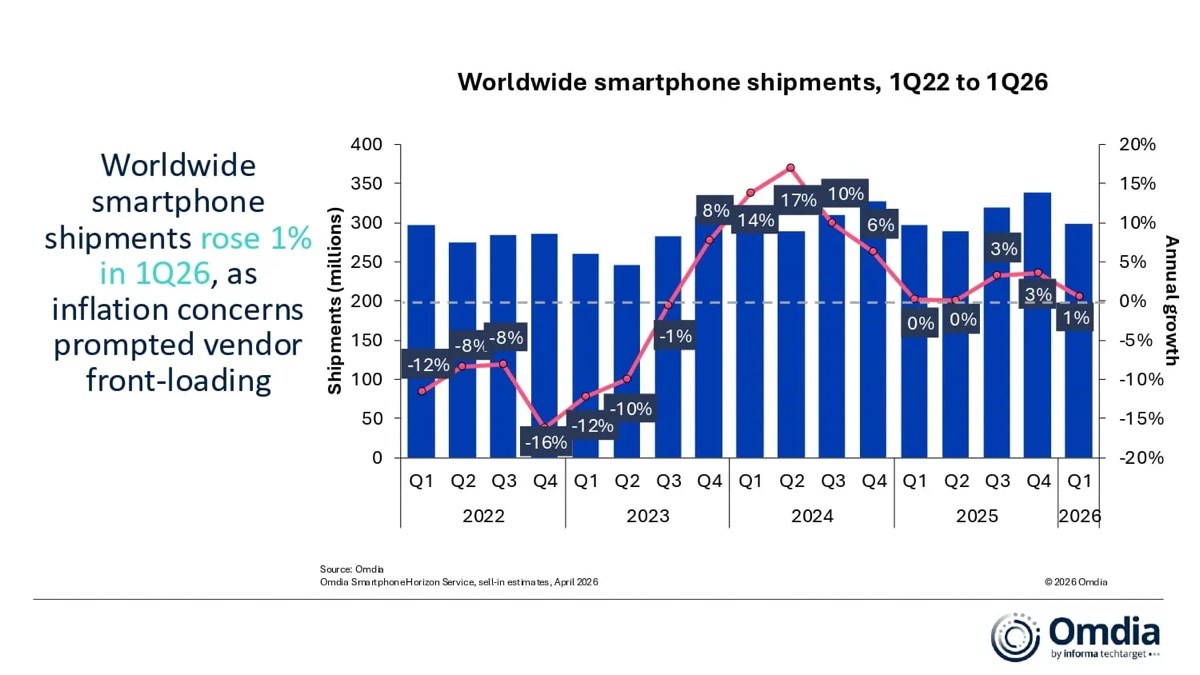
The global smartphone market registered a modest uptick in the first quarter of 2026, with worldwide shipments increasing by a mere 1 percent year-over-year to reach 298.5 million units, according to a comprehensive report released by global market research firm Omdia on April 30, 2026. This thin margin of growth emerges against a backdrop of intensifying industry challenges, including escalating component costs, a significant surge in memory prices, and persistent supply chain disruptions that continue to ripple across the global technology landscape. While the headline figure suggests a resilient market capable of eking out growth, Omdia’s analysis reveals that this expansion is not primarily indicative of a robust recovery in underlying consumer demand. Instead, the growth is largely attributed to strategic maneuvers by major vendors, particularly industry titans like Samsung and Apple, who accelerated device distribution to sales channels. This proactive measure, termed "vendor-led front-loading," aimed to preempt further increases in production costs and safeguard business margins in an increasingly volatile economic environment.
The Dynamics of "Front-Loading" and Component Price Volatility
The strategy of vendor-led front-loading involves expediting the supply of devices to distributors and retailers. This tactical acceleration is a direct response to anticipated price hikes for critical components such as DRAM (Dynamic Random-Access Memory) and NAND (Not And) flash memory, which are essential for smartphone functionality and storage. In the first quarter of 2026, the industry witnessed an alarming surge in the prices of mobile DRAM and NAND, reportedly skyrocketing by approximately 90 percent compared to the preceding quarter. Projections for the second quarter indicate that these prices are expected to climb further, with an additional increase of around 30 percent. Such substantial increases directly translate to significantly higher material costs for manufacturing smartphones, squeezing profit margins for device makers. This front-loading phenomenon, while boosting immediate shipment figures, creates a complex market dynamic where "sell-in" (shipments to channels) outpaces "sell-out" (actual sales to end-consumers), potentially leading to an inventory overhang in subsequent quarters.

The roots of these escalating component costs are multifaceted. Global inflation, which has remained stubbornly high across many economies, continues to exert upward pressure on raw material prices and manufacturing expenses. Concurrently, geopolitical tensions and lingering effects from the pandemic have disrupted traditional supply chains, leading to delays and increased logistics costs. However, a new and increasingly dominant factor driving memory price surges is the burgeoning demand from the artificial intelligence (AI) sector, particularly for AI data center infrastructure. The insatiable need for high-performance memory to power sophisticated AI models and computing clusters is absorbing a significant portion of the global semiconductor production capacity. This diversion of capacity, which historically served consumer electronics, is creating a supply crunch for smartphone manufacturers, intensifying competition for available components and driving up their prices. This marks the initial phase of what Omdia identifies as a component-based supply disruption cycle, with profound implications for the consumer tech industry.
Market Leaders Navigate a Challenging Landscape
Amidst these turbulent conditions, the competitive landscape saw some familiar leaders solidify their positions, while others faced steeper challenges. Samsung Electronics reclaimed its position as the world’s largest smartphone vendor in Q1 2026, shipping an impressive 65.4 million units, marking an 8 percent year-over-year growth. This strong performance was primarily fueled by the robust global reception of its flagship Galaxy S26 series, which recorded pre-orders more than 10 percent higher than its predecessor. Additionally, the consistent and widespread distribution of its mid-range and entry-level Galaxy A series in crucial emerging markets contributed significantly to its overall volume. Samsung’s diversified portfolio and strong brand loyalty in key regions proved instrumental in its success.
Apple secured the second position, demonstrating a solid performance driven by sustained demand for its iPhone 17 series. Despite broader market pressures, Apple’s strategy of maintaining relatively consistent pricing and a premium brand image helped the company sustain its momentum, even as some regions experienced distribution bottlenecks. The company’s strong ecosystem and high customer retention rates continue to provide a stable foundation in the premium segment. While specific shipment figures for Apple were not detailed in the initial report, market estimates place its Q1 2026 shipments in the range of 55-60 million units, underscoring its consistent performance at the top tier.

Beyond the duopoly, the market presented a more challenging picture for several prominent Android manufacturers. OPPO, which includes its sub-brands realme and OnePlus, ranked fourth globally with shipments totaling 30.7 million units, experiencing a 6 percent year-over-year decline. Vivo followed closely in fifth place, shipping 21.3 million units, a more significant drop of 7 percent compared to the previous year. These declines highlight the increased vulnerability of brands heavily reliant on the mid-range and entry-level segments, where consumer purchasing power is most acutely affected by inflation and economic uncertainties. These vendors often compete intensely on price and features, making them particularly susceptible to rising component costs and slower upgrade cycles.
Emerging Players and Regional Shifts
The competitive landscape outside the top five also revealed interesting shifts. HONOR emerged as one of the fastest-growing vendors within the top 10, demonstrating aggressive expansion strategies, particularly in the Middle East and Africa (MEA) regions. By focusing on competitive pricing, innovative features, and building robust local distribution networks, HONOR successfully carved out new market share in these high-growth areas. Meanwhile, in its domestic market of China, Huawei continued to show strong performance, leveraging a strategy of competitive pricing across its device portfolio and deepening the integration of its burgeoning ecosystem of smart devices and services. This domestic strength, coupled with strategic product launches, allowed Huawei to solidify its position within one of the world’s largest smartphone markets.
Other notable players like Xiaomi, while not explicitly detailed in the initial report for Q1 2026, are generally observed to be navigating similar pressures. Their performance is often tied to their ability to balance aggressive pricing with supply chain efficiency and product innovation. The collective performance of these challenger brands underscores a market increasingly bifurcated: a resilient premium segment dominated by Apple and Samsung, and a highly competitive, price-sensitive mass market where smaller margins and fluctuating consumer demand present significant hurdles.
The Broader Implications: AI’s Shadow and Inventory Woes
Omdia’s assessment of Q1 2026 as the "initial phase of a component-based supply disruption cycle" due to AI data center memory needs points to a fundamental shift in the technology supply chain. The burgeoning AI industry’s demand for high-bandwidth memory (HBM) and other specialized semiconductors is diverting manufacturing resources and R&D investment away from conventional consumer electronics. This new competition for critical silicon components places unprecedented pressure on smartphone vendors, especially those in the Android ecosystem who often rely on pricing flexibility to maintain market share. The implications are clear: a potential increase in production costs that cannot always be absorbed by manufacturers, leading to higher retail prices for consumers.
In response to these challenges, many smartphone vendors are already implementing more stringent portfolio strategies. This includes delaying certain product launches, streamlining their offerings to focus on higher-margin or strategically important devices, and becoming more selective in determining their distribution territories. The goal is to optimize inventory, reduce exposure to volatile component markets, and ensure profitability in a constrained environment.
Looking ahead, Omdia highlights the looming challenge for the smartphone industry in the second half of 2026: the widening gap between "sell-in" and "sell-out." When device shipments to distributors grow faster than actual sales to consumers, an accumulation of excess inventory inevitably occurs within the sales channels. This situation is particularly concerning because it can trigger a market correction, where vendors are forced to reduce their production volumes and shipment targets in subsequent quarters to clear existing stock. Le Xuan Chiew, Research Manager at Omdia, articulated this concern, noting that "the performance in the early part of this year, while showing growth, is somewhat distorted by short-term supply dynamics. The front-loading activities have indeed boosted shipment figures, but simultaneously, they are creating inventory pressures that are likely to weigh heavily on the subsequent quarters."
Outlook: A Fragile Recovery and Consumer Impact
For the global smartphone industry, the early 2026 performance signals that the market recovery remains fragile and highly susceptible to external economic and supply-side pressures. While demand for premium devices appears to be holding steady, the confluence of rising component costs, persistent global inflation affecting consumer purchasing power, and ongoing supply chain disruptions will be the dominant factors shaping market trajectories throughout 2026. This complex interplay suggests that the path to sustainable, demand-driven growth is still fraught with obstacles.
For consumers, the immediate implications could manifest as higher prices for new smartphones, particularly within the traditionally more accessible mid-range and entry-level segments. As vendors grapple with increased production costs, a portion of this burden is likely to be passed on to the end-user. This, combined with inflationary pressures on household budgets, is expected to further slow down smartphone upgrade cycles in many countries, especially those with developing economies. Consumers may opt to hold onto their current devices for longer, or choose more budget-friendly refurbished options, rather than investing in new, more expensive models.
For key markets such as Indonesia and other emerging economies, pricing strategy and distribution efficiency will become even more critical factors in maintaining competitiveness. Local vendors and international brands alike will need to meticulously balance affordability with innovation, while also navigating the complexities of regional supply chains and consumer preferences. The ability to offer compelling value propositions without eroding profitability will be paramount in a market that, despite its marginal growth, is fundamentally undergoing a significant structural transformation driven by both economic realities and the insatiable demands of the AI revolution. The coming quarters will reveal whether the industry can successfully recalibrate its strategies to achieve genuine, demand-led growth, or if the inventory build-up from current front-loading tactics will lead to a more significant slowdown.