Jakarta, CNN Indonesia — Japanese automotive giant Toyota has announced that it is actively developing its next battery electric vehicle (BEV) model specifically tailored for the Indonesian market. This strategic initiative comes in direct response to a formal request from Minister of Industry Sarmuji, who urged the automaker to accelerate its transition beyond hybrid technology and deepen its commitment to full electrification. While the specific vehicle segment, precise technical specifications, and expected price range remain under wraps, the announcement marks a pivotal turning point in Toyota’s electrification roadmap within Southeast Asia’s largest automotive market.
The development follows a high-level strategic meeting at the Ministry of Industry in Jakarta, where Minister Sarmuji engaged in direct discussions with Nandi Julyanto, President Director of PT Toyota Motor Manufacturing Indonesia (TMMIN). During the dialogue, the government emphasized that Indonesia’s rapidly maturing domestic electric vehicle supply chain and burgeoning battery ecosystem necessitate a more aggressive stance on purely electric mobility, moving past transitional hybrid solutions.
Current Landscape of Toyota Electric Vehicles in Indonesia
Presently, Toyota maintains a diverse yet segmented portfolio of electrified vehicles in the Indonesian market, balancing hybrids, plug-ins, and purely battery-powered offerings. The current lineup includes three distinct battery electric vehicle models: the Hilux EV, the bZ4X SUV, and the Urban Cruiser EV. However, the sourcing of these vehicles varies significantly due to regional manufacturing strategies and trade agreements.
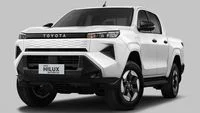
The Hilux EV is currently imported as a completely built-up (CBU) unit from Thailand, a country that has long served as the automotive manufacturing hub for Southeast Asia, particularly for pickup trucks. Similarly, the Urban Cruiser EV is imported from India, leveraging Toyota’s robust production networks in South Asia. In contrast, the bZ4X crossover stands as the sole BEV model that has seen local assembly or localized initiatives, underlining the gradual progression of domestic manufacturing capabilities.
The broader portfolio also features numerous hybrid electric vehicles (HEVs), which have historically dominated Toyota’s electrified sales in Indonesia due to their lower initial purchase price, lack of reliance on public charging infrastructure, and familiarity among local consumers. Models such as the Kijang Innova Zenix Hybrid and the Yaris Cross Hybrid have enjoyed robust commercial success, serving as transitional pillars for consumers hesitant to make the immediate leap to pure electric mobility.
Government Stance and Strategic Directives
During the ministerial meeting, Minister Sarmuji articulated a clear and pressing vision for the future of Indonesia’s automotive sector. He emphasized that the nation can no longer afford to linger indefinitely in the hybrid vehicle phase, given the substantial investments made in establishing a domestic battery manufacturing ecosystem.
"We have asked Toyota to take a step further into full electrical vehicles. Why? Because our battery ecosystem is already quite advanced," Minister Sarmuji stated during the briefing.
The minister’s remarks underscore a broader national ambition. Over the past several years, the Indonesian government has aggressively courted global battery and electric vehicle manufacturers by leveraging its vast reserves of nickel—a critical component in lithium-ion batteries. Through a series of sweeping downstream policies, including a strict ban on the export of raw nickel ore, Jakarta has successfully attracted multi-billion-dollar investments from global consortiums originating from South Korea, China, and Western nations to build integrated EV supply chains, ranging from upstream mining and smelting to precursor production and battery cell manufacturing.
Consequently, policymakers are increasingly pressuring legacy automakers that have benefited from Indonesia’s domestic market protection and incentives to transition from mere import-dependent assembly to deep, localized manufacturing of core EV components.
The Double Cabin Production Dilemma
Beyond the push for pure battery electric vehicles, the meeting between the Ministry of Industry and TMMIN also touched upon the localization of commercial utility vehicles, specifically double-cabin pickup trucks. According to Nandi Julyanto, Minister Sarmuji formally requested that Toyota evaluate the feasibility of manufacturing double-cabin vehicles domestically within Indonesia.
Currently, the domestic market for double-cabin utility vehicles—which are heavily utilized in the plantation, mining, and infrastructure sectors—is heavily dependent on imports. Toyota’s flagship commercial workhorse, the Hilux double cabin, is currently imported directly from manufacturing plants in Thailand. Furthermore, the newly introduced Hilux Rangga, a versatile single-cabin pickup truck designed to cater to small and medium enterprises (SMEs) and commercial logistics, is similarly supplied from Thailand.
The dominance of Thailand in the pickup truck segment is the result of decades of strategic industrial clustering, favorable taxation policies for one-ton pickups, and deeply integrated supply chains that supply global markets. Shifting or establishing a competitive double-cabin production line in Indonesia would require massive capital expenditure, supplier readiness, and guaranteed domestic and export demand to achieve economies of scale.
Balancing Consumer Demand and Market Realities
Responding to the government’s directives, Nandi Julyanto affirmed that Toyota remains deeply committed to aligning its corporate strategy with the dynamic needs and purchasing power of Indonesian consumers. While acknowledging the government’s visionary goals for full electrification and commercial vehicle localization, Nandi emphasized that product introduction must carefully reflect the economic realities on the ground.
Toyota is currently evaluating the possibility of introducing additional BEV models that are better calibrated to the specific purchasing power, infrastructure readiness, and lifestyle requirements of the domestic market. A critical component of this evaluation is pricing. The current bZ4X model occupies a premium price bracket, which naturally limits its addressable market to high-income earners and corporate fleets. To achieve mass adoption, future BEV offerings must cross the threshold into more accessible price segments.
"So right now we have the bZ4X, and in the future, we will think about models that are more suitable. Hopefully, they will be more affordable," Nandi noted. "We are also preparing subsequent BEV models that match the needs and conditions of the Indonesian market."
Chronology of Indonesia’s EV Push and Toyota’s Adaptation
The dialogue between the Ministry of Industry and Toyota represents the latest chapter in a rapidly accelerating timeline of industrial transformation in Indonesia:
- 2019-2020: The Indonesian government issues Presidential Regulation No. 55/2019 concerning the Acceleration of the Battery-Electric Vehicle Program for Road Transportation, laying the legal foundation for EV adoption and local manufacturing incentives.
- 2021-2022: Indonesia successfully secures major commitments from global EV battery consortia, including partnerships involving Hyundai, LG Energy Solution, CATL, and Foxconn, establishing the foundation for a domestic battery supply chain.
- 2022: Toyota launches the bZ4X in Indonesia as its inaugural battery electric vehicle, initially entering the market as a completely built-up import before evaluating local integration.
- 2023: Hybrid vehicles surge in popularity across Indonesia, driven by locally assembled models like the Kijang Innova Zenix Hybrid, capturing the lion’s share of the electrified vehicle market.
- 2024: The Indonesian government introduces revised tax incentives (such as import duty and luxury tax exemptions for CBU and CKD electric vehicles meeting local content requirements) to stimulate consumer adoption and attract investment.
- Late 2024 (October): Minister of Industry Sarmuji meets with TMMIN President Director Nandi Julyanto, formally requesting an escalation toward full BEV manufacturing and domestic double-cabin production, prompting Toyota to pledge new, market-appropriate electric models.
Implications for the Broader Automotive Industry
The friction and collaboration between the Indonesian government and legacy automotive titans like Toyota highlight a critical transition phase for the country’s industrial policy. For decades, Indonesia has operated as a major consumer market and regional assembly hub dominated by internal combustion engine (ICE) vehicles and, more recently, hybrids. However, the aggressive push toward full electrification threatens to upend traditional supply chains if legacy manufacturers fail to adapt quickly.
From an economic perspective, transitioning to full BEV production leverages the billions of dollars already poured into domestic nickel processing and battery cell manufacturing plants. If automotive giants continue to rely heavily on hybrid architectures or imported electric vehicles, the domestic battery supply chain risks overproducing components for export rather than fueling a local green revolution.
However, significant hurdles remain. Chief among them is the state of Indonesia’s electric vehicle charging infrastructure. While public charging stations have proliferated across major urban centers like Jakarta, Surabaya, and along the Trans-Java toll road, vast archipelagic regions outside Java suffer from a severe lack of charging facilities. This infrastructural deficit naturally breeds "range anxiety" among consumers, making hybrids a safer psychological and practical choice for many motorists who frequently travel long distances or reside in areas with unreliable power grids.
Furthermore, the price disparity between traditional ICE vehicles, hybrids, and pure battery electric vehicles remains a formidable barrier. Without targeted subsidies or aggressive cost-reduction strategies from manufacturers, mass-market adoption of BEVs will likely remain constrained to affluent urban demographics and government fleets.
Looking Ahead
As Toyota goes back to the drawing board to design its next-generation BEV for Indonesia, the market eagerly anticipates concrete timelines and technical details. Whether the upcoming vehicle will take the form of an affordable compact hatchback, an urban utility vehicle, or an entry-level crossover remains to be seen.
What is certain, however, is that the pressure from Indonesian regulators is unlikely to abate. As the government continues to refine its industrial policies and tighten expectations for local content value, automakers operating within the archipelago must navigate a delicate balancing act: aligning with national decarbonization goals while maintaining commercial viability in a fiercely competitive and price-sensitive market.