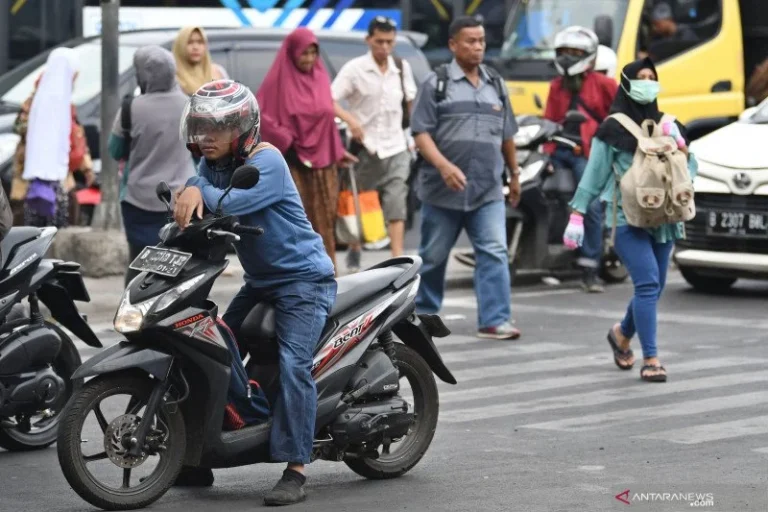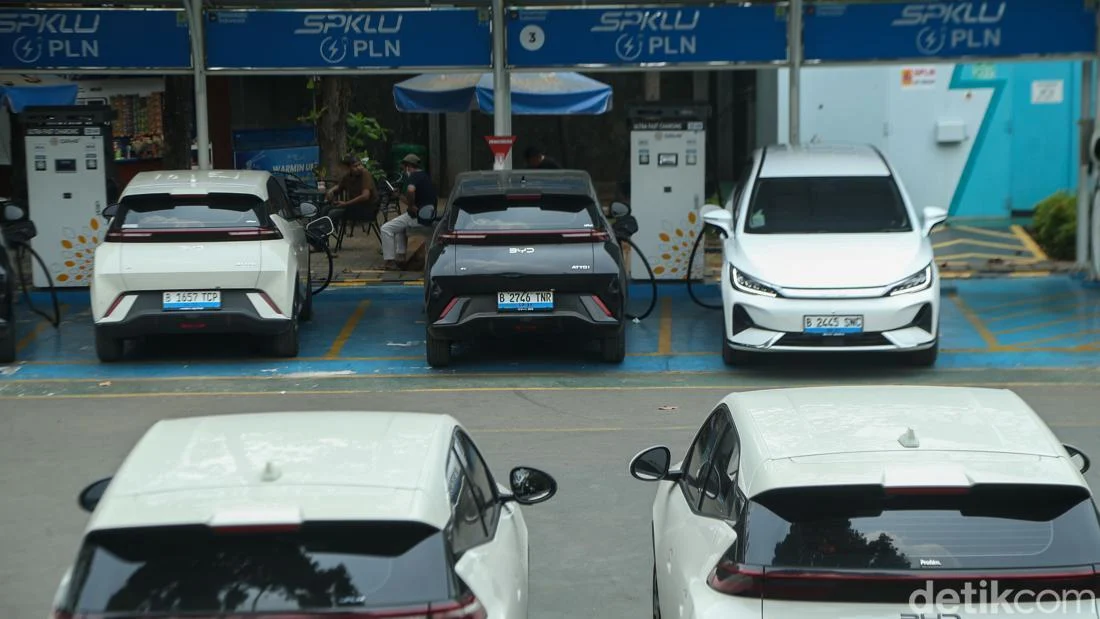
JAKARTA — The Indonesian government has officially renewed its steadfast commitment to maintaining and expanding a comprehensive incentive framework for electrified vehicles, encompassing both battery-powered motorcycles and passenger cars, as well as spanning across pure battery electric vehicles (BEVs) and hybrid electric vehicles (HEVs). This strategic policy stance is designed to systematically lower the economic barrier to entry for eco-friendly transportation, rendering advanced automotive technologies increasingly accessible and affordable for a significantly broader segment of the Indonesian populace.
Speaking on the sidelines of the prestigious Periklindo Electric Vehicle Conference held in Jakarta, Deputy Minister of Industry Faisol Riza emphasized that the overarching rationale behind the state-backed incentive programs extends far beyond merely stimulating corporate manufacturing metrics. Instead, the policy is fundamentally engineered to provide direct, tangible relief and encouragement to everyday consumers who are actively seeking to transition from traditional internal combustion engine (ICE) vehicles to modern electrified alternatives.
The official reiteration of state support arrives at a crucial juncture for the Southeast Asian nation’s rapidly evolving automotive sector, providing both industry stakeholders and potential buyers with a clear signal regarding the long-term policy trajectory of the administration. As global pressure mounts to curb carbon emissions and achieve ambitious national net-zero targets, Indonesia is positioning itself as a strategic hub for electric vehicle adoption and manufacturing within the region.
Strategic Vision for Inclusive Electrification
During his address to industry leaders, policymakers, and international delegates at the conference, Deputy Minister Faisol articulated the government’s core philosophy regarding the democratization of green mobility. He noted with emphasis that state interventions must not merely serve as corporate subsidies for automotive conglomerates, but must actively function as a bridge for ordinary households looking to embrace sustainable living standards.
"The government consistently demonstrates a definitive commitment to ensuring that incentives for electric vehicles—covering both two-wheeled and four-wheeled platforms, regardless of whether they are full EVs or hybrids—remain a central pillar of our national industrial and environmental strategy," Faisol stated to members of the press in Jakarta.
According to the Ministry of Industry, the ultimate policy objective is to eradicate the perception that electric vehicles are luxury commodities reserved strictly for high-income demographics. By deploying targeted fiscal instruments, regulatory support, and infrastructural investments, the state aims to transform electrified transport into an everyday reality for families, commuters, and commercial operators alike.
"We harbor a clear aspiration: we want electric vehicles to evolve into mainstream modes of transportation that can be seamlessly utilized on a broad scale by the wider community," Faisol added, underlining the government’s inclusive vision for the future of national mobility.
Analyzing the Surging Consumer Response
The renewed pledge of government support is strongly underpinned by empirical data reflecting an unprecedented wave of public enthusiasm over the preceding two-year period. Ministry officials have observed a paradigm shift in consumer behavior, characterized by a rapidly growing appetite for low-emission transport options across major metropolitan centers and secondary cities throughout the archipelago.
Faisol pointed out that the remarkable consumer uptake witnessed between 2024 and 2026 serves as a foundational justification for the continued implementation and potential refinement of state incentives. The public’s willingness to embrace novel vehicle technologies has surpassed initial internal projections, prompting policymakers to recalibrate their growth targets upwards.
"We have closely monitored the public response toward electric vehicles over the past two years, and the enthusiasm can only be described as extraordinarily high," Faisol remarked. "This positive market reaction acts as one of the primary guiding metrics utilized by the government to aggressively foster and accelerate the integration of electrified mobility nationwide."
This consumer shift is not merely anecdotal; it is robustly supported by official figures compiled and processed by the Ministry of Industry. Statistical evaluations reveal that by August 2026, the cumulative population of operational electric vehicles on Indonesian roads reached an estimated 541,678 units. This expansive figure encompasses a diverse mix of battery-powered two-wheelers, three-wheeled commercial vehicles, and multi-passenger automobiles, illustrating a multi-tiered adoption pattern across various socioeconomic strata.
Market Share Expansion: HEVs and BEVs on the Rise
A deeper dive into the statistical data released by the Ministry of Industry highlights a dramatic structural transformation within the domestic automotive market. Both Hybrid Electric Vehicles (HEVs) and Battery Electric Vehicles (BEVs) have experienced exponential growth in their respective market shares over a relatively short four-year window, demonstrating the immediate efficacy of early-stage government policies and rising environmental consciousness among buyers.

Historical comparisons illustrate this remarkable trajectory. In 2022, Hybrid Electric Vehicles commanded a modest market share of just 0.49 percent within the national automotive landscape. However, by the close of the reporting period spanning January to August 2026, HEV market penetration surged to an impressive 9.68 percent. This substantial upward movement underscores the enduring appeal of hybrid technology as a practical, transitional bridge for consumers who may harbor initial hesitations regarding pure battery range or charging infrastructure availability.
Simultaneously, pure Battery Electric Vehicles have recorded an even more staggering ascent. In 2022, BEVs accounted for a mere 0.99 percent of the total market share. By the first eight months of 2026, that figure catapulted to 16.88 percent. When combined, electrified vehicles now command a significant and influential slice of total vehicle sales in Indonesia, signaling a definitive departure from traditional fossil-fuel dominance.
Faisol attributed these monumental gains directly to the coherent alignment of state policy, regulatory incentives, and aggressive private-sector investments. He emphasized that the surging adoption curves serve as definitive proof that Indonesia’s strategic transition toward a low-carbon transportation ecosystem is proceeding securely along the correct pathway.
"This sharp increase clearly indicates that the policies and incentive frameworks initiated by the government have successfully begun to yield tangible results," Faisol explained. "This undeniable trend functions as a robust indicator that our national transition toward sustainable, low-emission transportation is firmly on the right track."
Ensuring Direct Benefits for Consumers
A critical theme of the Deputy Minister’s address centered on the equitable distribution of economic value generated by state incentive programs. Faisol was unequivocal in his assertion that government-backed financial assistance must translate into direct, practical advantages for individual purchasers, rather than merely padding the profit margins of vehicle manufacturers and import dealerships.
While robust industrial policy is vital to attract foreign direct investment and foster domestic manufacturing capabilities—particularly concerning battery production and vehicle assembly—the ultimate catalyst for mass adoption remains consumer affordability. By lowering the upfront retail price of electric motorcycles and passenger cars, the government seeks to neutralize the cost-prohibitive nature that has historically hampered clean-technology adoption in developing economies.
"It is imperative to understand that the benefits generated by these incentive mechanisms must be felt directly by the end consumer, and not restricted solely to industrial players," Faisol stressed. "By ensuring this direct impact, we fully expect the policy to continuously reinforce public interest and significantly lower the psychological and financial barriers preventing citizens from switching to electrified transportation."
Despite the optimistic tone and the reaffirmed commitment to broad-based support, administration officials have exercised caution regarding the immediate release of specific structural details. As of the announcement during the Periklindo conference, Faisol has yet to disclose the precise mechanics, financial ceilings, or exact activation timelines for the upcoming wave of incentives. Furthermore, the government has not yet formalized the distinct regulatory schemas that will govern future subsidies for full electric cars, electric motorcycles, and hybrid variants respectively. Industry analysts anticipate that these comprehensive guidelines will be progressively unveiled in subsequent regulatory packages as inter-ministerial coordination concludes.
Broader Economic and Environmental Implications
The ongoing commitment by the Indonesian government to support both full EVs and hybrids carries profound implications for the nation’s macroeconomic landscape, energy security, and international climate commitments. From an economic perspective, maintaining fiscal support for the EV ecosystem helps solidify Indonesia’s position as a premier investment destination within the global electric vehicle supply chain. With extensive domestic reserves of nickel—a critical raw material for lithium-ion batteries—Indonesia has aggressively courted international automotive giants to establish local processing, cell manufacturing, and vehicle assembly plants.
By simultaneously stimulating domestic demand through targeted consumer incentives, the government ensures a symbiotic relationship between upstream mineral processing and downstream consumer markets, thereby mitigating the risk of overproduction and creating a self-sustaining domestic industrial cluster.
Environmentally, accelerating the adoption of both BEVs and HEVs plays an indispensable role in mitigating urban air pollution and reducing the greenhouse gas emissions associated with the transportation sector, which remains one of the largest contributors to national carbon output. While pure BEVs offer zero tailpipe emissions, the inclusion of hybrid vehicles in the incentive matrix provides a pragmatic, immediate reduction in fossil fuel consumption, particularly for emerging markets where charging infrastructure is still undergoing rapid development.
As Indonesia navigates its complex journey toward energy independence and sustainable industrialization, the government’s balanced approach—combining industrial readiness with consumer-focused fiscal incentives—will remain a decisive factor. The ability of policymakers to fine-tune these mechanisms in the face of evolving market dynamics will ultimately determine whether the nation can successfully fulfill its ambitious vision of becoming a regional leader in the clean mobility revolution.