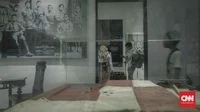
Every 28th of October, the Republic of Indonesia commemorates Youth Pledge Day, widely known as Hari Sumpah Pemuda, a foundational milestone that cemented the ideological groundwork for a unified nation. This historic vow emerged from the Second Youth Congress, initiated and organized by the Indonesian Students Association, or Perhimpunan Pelajar-Pelajar Indonesia (PPPI). The overarching objective of the congress was to galvanize the fragmented youth organizations scattered across the archipelago into a cohesive front against Dutch colonial rule. Spanning two pivotal days, October 27 and 28, 1928, in the city then known as Batavia—now the modern capital of Jakarta—the congress unfolded through a series of meticulously planned sessions. These meetings were strategically distributed across three distinct venues, each hosting discussions that emphasized national unity, the formation of a unified identity, and the critical role of education in bridging regional divides.
The culmination of these deliberations occurred during the final session, where participants collectively ratified a tripartite pledge affirming one homeland, one nation, and one unifying language: Indonesia. Moments before this monumental resolution was formally read by Congress Chairman Sugondo Djojopuspito, composer Wage Rudolf Supratman famously performed the instrumental melody of Indonesia Raya on the violin, providing a cultural heartbeat to the proceedings. For contemporary history enthusiasts and cultural tourists, tracing the physical geography of the Second Youth Congress offers a profound connection to the birth of the Indonesian national identity. Understanding this monumental event requires a thorough examination of the chronological sequence of venues, the socio-political context of the late 1920s, the economic and logistical data surrounding these sites today, and the enduring legacy of the youth movement on modern Indonesian statehood.
The Historical Context and Socio-Political Landscape of 1928
To fully appreciate the significance of the Second Youth Congress, one must examine the socio-political climate of the Dutch East Indies in the late 1920s. Following the failed uprisings of 1926 initiated by the Communist Party of Indonesia, the colonial administration implemented stringent repressive measures, curbing political freedoms and clamping down on nationalist organizations. In response to this heavy-handed suppression, the nationalist movement shifted its strategy from open political confrontation to a more resilient, culture-based and education-driven mobilization. Regional youth organizations had sprouted across the archipelago, including Jong Java, Jong Sumatranen Bond, Jong Bataksbond, Jong Celebes, and Pemuda Kaoem Betawi. While these groups shared a common aspiration to end colonial subjugation, their immediate focus remained tethered to their respective ethnic or regional identities.
The realization that regional factionalism weakened the anti-colonial struggle prompted visionary student leaders within the PPPI to bridge these divides. The First Youth Congress, held in 1926, had laid the conceptual groundwork, but it was the Second Youth Congress in 1928 that successfully translated abstract ideals into concrete political commitments. The decision to hold the congress across three separate buildings in Batavia was not merely a logistical necessity, but a reflection of the evolving themes of the sessions: youth unity, educational reform, and the synthesis of a national identity through language and culture. Historians note that the colonial government kept a watchful eye on the proceedings through intelligence agents, yet the disciplined and intellectual tone of the congress prevented direct intervention, allowing the delegates to permanently alter the course of Indonesian history.
Chronology and Detailed Analysis of the Three Historic Venues
The First Session: Building the Foundation of Unity at Gedung Katholieke Jongenlingen Bond
The chronology of the Second Youth Congress began on the evening of October 27, 1928, at the Katholieke Jongenlingen Bond (KJB) building. Situated historically in the Waterlooplein Noord area—known today as the vibrant Lapangan Banteng district in Central Jakarta—this venue set the intellectual tone for the entire gathering. The choice of the KJB building underscored the inclusive nature of the congress, drawing on Catholic youth facilities to host a cross-cultural assemblage of nationalist thinkers.
During this inaugural session, Congress Chairman Sugondo Djojopuspito delivered a stirring opening address that underscored the absolute necessity of unity among the archipelago’s diverse populace. Following his remarks, nationalist luminary Mohammad Yamin took the floor to articulate the fundamental pillars capable of cementing a unified Indonesian nation. Yamin argued that unity could not rely on emotion alone; it required structural reinforcement through shared history, a common language, customary law, advanced education, and a collective political will. The discussions during this first night challenged delegates to look beyond their specific regional origins and recognize their shared destiny under colonial oppression.
Today, the physical footprint of the original KJB building has evolved. The site is currently occupied by the Santa Ursula Educational Foundation, functioning as an active academic institution. Because of its primary role as a school environment, the building is not designated as a public museum and is closed to casual historical tourism. Nonetheless, urban conservationists and historians frequently visit the perimeter to acknowledge its vital role as the cradle where the concept of a unified Indonesia was first formally debated on the convention floor.
The Second Session: Educational Reform at Gedung Oost-Java Bioscoop
The second phase of the congress commenced on the morning of October 28, 1928, shifting the delegates’ focus from broad political ideology to the practical mechanisms of nation-building, specifically education. This session was held at the Oost-Java Bioscoop, a building that historically stood in the Koningsplein Noord district—an area roughly corresponding to today’s Jalan Medan Merdeka Utara, in close proximity to the Supreme Court and the State Palace in Central Jakarta.
Unlike the opening night’s emphasis on political solidarity, the morning meeting at the Oost-Java Bioscoop addressed the ideological battleground of the classroom. Prominent educational reformers Poernomowoelan and Sarmidi Mangoensarkoro delivered comprehensive papers stressing the urgent need for national education systems that countered Dutch colonial indoctrination. They argued that true emancipation required a harmonization of nationalistic values taught in formal schools with moral and cultural education imparted within the family unit. The speakers contended that a colonial curriculum designed to produce clerical subordinates must be replaced with an educational framework that fostered critical thinking, self-reliance, and pride in indigenous heritage.
In contrast to the KJB building, the physical structure of the Oost-Java Bioscoop has been entirely lost to urban development. The building no longer stands, leaving no tangible architectural remnants for visitors to inspect. Urban historians rely on archival photographs, colonial-era maps, and municipal records to map its exact location, underscoring the relentless pace of modernization in the capital that has continuously reshaped Jakarta’s historical topography.
The Final Session and Ratification: The Birth of Sumpah Pemuda at Gedung Indonesische Clubgebouw
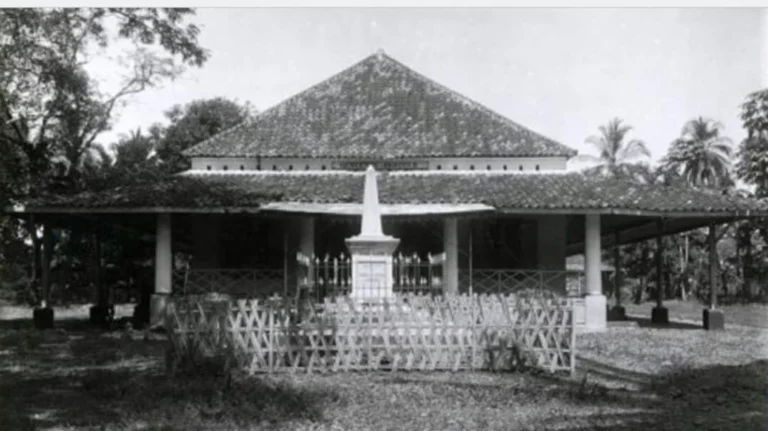
The climax of the Second Youth Congress took place on the afternoon of October 28, 1928, at the third and final venue: the Indonesische Clubgebouw, located at Jalan Kramat Raya No. 106 in Central Jakarta. Long before hosting the congress, this building served as a boarding house and communal hub for indigenous students and various youth movement organizations, functioning as a 24-hour incubator for nationalist discourse.
During this crucial afternoon session, the delegates synthesized the discussions on unity and education into a definitive resolution. It was here that the historic text of the Sumpah Pemuda was read to the assembly, binding the youth to three timeless tenets: one motherland, one nation, and one language. Crucially, this session was also immortalized by Wage Rudolf Supratman, who played the national anthem Indonesia Raya on his violin for the first time in public, providing an emotional crescendo that united the diverse attendees in a shared cultural experience.
Unlike the first two venues, the Indonesische Clubgebouw has been meticulously preserved and transformed into the official Museum Sumpah Pemuda. Managed by the state, the museum serves as a primary educational repository, housing extensive collections, photographic documentation of the youth movement, and artifacts directly associated with W.R. Supratman and the creation of the national anthem.
Economic Data, Operational Logistics, and Accessibility of the Museum Sumpah Pemuda
For researchers, educators, and cultural tourists wishing to engage directly with the physical heritage of the 1928 congress, the Museum Sumpah Pemuda on Jalan Kramat Raya remains fully accessible under regulated operational guidelines. According to official data from the museum management, entrance fees are structured to encourage broad public and educational participation. Domestic visitors over the age of twelve are charged a nominal admission fee of IDR 5,000, while children aged three to twelve pay IDR 3,000. These accessible pricing tiers reflect a national commitment to keeping historical education affordable for all socio-economic strata.
In terms of operational hours, the museum welcomes visitors from Tuesday through Thursday, as well as on weekends, operating from 08:00 to 16:00 Western Indonesia Time (WIB). On Fridays, the operating hours are slightly extended, running from 08:00 to 16:30 WIB. The facility is officially closed on Mondays and national public holidays. Museum authorities routinely advise prospective visitors to check official announcements or contact the facility directly prior to organizing group tours or academic visits, ensuring compliance with updated municipal regulations and special exhibition schedules.
Broader Impact, Sociological Analysis, and Historical Implications
The ratification of the Sumpah Pemuda transcended its immediate context as a student gathering, fundamentally altering the trajectory of the Indonesian independence movement. From a sociological standpoint, the congress engineered a paradigm shift from primordial identity—wherein individuals identified strictly as Javanese, Sumatran, Minahasa, or Ambonese—to a modernized civic nationalism centered on an overarching Indonesian identity. By voluntarily subordinating regional languages and dialects to Malay as the foundation for the national language, Bahasa Indonesia, the delegates solved one of the most complex linguistic hurdles facing post-colonial state formation.
Political analysts note that this linguistic unification played an indispensable role in preventing the balkanization of the archipelago following the declaration of independence in 1945. While neighboring post-colonial nations grappled with severe ethnolinguistic fragmentation and separatist insurgencies fueled by linguistic divides, Indonesia possessed a unifying lingua franca that permeated administration, education, literature, and public discourse. Furthermore, the inclusion of women and diverse ideological factions within the 1928 congress established a pluralistic template for the future Indonesian republic, embedding the principle of unity in diversity—Bhinneka Tunggal Ika—into the national consciousness decades before it was officially codified in the state constitution.
As contemporary Indonesia navigates the complexities of the digital age and globalization, the legacy of the three historic buildings of October 1928 serves as a persistent reminder of the agency of youth in national transformation. The meticulous preservation of the Museum Sumpah Pemuda and the academic acknowledgment of the lost sites like the KJB building and the Oost-Java Bioscoop ensure that the sacrifices, intellectual rigor, and visionary courage of the 1928 delegates continue to inspire new generations of citizens dedicated to the preservation of national sovereignty and democratic unity.