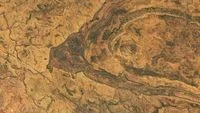
The vast and rugged landscape of the Kimberley region in Western Australia has long been a subject of fascination for geologists and planetary scientists, but a recent satellite image has brought renewed attention to one of its most enigmatic features. The National Aeronautics and Space Administration (NASA), in collaboration with the United States Geological Survey (USGS), has released a high-resolution image of the so-called Spider Crater. Captured on September 20 by the Operational Land Imager (OLI) aboard the Landsat 9 satellite, the image provides a striking view of an ancient geological formation that resembles the sprawling limbs of a giant spider embedded in the earth.
The formation is an oval-shaped impact structure measuring approximately 13 kilometers by 11 kilometers, with a central "spider" core spanning roughly 4 kilometers. While the visual resemblance to an arachnid is uncanny, the structure represents a significant piece of Earth’s deep-time history, serving as a silent witness to a cataclysmic event that occurred hundreds of millions of years ago.
Geological Mechanics: Unpacking the Spider Structure
The "legs" of the spider are not biological in origin, but are rather a complex series of sandstone ridges. According to geologists, these ridges have persisted over eons because they are more resistant to erosion than the surrounding sedimentary rock layers. When a high-velocity impact occurs, the Earth’s crust is subjected to intense pressure, causing a phenomenon known as "central uplift."
Following the initial kinetic shock of a meteorite impact, the floor of the crater undergoes a rebound effect, pushing central material upward to create a dome. Over millions of years, weathering and erosion strip away the softer, less resilient material, leaving behind the hardened, elevated ridges that radiate from the center. This specific morphology is what gives the Spider Crater its distinctive, sprawling appearance. For decades, the origin of this site was a point of intense scientific debate, with early theories suggesting a potential volcanic origin before definitive evidence of an extraterrestrial impact was uncovered.
The Search for Definitive Evidence
For many years, the scientific community struggled to reach a consensus regarding the genesis of the Spider Crater. Early geological surveys in the mid-20th century were limited by the remote nature of the Kimberley region and the lack of advanced imaging technology. Some researchers hypothesized that the central uplift could have been the result of a subterranean volcanic intrusion or a diapir—a type of intrusion where more mobile material is forced into brittle overlying rocks.
However, modern field research and advanced laboratory analysis have largely put these debates to rest. Geologists conducting on-site investigations discovered the presence of "shatter cones." These are rare, distinctively fan-shaped fracture patterns that develop in bedrock only when a powerful shockwave—generated by a high-energy impact—passes through it. The widespread presence of these cones across the central dome of the crater serves as a "smoking gun" for an extraterrestrial event.
Furthermore, laboratory analysis of quartz and zircon crystals collected from the site has revealed "shocked" microstructures. These microscopic features occur when minerals are subjected to the instantaneous, extreme pressures associated with a meteorite strike, effectively altering their crystal lattices in ways that volcanic heat and pressure cannot replicate.
A Chronology of the Impact
Determining the age of ancient craters is notoriously difficult, particularly in a region as geologically active and ancient as the Australian outback. Because the crater is so heavily eroded, the original rim has long since disappeared, leaving only the central structure exposed.
Based on the stratigraphic position of the rocks in the Kimberley region, scientists have estimated that the impact took place during the late Precambrian period. Specifically, the data suggests a window of approximately 900 million to 600 million years ago. To put this into perspective, this event occurred long before the rise of complex terrestrial life, during a time when Earth’s biological complexity was primarily limited to microbial mats and primitive multicellular organisms.
The Kimberley region itself is part of the North Australian Craton, one of the oldest and most stable pieces of the Earth’s crust. The fact that the Spider Crater has survived for nearly a billion years is a testament to the tectonic stability of the Australian continent, which has allowed such ancient structures to remain relatively intact despite the relentless passage of time.
Scientific Significance and Planetary Defense
The study of craters like the one in the Kimberley is not merely an exercise in historical curiosity; it is a vital component of planetary science. By analyzing the frequency and characteristics of impact sites on Earth, scientists can better calibrate models of the solar system’s history.
"The Spider Crater provides a unique window into the Earth’s past," notes a representative from the NASA Earth Observatory. "Understanding how these structures form helps us refine our understanding of impact mechanics, which is essential for planetary defense and our ability to assess the risks posed by near-Earth objects today."
The analysis of the Spider Crater also offers insights into how the Earth’s surface responds to extreme energy events. When a meteor strikes, it transfers a massive amount of kinetic energy into the crust, effectively rearranging the local geology. Studying these "scars" helps geologists interpret similar features on other planets, such as Mars, where erosion is slower and craters remain pristine for much longer periods. By using Earth-based sites as analogs, researchers can better interpret data sent back by rovers and orbiters exploring the Martian surface.
Broader Implications for Earth’s Geological History
The identification and confirmation of the Spider Crater as an impact site remind the scientific community of how much of Earth’s history remains hidden beneath the surface. Many craters that were once prominent have been erased by plate tectonics, volcanic activity, and ice ages. The survival of the Spider Crater structure offers a rare, high-quality data point for researchers mapping the history of bombardment in the inner solar system.
Moreover, the collaborative nature of this finding—leveraging satellite data from Landsat 9 and ground-truth verification from field geologists—underscores the importance of integrated research methods. As satellite technology improves, NASA and other space agencies expect to identify more of these "hidden" structures, further refining our map of the Earth’s ancient history.
The Future of Crater Research
As technology continues to advance, the methods used to study the Spider Crater will likely evolve. Remote sensing, which allows scientists to analyze the mineral composition of the crater from space, is becoming increasingly sophisticated. Hyperspectral imaging, for example, could reveal subtle variations in the chemical makeup of the rocks in the Kimberley, potentially providing more precise data on the type of meteorite that caused the impact—whether it was a stony chondrite, an iron-nickel body, or an icy comet fragment.
While the "spider" remains a silent observer of a long-vanished epoch, its presence serves as a bridge between the distant past and the technological present. For the scientific community, the crater is not just an image on a monitor, but a complex laboratory that continues to yield secrets about the dynamic relationship between Earth and the cosmos.
The Kimberley region, already celebrated for its breathtaking scenery and cultural heritage, now stands as a premier site for understanding the cosmic forces that have shaped our planet. As researchers continue to analyze the data provided by the Landsat 9 imagery, they expect to uncover further details about the scale of the impact and the environmental consequences that followed—a project that ensures the Spider Crater will remain a focus of geological inquiry for years to come.