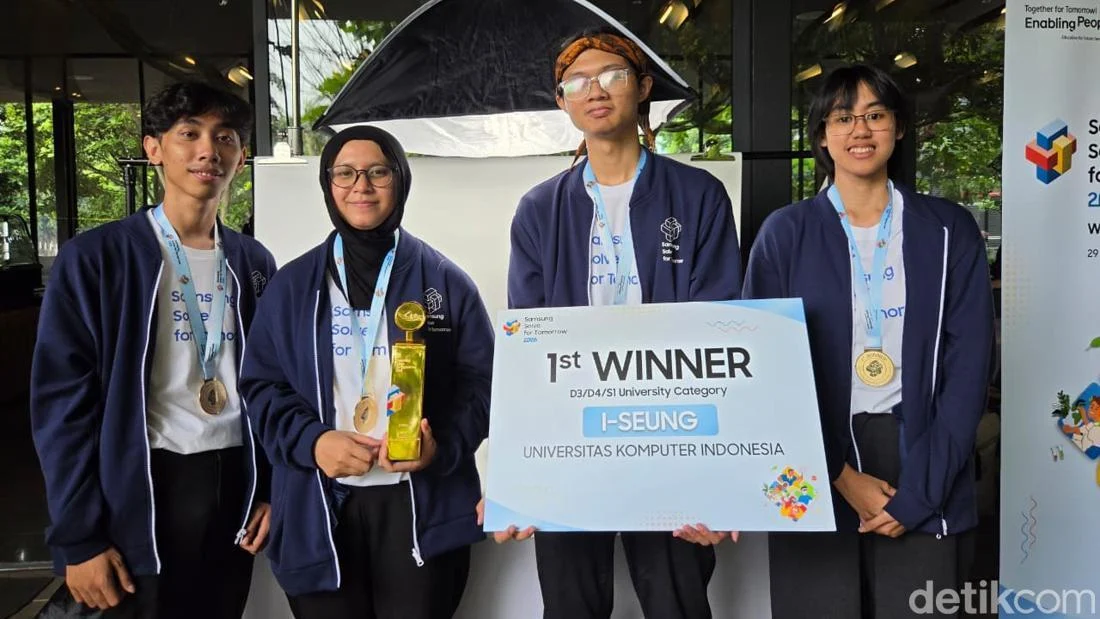
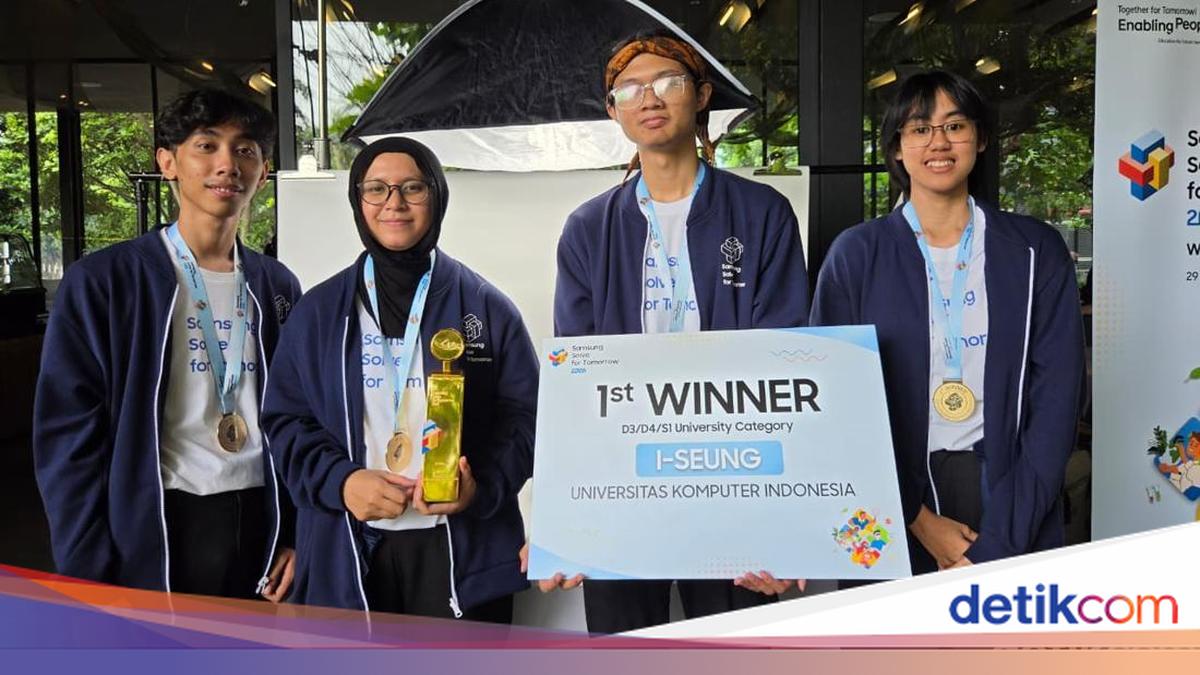
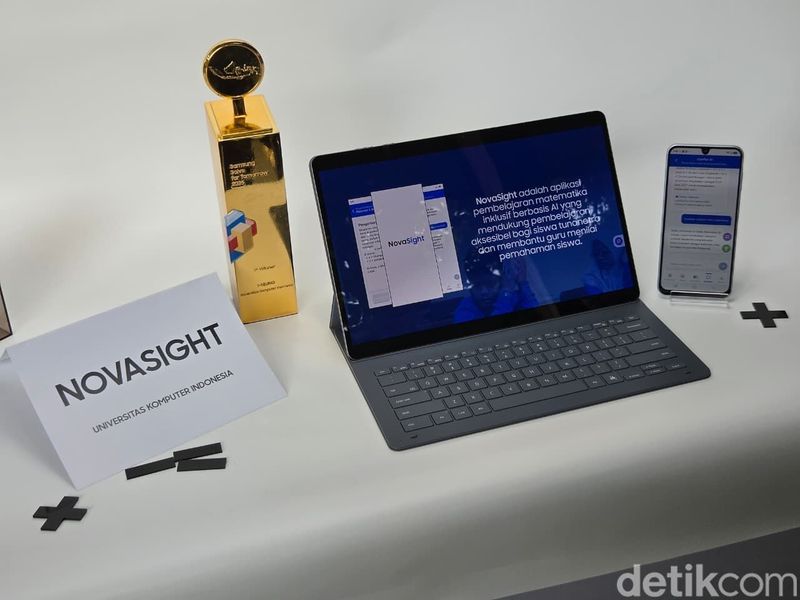
In a remarkable display of technological innovation aimed at social inclusivity, a team of four students from the Universitas Komputer Indonesia (Unikom) has secured the first-place title in the prestigious Samsung Solve for Tomorrow (SFT) 2026 competition. The team, known as I-SEUNG, triumphed in the D3/D4/S1 category with their groundbreaking artificial intelligence platform, NovaSight, a digital solution specifically engineered to empower visually impaired students to study mathematics independently. The victory was formally announced in Jakarta on October 29, 2026, marking a significant milestone in the integration of assistive technology within the Indonesian educational landscape.
The I-SEUNG team comprises four dedicated students—Ratuayu Nurfajar, Regia Qolbu Rivita Atmowidjaja, Mohamad Zaki Zakiran, and Damar Fikri Haikal—who developed the application under the guidance of their academic mentor, Dian Dharmayanti. Their project emerged from a desire to bridge the accessibility gap that frequently marginalizes visually impaired students in STEM (Science, Technology, Engineering, and Mathematics) fields.
The Genesis of NovaSight: Addressing an Educational Void
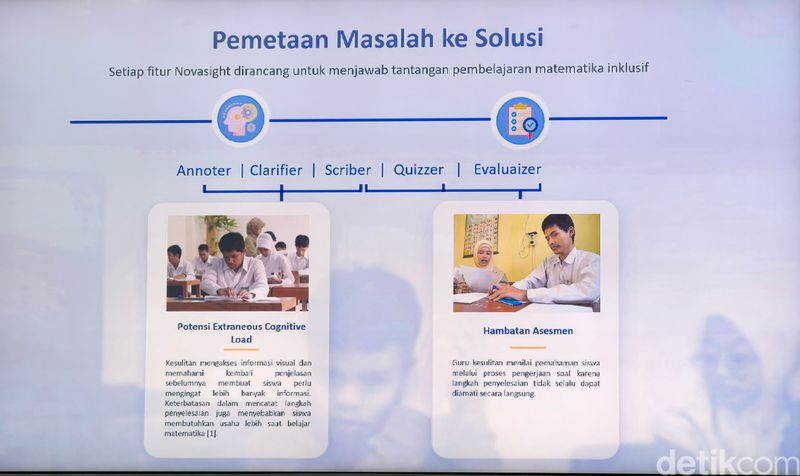
The development of NovaSight was not merely a theoretical exercise; it was grounded in rigorous field research. The team initiated their project by conducting extensive interviews and observations at the SLB Negeri A Citeureup, a school for the visually impaired located in Cimahi, West Java. Their preliminary findings highlighted a critical systemic challenge: students with visual impairments consistently struggle to comprehend complex visual information such as geometric graphs, intricate diagrams, and the sequential steps required for algebraic calculations.
"Our approach was rooted in evidence," explained Ratuayu during an interview following the award ceremony. "We began by reviewing existing literature and online resources to formulate a hypothesis. However, we knew that to truly understand the friction points in the learning process, we had to go directly to the source—the students and the educators themselves."
This field research proved invaluable, as it uncovered that traditional assistive tools were often insufficient for higher-level mathematics. With approximately 4,229 visually impaired students currently enrolled in specialized schools (SLB) across Indonesia according to data from the Ministry of Primary and Secondary Education, the need for a scalable, AI-driven solution has become increasingly urgent.
Technical Architecture and Functional Capabilities
NovaSight is built upon a robust architecture, utilizing the Flutter framework for cross-platform compatibility, integrated with Azure OpenAI services for advanced linguistic and logical processing, and optimized with TalkBack accessibility features. The platform is defined by five specialized AI-powered features designed to facilitate a holistic learning experience:
- Annoter: This feature serves as the primary visual-to-text converter. It interprets mathematical graphs and diagrams, translating visual data into comprehensive textual descriptions that can be read aloud by screen readers.
- Scriber: Recognizing the difficulty of tactile input in math, the team developed a specialized keyboard interface that allows students to input mathematical notations and record their problem-solving steps in a format that is intuitive for the visually impaired.
- Clarifier: This functions as an interactive AI tutor. Students can pose questions regarding specific mathematical concepts, and the AI provides explanations tailored to their learning pace and level of understanding.
- Quizzer: A tool designed for educators, enabling them to generate custom mathematical problems and corresponding answer keys, thereby streamlining the assessment process.
- Evaluaizer: Perhaps the most sophisticated component, this feature analyzes a student’s final answer and their step-by-step methodology to identify exactly where a calculation error occurred, offering constructive feedback to facilitate self-correction.
The development process was characterized by rapid iteration. A significant pivot occurred during the testing phase when the team realized their initial keyboard design was not user-friendly for the intended demographic. "We had developed a design that we believed was optimal," noted Regia, one of the team members. "However, once we returned to the field, it became clear that our assumptions did not align with the users’ actual habits. We had to go back to the drawing board and strictly adhere to the Web Content Accessibility Guidelines (WCAG) to ensure our interface was truly accessible."
Empirical Validation and Pilot Testing
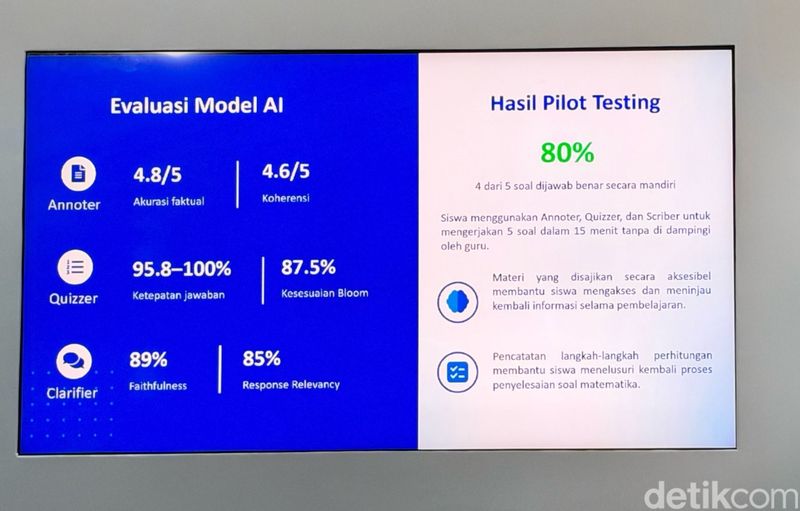
Following four months of intensive development, the team conducted pilot testing to measure the real-world efficacy of the platform. The results provided a compelling case for the project’s viability. In a controlled test session, a visually impaired student was tasked with solving five mathematical problems. Utilizing the Annoter, Quizzer, and Scriber features, the student successfully solved four out of the five problems within a 15-minute window—an impressive feat given the absence of direct, minute-by-minute teacher intervention.
Irman, a Grade 11 student at SLB Negeri A Citeureup who participated in the pilot, shared his perspective on the impact of the tool. "NovaSight has been a revelation for my studies," he stated. "Understanding graphs and diagrams has always been my greatest challenge. With this application, I can finally work through problems and document my progress independently, without needing a teacher to walk me through every single step."
Educators have also expressed cautious optimism. Bayu, a mathematics teacher who tested the application, noted the rarity of such specialized tools. "The features are remarkably clear and well-structured. For a teacher, this is an excellent supplement to traditional teaching methods, as it empowers the student to gain confidence in their own analytical abilities," he said.
However, the researchers remain pragmatic. They acknowledge that while the pilot study provided encouraging data, it represents a limited sample size. The long-term efficacy, adaptability across different mathematical curricula, and generalizability of the software require more extensive testing and longitudinal observation.
The Path to Victory and Future Outlook
The journey to the top of the SFT 2026 podium was almost cut short. The team, part of the Code Lens community at Unikom, had originally hesitated to register for the competition. It was only through an extension of the registration deadline that they managed to submit their entry. "We were essentially the ‘last-minute’ team," Regia admitted. "We almost missed the window entirely, but we are incredibly grateful that we did, because this experience has fundamentally changed our perspective on the role of technology in society."
The victory at Samsung Solve for Tomorrow 2026 provides not only prestige but also a platform for future development. The I-SEUNG team has stated that their immediate goal is to refine the beta version of NovaSight for wider implementation, beginning with institutions in West Java.
Beyond the technical hurdles, the team is currently exploring potential partnerships and investment opportunities. Developing and maintaining AI infrastructure—particularly when it requires high-level data processing—is capital-intensive. The team hopes to secure support that will allow them to transition from a prototype to a fully operational, sustainable service.
Implications for Assistive Technology in Indonesia
The success of NovaSight serves as a broader case study for the potential of AI in bridging the digital divide. In Indonesia, where inclusive education remains a work in progress, digital solutions like NovaSight represent a critical shift toward "Universal Design for Learning" (UDL). By leveraging generative AI to translate visual information into auditory or tactile-friendly data, the I-SEUNG team has demonstrated that the barrier to entry for STEM subjects for the visually impaired is not a lack of aptitude, but a lack of accessible tools.
As the government and private sector continue to push for digital transformation, projects like NovaSight provide a blueprint for how innovation can be directed toward solving persistent social inequities. The impact of such technology extends beyond the classroom; it fosters a sense of agency and self-sufficiency that is essential for the future integration of visually impaired individuals into the workforce and higher education.
As the team looks toward the future, the lessons learned from their win are clear: effective innovation requires a deep, empathetic connection with the end-user. The success of the Unikom students is a testament to the power of combining technical skill with a commitment to human-centric design. While NovaSight is currently a prototype, its potential to democratize education for thousands of students across the archipelago remains a source of great promise for the technological community in Indonesia.