The serene village of Gogik, nestled on the verdant slopes of Mount Andong in Girirejo Village, Ngablak District, Magelang Regency, recently became the epicenter of cultural preservation. On August 2, 2026, the community celebrated the Saparan Gogik festival, a deeply rooted Javanese tradition dedicated to honoring ancestral heritage, giving thanks to nature, and strengthening communal solidarity. Far from being a mere tourist attraction or a superficial seasonal celebration, the event served as an immersive masterclass in nguri-uri kabudayan—the active preservation of culture—intertwining indigenous spirituality with contemporary environmentalism and youth-led activism.
Background and Context of Saparan Gogik
Saparan is traditionally celebrated during Sapar, the second month of the Javanese calendar. For the residents of Dusun Gogik, the 2026 iteration marked a monumental revival. According to Krisna Phiyastika, co-founder of Arutala Boemi Lestari—an initiative focused on mindfulness and cultural ecotourism—and a native of Gogik, this year’s festival was designed to resurrect an authentic village identity that had remained hidden from the public eye for decades.
The primary objective extended far beyond satisfying the cultural maxim wong Jawa aja ilang Jawane (Javanese people must not lose their Javanese identity). In the post-New Order era, which allows for greater freedom in cultural expression, the festival functioned as a deliberate counterweight to the homogenization and commodification of local traditions. By reclaiming indigenous rituals and narratives, the community asserted its autonomy in defining its cultural landscape.
Operating under the central theme “Nandur Tradisi, Ngunduh Pakarti”—literally translating to "planting traditions to harvest virtues"—the festival was built on the premise that nurturing heritage cultivates core societal values: religiosity, mutual cooperation (gotong royong), environmental stewardship, and unbreakable communal bonds.
Chronology and Sequence of Events
The road to the peak celebration on August 2 involved a meticulously planned chronology of communal labor, spiritual cleansing, and logistical preparation.
Days prior to the main event, the village engaged in tirakatan (night vigils and collective prayers) and the cleaning of the village sarean (ancestral graves) as a mark of respect to forebears. As a testament to the village-wide commitment to the ritual, local authorities temporarily closed the popular Mount Andong climbing route via Gogik to general hikers, ensuring that the focus remained undivided.
The culmination on Sunday morning began well before dawn. Following the Subuh prayer, community elder Haji Sutopo—locally known as Pak Kaum—consecrated seven tampah (woven bamboo trays) containing ritual offerings (sajen or langgat). These trays held ingkung (whole free-range chicken), traditional snacks, local flora, agricultural yields, and symbolic artifacts.

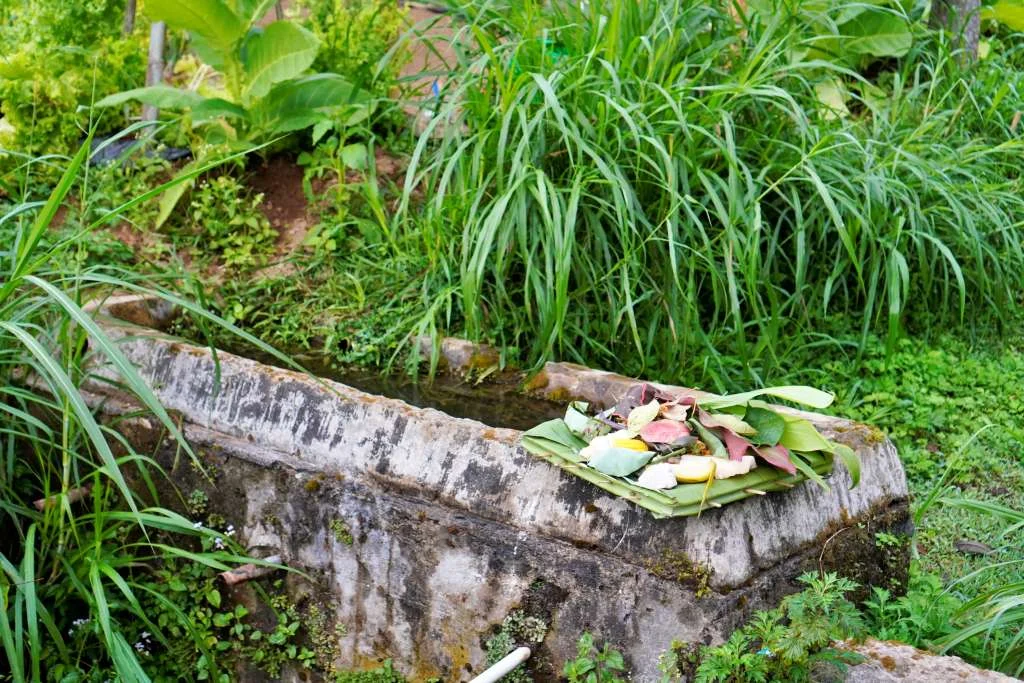
Following the prayers, the community performed nyebar sajen (the scattering of offerings) across the seven sacred springs (tuk) scattered throughout Dusun Gogik. Haji Sutopo emphasized that this practice is not a form of worship, but rather an expression of profound gratitude to Gusti Pengeran (God Almighty) for providing water as the ultimate source of life. The organic offerings subsequently serve as sustenance for local fauna and organisms residing around the water sources, visually reinforcing an ecological commitment to protecting the village’s watersheds.
Cultural Procession and Community Integration
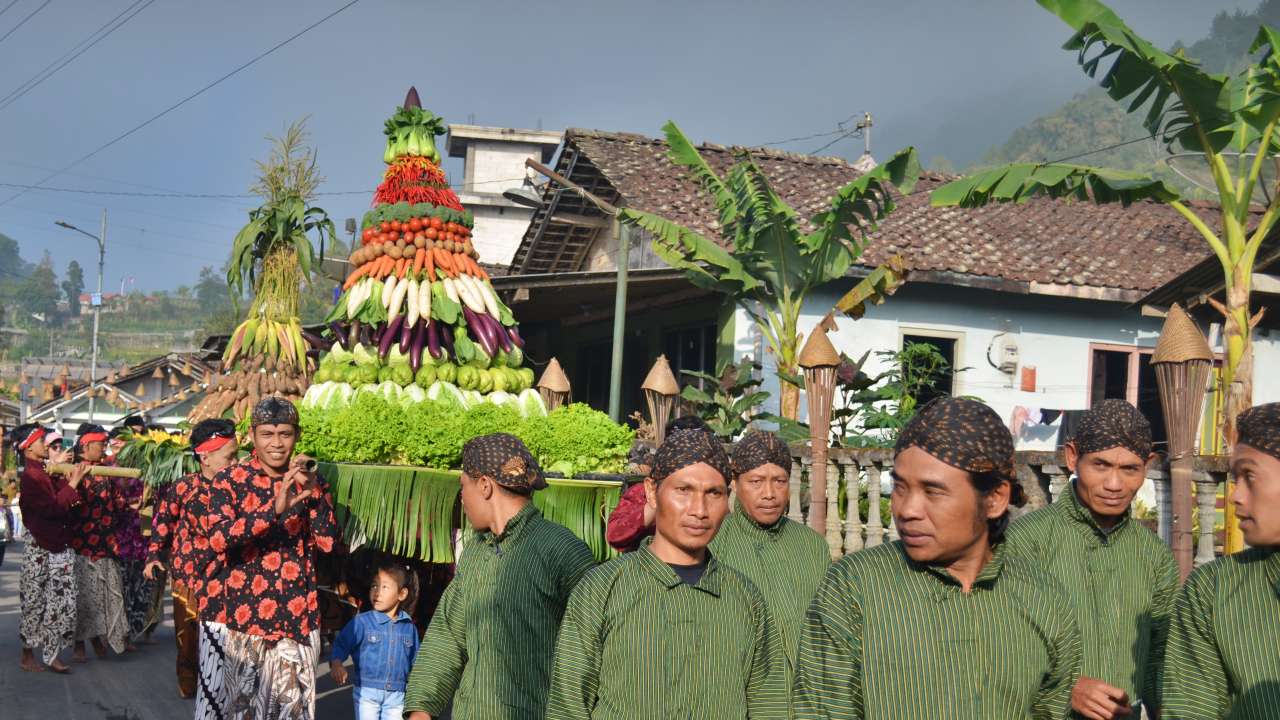
The morning progressed into a vibrant cultural parade led by village head Rangga Pramana. Floats and marching residents displayed rich symbolic elements:
- Pangon: Representing animal husbandry and the intrinsic values of responsibility.
- Sunggen: Symbolizing the resilience and diligent labor of rural communities.
- Pawon: Serving as an emblem of familial blessings and food security.
- Agricultural Mounts (Pewetu): Massive structures laden with harvested vegetables and secondary crops (palawija), highlighting gratitude to the earth.
Traditional children’s games (dolanan) were also showcased, serving both as nostalgic elements for older generations and as foundational tools for character education among the youth.
The procession converged at the village hall courtyard, where residents participated in umbul donga—a communal prayer for village safety and prosperity—followed immediately by kembul bujana, a massive shared feast.

The afternoon and evening featured long-absent artistic performances. Local youth delivered a dynamic Soreng dance, while children presented the Warok dance. The festivities concluded with a traditional Wayang Ringgit Purwo shadow puppet performance that lasted from late afternoon through the night.
Youth Leadership and Organizational Backbone
A defining feature of Saparan Gogik 2026 was the heavy involvement of the local youth organization, Karang Taruna Kompag Sigra Jumangkah. Collaborating closely with village elders, religious figures, and administrative leaders, these young individuals spearheaded the revival of traditions that had languished in obscurity for decades.
This intergenerational collaboration addresses a critical vulnerability in cultural preservation: the risk of knowledge severance. Observers noted that the involvement of youth as active planners—such as appointing young residents to lead village tours—ensures that the transmission of local knowledge is experiential rather than merely theoretical.
Furthermore, the hospitality exhibited during the festival mirrored the communal warmth of Eid al-Fitr. Households prepared traditional snacks and the local teh trasuan—a unique beverage made by directly boiling freshly plucked leaf shoots without drying or fermentation—for visitors and relatives alike. This egalitarian environment fostered what anthropologist Koentjaraningrat termed guyub rukun (harmonious togetherness).

Broader Impact and Implications
While Mount Andong is widely recognized as a premier hiking destination that draws regional tourists, cultural experts argue that the economic windfall of tourism is merely a secondary benefit. The primary yield of events like Saparan Gogik is the fortification of social fabric and the safeguarding of intangible cultural heritage.
The integration of religious devotion and ancestral traditions in Gogik demonstrates a resilient model of cultural defense against modern atomization. However, researchers and organizers stress that the village cannot maintain this momentum in isolation. The preservation of local culture functions like a spider’s web: snapping a single strand can unravel the entire network of meaning.
Consequently, the success of Saparan Gogik 2026 highlights a broader imperative for academics, journalists, media practitioners, and government bodies. In an era dominated by rapid digitalization, documenting and supporting hyper-local cultural festivals is not merely a nostalgic exercise, but an essential strategy for maintaining cultural diversity, ecological awareness, and community resilience in rural Indonesia.