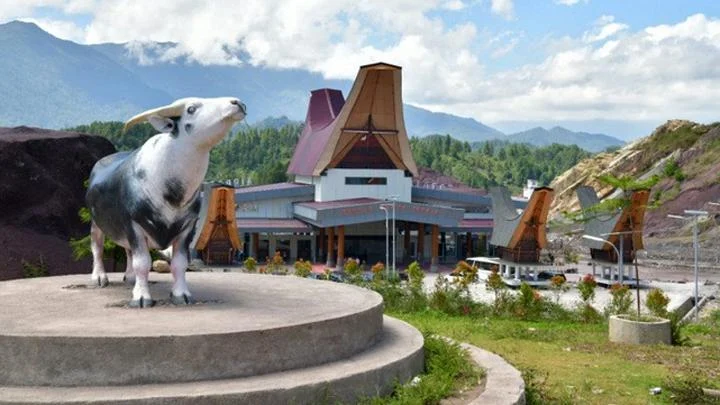
On Thursday, March 18, 2021, President Joko Widodo officially inaugurated the Toraja Airport, a landmark infrastructure project located in the Tana Toraja Regency of South Sulawesi. Formerly known as Buntu Kunik Airport, the facility represents a significant shift in the region’s transportation landscape, aimed at unlocking the economic potential of the highland area. The ceremony, which was broadcast via the Presidential Secretariat’s official YouTube channel, marked the culmination of a decade-long construction effort designed to replace the aging Pongtiku Airport in Ratentayo and provide a more accessible gateway for both domestic and international visitors.
The inauguration of the airport is part of a broader national strategy under the administration of President Joko Widodo to prioritize connectivity in remote and challenging terrains. By facilitating easier access to Tana Toraja—a region world-renowned for its unique cultural heritage, ancient burial rites, and breathtaking landscapes—the government aims to catalyze growth in the tourism sector and foster the emergence of new economic hubs across the archipelago.
A Decade of Development: The Chronology of Toraja Airport
The history of Toraja Airport is characterized by persistent engineering challenges and a series of strategic pivots. The project’s genesis dates back to 2011, when the initial plans for the Buntu Kunik site were conceived to supersede the limited capacity of the Pongtiku Airport. However, the project faced significant delays due to technical complexities related to the rugged topography of Tana Toraja.
Construction momentum stalled for several years until the project was revitalized under President Jokowi’s administration in 2018. The central government took a decisive role in accelerating the first phase of construction, which reached completion by the middle of 2020. This phase allowed for the commencement of initial commercial operations, with carriers such as Wings Air and Citilink stepping in to establish vital air bridges between Makassar and Toraja.
The transformation of the site was a monumental task for civil engineers. To establish a stable and flat surface for the landing strip in the mountainous region, construction teams had to engage in the massive undertaking of cutting through three separate hills. This engineering feat, highlighted by the President during his visit, underscores the government’s commitment to overcoming geographical barriers to achieve national integration.
Technical Specifications and Infrastructure Capabilities
Toraja Airport occupies an expansive site covering 141 hectares. The infrastructure is designed in a modular format, allowing for iterative growth based on traffic demand and aircraft size. In its initial operational phase, the airport features a runway length of 1,600 meters, which is sufficient for ATR-72 turboprop aircraft. The airside infrastructure includes an apron measuring 94.5 by 67 meters and a taxiway of 124.5 by 15 meters, ensuring efficient ground movement for regional flights.
The terminal building, spanning 1,000 square meters, was constructed with a capacity to accommodate 150 passengers at any given time. However, the vision for the airport extends beyond its current state. The second phase of development is slated to increase the runway length to 2,000 meters. This expansion is critical, as it will allow the facility to handle larger, narrow-body commercial jets such as the Boeing 737 or the Airbus A320. These aircraft are the workhorses of domestic aviation in Indonesia and are essential for scaling up tourist arrivals from major hubs like Jakarta or Surabaya.
Minister of Transportation Budi Karya Sumadi, who accompanied the President during the inauguration, emphasized the technical rigor required to ensure safety at the site. "The construction of this airport was highly complex due to the steep, hilly topography," the Minister stated. He noted that even as of 2021, work was ongoing to remove additional obstacles—specifically, further reducing the elevation of hills surrounding the runway—to meet international aviation safety standards.
The Significance of Renaming and Local Consensus
The transition from "Buntu Kunik" to "Toraja Airport" was more than a mere administrative change; it was a result of a concerted effort to build local ownership and cultural branding. The name change was formalized through a consensus-building process involving the Tana Toraja Regency government, local legislative bodies (DPRD), and traditional leaders representing 19 districts in the region.
This consultative process ensured that the airport’s identity aligned with the regional branding of Tana Toraja, a destination that is widely recognized as a "land of ancestral heritage." By aligning the name with the destination, the government hopes to enhance the airport’s marketing value in the global tourism market. The proposal was vetted through a series of parliamentary sessions before receiving final approval from the Ministry of Transportation, reflecting a collaborative governance model between local stakeholders and central authorities.
Economic Implications and Regional Development
The presence of a modern airport in Tana Toraja is expected to generate a multiplier effect on the regional economy. Historically, tourists wishing to visit Tana Toraja had to endure an eight-to-ten-hour land journey from Makassar, which often deterred potential visitors with limited time. By reducing travel time to approximately 50 minutes via air, the airport significantly increases the frequency of potential visits.
The implications for the local economy are threefold:
- Tourism Revitalization: Tana Toraja is home to some of Indonesia’s most unique cultural tourism assets, including the Tongkonan traditional houses and elaborate funeral ceremonies. Improved accessibility is projected to increase visitor numbers, which in turn supports the hospitality, catering, and tour guide industries.
- Job Creation: The operational requirements of an airport, ranging from ground handling and aviation security to administrative roles, create direct employment opportunities for the local workforce. Furthermore, the expansion of the tourism sector will stimulate indirect job creation in the service and retail sectors.
- New Economic Centers: The airport acts as an anchor for regional development. The government anticipates that the area surrounding the airport will evolve into a commercial zone, providing logistical support to local agricultural producers who wish to export their goods—such as Toraja’s famous coffee—more efficiently to the national market.
Strategic Outlook: Connectivity as a Catalyst
President Jokowi’s focus on regional airports is a hallmark of his administration’s "Nawa Cita" agenda, which emphasizes developing Indonesia from the periphery. By ensuring that remote, high-value destinations like Tana Toraja are connected to the national aviation grid, the government is effectively decentralizing economic growth.
The successful inauguration of the airport also serves as a case study for future infrastructure projects in mountainous regions. The lessons learned in managing the topography, engaging with local customs, and managing multi-year budgets will be applied to other ongoing airport projects in provinces such as Papua and East Nusa Tenggara.
While the immediate impact of the airport was tempered by the global slowdown in travel due to the COVID-19 pandemic during its opening, its long-term strategic value remains undisputed. As domestic travel recovers and international borders gradually reopen, Toraja Airport is positioned to become a vital artery for the South Sulawesi economy.
Looking Toward the Future
As the government continues to refine the airport’s facilities, including the planned runway extension to 2,000 meters, the focus will likely shift toward increasing flight frequency and fostering partnerships with more airlines. The ultimate goal is to move beyond the current Makassar-Toraja route and explore direct connections to other major cities, thereby positioning Tana Toraja as a primary destination in the Indonesian tourism portfolio.
The inauguration of Toraja Airport is a testament to the perseverance of both the engineers who carved the facility into the mountains and the community leaders who advocated for a facility that reflects the pride of the Torajan people. With the ribbon officially cut, the region stands at the precipice of a new era of connectivity, one that promises to bridge the gap between its ancient traditions and the demands of the modern globalized economy. As the airport begins its full operational life, the eyes of the nation will be on Tana Toraja to see how effectively this new infrastructure is leveraged to transform the lives of its residents and preserve its unique cultural legacy for generations to come.