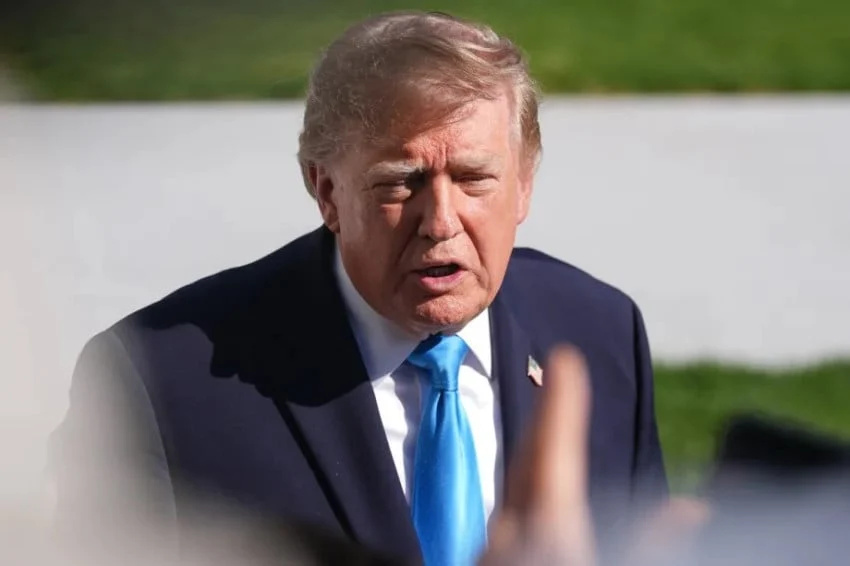
In a significant diplomatic maneuver reflecting a profound shift in regional risk assessment, high-ranking officials in Riyadh have formally urged the administration of United States President Donald Trump to exhaust all diplomatic avenues before contemplating any military confrontation with Iran. According to intelligence and geopolitical reports originating from regional media outlets, including the Israeli news network i24News, the Saudi leadership is increasingly apprehensive that a renewed military escalation between Washington and Tehran would immediately endanger the Kingdom’s critical energy infrastructure, making vital oil production and processing facilities vulnerable to retaliatory missile and drone attacks from Iran or its aligned regional proxies.
This urgent appeal from the heart of the Gulf comes directly on the heels of high-stakes diplomatic missions involving senior Saudi defense and foreign policy leadership. The outreach to Washington follows a pivotal visit to Tehran by Saudi Arabia’s Minister of Defense, Prince Khalid bin Salman. Demonstrating the multilateral dimensions of this diplomatic push, Prince Khalid was accompanied during the discussions in the Iranian capital by the head of Pakistan’s army and the chief of Turkish intelligence. This high-level delegation underscores a broader regional consensus among key Islamic nations favoring de-escalation, stability, and mediated dialogue over catastrophic military conflict in the Middle East.
Background Context of US-Iran Tensions and Saudi Vulnerability
The modern geopolitical architecture of the Persian Gulf has long been defined by a precarious balance of power between the United States, its regional allies—predominantly Saudi Arabia and Israel—and the Islamic Republic of Iran. During previous cycles of heightened tension, particularly following the unilateral withdrawal of the United States from the Joint Comprehensive Plan of Action (JCPOA) in 2018 and the subsequent "maximum pressure" campaign, the Kingdom of Saudi Arabia found itself squarely in the geopolitical crossfire.
The most dramatic manifestation of this vulnerability occurred in September 2019, when coordinated drone and cruise missile strikes targeted the critical oil processing facilities at Abqaiq and Khurais, temporarily knocking out half of Saudi Arabia’s global oil output. Although Tehran consistently denied direct involvement, the sophisticated nature of the attack sent shockwaves through global energy markets and shattered the illusion of impenetrable security surrounding Gulf energy infrastructure.
For Riyadh, the economic imperatives of Vision 2030—Crown Prince Mohammed bin Salman’s ambitious blueprint to diversify the Saudi economy away from oil dependency—require a stable and predictable security environment. Any resumption of open hostilities between the United States and Iran poses an existential threat to these national development goals, as renewed kinetic conflict could instantly spike insurance premiums, disrupt global supply chains, and inflict devastating physical damage on multi-billion-dollar energy installations.
Chronology of Recent Diplomatic Engagements
The current diplomatic push is the culmination of months of behind-the-scenes maneuvering aimed at preventing a slide back into open conflict. A chronological overview highlights the intensity of these efforts:
- Early Phase: Following shifts in the political landscape in Washington and persistent low-level friction across regional proxy battlegrounds, Gulf capitals intensified backchannel communications with both Washington and Tehran to gauge appetite for dialogue.
- The Trilateral-Led Mission to Tehran: Saudi Arabia’s Defense Minister, Prince Khalid bin Salman, traveled to Tehran. Uniquely, the mission included the head of Pakistan’s army and Turkey’s intelligence chief, signaling a coordinated regional and Islamic coalition effort to impress upon Iranian leadership the urgent necessity of restraint and diplomatic engagement.
- Outreach to Washington: Armed with insights and implicit assurances gathered from the Tehran talks, Saudi officials relayed formal messages to the Trump administration, explicitly counseling that diplomacy be given a decisive chance to prevent a new cycle of hostilities.
- Direct US-Iran Channels: Concurrently, diplomatic channels have opened directly between Washington and Tehran. Reports indicate that Iran has officially acknowledged receiving communication from high-ranking US officials, specifically noting a message from US Vice President J.D. Vance regarding the potential resumption of structured negotiations.
Strategic Mediation and Regional Realignments
The inclusion of Turkish and Pakistani military and intelligence chiefs in Prince Khalid’s delegation to Tehran points to a broader transformation in Middle Eastern diplomacy. Historically, regional powers relied heavily on Western intermediaries to manage adversarial relations with Iran. However, the events of recent years—including the normalization agreements and a general realization that external powers often leave regional states to bear the immediate consequences of conflict—have fostered a renewed spirit of regional diplomacy.
Turkey, with its complex political balancing act between NATO commitments and deep economic ties with Iran, along with Pakistan, which shares a long border with Iran and maintains profound strategic partnerships across the Gulf, acted as stabilizing guarantors in the talks. This multi-track diplomacy is designed to reassure Tehran that genuine diplomatic off-ramps exist, while simultaneously providing Washington with viable pathways to address security concerns without resorting to preemptive military strikes.
Furthermore, Iran’s confirmation of receiving messages from US leadership—specifically highlighting Vice President J.D. Vance—suggests that channels of communication remain open at the highest levels of the American executive branch. This development indicates that despite hardline rhetoric often favored by domestic political constituencies on both sides, pragmatic elements within Washington and Tehran recognize the catastrophic economic and strategic costs of full-scale war.
Economic Implications and Global Market Sensitivity
The global implications of the ongoing diplomatic standoff cannot be overstated. Energy markets remain exceptionally sensitive to any whispers of conflict in the Persian Gulf. Approximately a fifth of the world’s petroleum passes through the Strait of Hormuz, a narrow waterway flanked by Oman and Iran. A military conflict involving the United States and Iran would almost certainly result in the immediate disruption of maritime traffic through this vital chokepoint.
Supporting data from international energy agencies consistently demonstrates that any threat to the Strait of Hormuz triggers immediate, double-digit percentage spikes in Brent crude prices. For the global economy, which continues to navigate inflationary pressures and fragile post-pandemic recoveries, an oil shock of that magnitude could precipitate widespread economic stagnation.
By pushing for diplomacy, Riyadh is acting out of enlightened self-interest. Saudi officials are well aware that while advanced US missile defense systems provide a significant layer of protection, they are not infallible against saturation attacks utilizing low-cost asymmetric drone technology. Therefore, averting war through negotiation is viewed in Riyadh as the only reliable security strategy for safeguarding the Kingdom’s physical assets and maintaining its status as a reliable global energy supplier.
Official Responses and International Reactions
While the White House has maintained a disciplined public posture, emphasizing that all options remain on the table to counter Iranian nuclear ambitions and regional destabilization, diplomatic sources suggest that the administration is under increasing pressure from traditional allies to weigh the economic fallout of military escalation.
In Tehran, the response to the dual track of regional diplomacy and direct communication from Washington has been cautiously measured. Iranian state media and diplomatic spokespersons have reiterated that Tehran remains open to mutually respectful negotiations, provided that the United States demonstrates a genuine willingness to lift crippling economic sanctions and respect Iranian sovereignty. However, hardline factions within Iran’s political establishment continue to express deep skepticism regarding American intentions, pointing to the history of broken agreements and maximum pressure policies.
European capitals have welcomed the Saudi-led diplomatic initiative. European Union foreign policy officials have long advocated for a political solution to the standoff over Iran’s nuclear program, warning that military action would destabilize not only the Middle East but also have immediate spillover effects into European security and migration patterns.
Fact-Based Analysis of Future Implications
Analyzing the trajectory of US-Iran relations in light of these recent developments reveals several key takeaways for regional stability:
- The Primacy of Deterrence-Backed Diplomacy: The active intervention of Saudi Arabia proves that regional actors are no longer willing to be passive bystanders in a US-Iran conflict. By leveraging regional partnerships (Turkey, Pakistan) alongside direct appeals to Washington, Riyadh is attempting to shape a diplomatic architecture where deterrence is backed by collective regional engagement rather than unilateral Western military intervention.
- The Fragility of the Status Quo: While the reception of messages from US leadership by Tehran and the diplomatic outreach by Riyadh are positive indicators, the underlying structural disputes—particularly regarding uranium enrichment, regional proxy networks, and ballistic missile proliferation—remain unresolved. Without a comprehensive framework, these diplomatic overtures risk stalling under the weight of mutual distrust.
- The Energy Security Imperative: The ultimate arbiter of peace in the near term may well be the global economy. The clear messaging from Riyadh underscores that energy security and economic diversification are fundamentally incompatible with military conflict. As long as Saudi Arabia and other Gulf states maintain this firm stance against kinetic escalation, both Washington and Tehran will face formidable regional pressure to keep open the channels of dialogue.
Ultimately, the coming weeks will test whether the convergence of Saudi diplomatic mediation, regional coalition-building, and direct backchannel communication between Washington and Tehran can successfully translate into a sustainable framework for peace, or if it will merely serve as a temporary pause in a long-standing geopolitical rivalry.