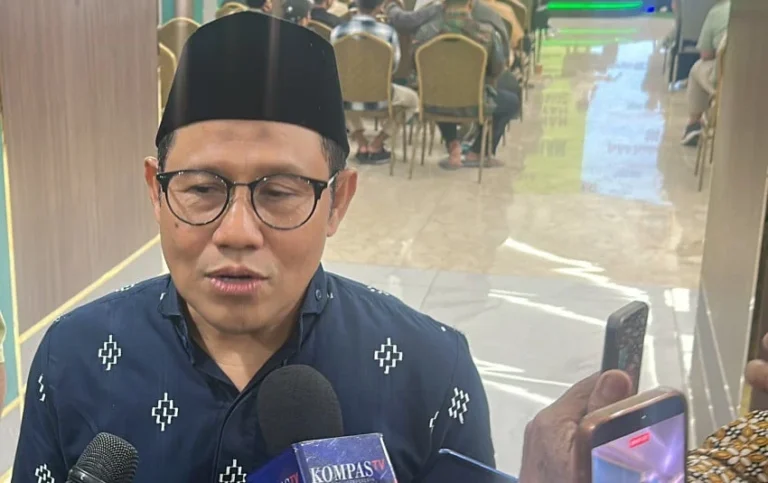
The political discourse surrounding one of Indonesia’s most contentious law enforcement incidents has reignited as lawmakers signal a willingness to re-examine the fatal confrontation known as the KM 50 tragedy. Mardani Ali Sera, a prominent member of House of Representatives (DPR) Commission II, has explicitly endorsed the reopening of the official investigation into the deaths of six members of the disbanded Front Pembela Islam (FPI). This renewed momentum comes amid shifting political dynamics and recent high-profile institutional controversies that have prompted legislators to take a fresh look at past security operations.
The push to revisit the incident is not merely a localized political maneuver; it touches upon core questions of state accountability, the separation of powers, transparency within the Indonesian National Police (Polri), and the rule of law. As civil society organizations and legal experts continue to advocate for comprehensive justice, the stance taken by members of the national legislature suggests that accountability for past state-sanctioned actions remains a potent issue in contemporary Indonesian politics.
Background and Context of the KM 50 Tragedy
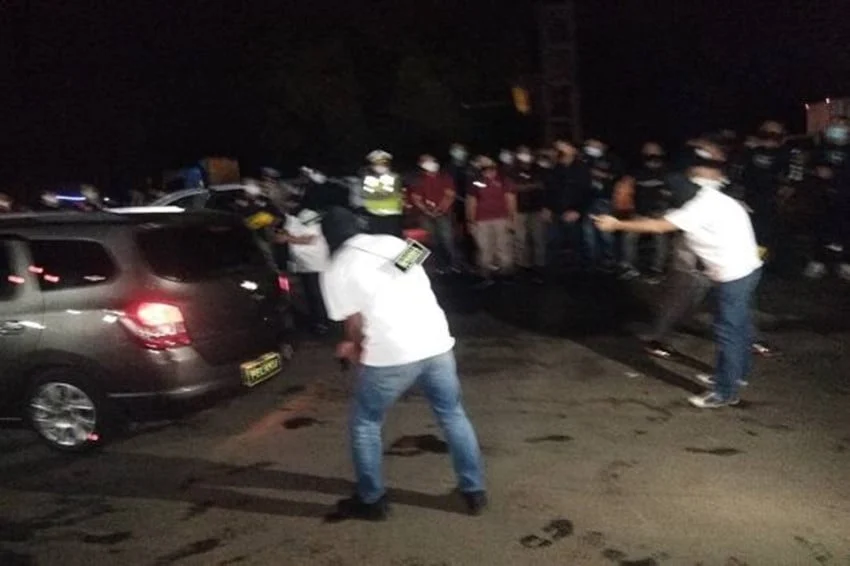
The KM 50 tragedy refers to the violent clash that occurred in the early hours of December 7, 2020, along the Jakarta-Cikampek Toll Road near Kilometer 50 in Karawang, West Java. The incident involved members of the Jakarta Metropolitan Police and supporters of Rizieq Shihab, the charismatic and polarizing leader of the now-outlawed FPI.
At the time, police officers were tailing vehicles carrying Rizieq Shihab and his entourage as part of an investigation into an alleged violation of regional health quarantine protocols during the COVID-19 pandemic. According to official police accounts issued in the immediate aftermath, officers attempted to stop the vehicles, leading to a physical altercation and a shootout in which law enforcement personnel fired in self-defense after allegedly being attacked with firearms and sharp weapons.
Conversely, representatives of the FPI and various human rights organizations presented a drastically different narrative. They asserted that the victims were abducted, tortured, and extrajudicially executed by law enforcement officers. The stark divergence between the official police narrative and the claims made by victims’ families and human rights advocates sparked intense public outcry, demanding an independent and transparent investigation to uncover the true sequence of events.
Chronology of Key Legal and Institutional Developments
To understand the current calls for reopening the case, it is essential to trace the institutional milestones and investigations that followed the initial tragedy:
December 2020: The Incident and Immediate Backlash
Following the fatal shooting of the six FPI members, public pressure forced state institutions to intervene. President Joko Widodo urged transparency, leading to the involvement of the National Commission on Human Rights (Komnas HAM).
January to February 2021: Komnas HAM Findings
Komnas HAM released its official investigative report, concluding that the incident constituted a human rights violation. While the commission acknowledged that the FPI members had resisted arrest and engaged in a struggle, it found that the deaths of four individuals occurred while they were already in police custody and control, effectively labeling their deaths as unlawful killings. Komnas HAM recommended that the case be brought to a criminal court rather than handled solely through internal police disciplinary channels.
March to April 2021: Establishment of the Joint Fact-Finding Team
The National Police established a dedicated investigative team to follow up on the Komnas HAM recommendations. This led to the identification of police suspects and subsequent administrative and legal proceedings.
November 2021: The Court Verdict
Two police officers, Insp. Two Yusmin Reza and Brig. First Fikri Ramadhan, were put on trial at the South Jakarta District Court. In March 2022, the court delivered its verdict, ruling that the officers acted in self-defense during a life-threatening situation, despite acknowledging procedural excesses. Consequently, the defendants were acquitted of criminal charges, leading to widespread disappointment among human rights activists and victims’ families who viewed the legal outcome as a form of impunity.
Catalysts for Reopening: The New Political Landscape
The resurgence of legislative interest in the KM 50 incident is closely tied to broader institutional developments. According to Mardani Ali Sera, a major catalyst for revisiting the case involves startling revelations and recent controversies surrounding high-ranking security figures, including developments tied to former National Police Chief General Listyo Sigit Prabowo and allegations of illegal wiretapping involving prominent national figures, notably President Prabowo Subianto.
Speaking during an interactive television program on iNews TV, Mardani emphasized that these shocking events have altered the political calculus within the legislature. "Setuju, sebetulnya salah satu background itu peristiwa yang sangat mengejutkan terkait penyadapan, ya," stated Mardani, signaling that perceived abuses of intelligence and law enforcement powers in other contexts warrant a comprehensive review of past security operations.
Mardani confirmed that the matter is no longer confined to casual discussions but has officially entered the parliamentary arena. Members of DPR Commission III—the parliamentary committee overseeing legal affairs, human rights, and security—have actively deliberated the feasibility of reopening the investigation. The legislative branch, traditionally deferential to executive and security agencies during high-stakes security operations, is displaying a renewed appetite for parliamentary oversight.
Official Responses and Institutional Posture
The prospect of revisiting the KM 50 tragedy has elicited mixed reactions from current and former military and police officials, reflecting the sensitivity of the subject matter. High-ranking figures have increasingly been forced to address their potential historical links or institutional responsibilities regarding the incident.
For instance, former military leaders have stepped forward to declare their willingness to cooperate with any renewed inquiries. Retired high-ranking generals have publicly stated that they are prepared to face scrutiny, with some asserting that they are willing to step down from public life if evidence directly ties them to institutional wrongdoing or cover-ups during the 2020 operations. This posture contrasts sharply with the defensive stance initially adopted by security institutions in the immediate aftermath of the tragedy.
Meanwhile, civil society organizations, legal aid institutes, and families of the victims have consistently argued that the judicial processes conducted in 2021 failed to address the systemic command responsibility behind the killings. They maintain that while lower-ranking operatives faced trial, the intellectual actors—those who planned, authorized, or oversaw the operational framework that resulted in six fatalities—were never held accountable.
Fact-Based Analysis of Implications and Future Outlook
The political decision to potentially reopen the KM 50 case carries profound implications for Indonesia’s democratic governance, the rule of law, and institutional reform:
-
Strengthening Parliamentary Oversight
By bringing the case back into the purview of DPR Commission III, lawmakers are reasserting their constitutional mandate to oversee the executive branch and security apparatus. This move challenges the historical impunity often associated with state security operations and signals a shift toward greater legislative accountability. -
Restoring Public Trust in Law Enforcement
The Indonesian National Police has faced severe public scrutiny over various controversies in recent years. Reopening an investigation into an incident that severely damaged public trust could serve as a litmus test for the police force’s commitment to internal reform, transparency, and adherence to international human rights standards. -
Legal Precedent and Human Rights Protection
If the investigation is officially reopened and expands beyond the immediate actors to examine command responsibility, it could establish a crucial legal precedent in Indonesia. It would demonstrate that state actors are not immune from prosecution for extrajudicial actions, thereby reinforcing constitutional guarantees of the right to life and due process. -
Political Dynamics in the Current Administration
As the administration of President Prabowo Subianto navigates complex political coalitions, high-profile investigations involving past security controversies can become instruments of political alignment or contention. Analysts note that while reopening the case satisfies public demands for justice, it also risks triggering friction within the security establishment.
Conclusion
The statement by DPR lawmaker Mardani Ali Sera advocating for the reopening of the KM 50 tragedy investigation marks a significant turning point in a long-dormant chapter of Indonesia’s legal and political history. Driven by recent institutional shocks and sustained pressure from civil society, the national legislature is formally evaluating avenues to revisit the deaths of the six FPI members.
While legal hurdles remain significant—particularly concerning the principle of ne bis in idem (double jeopardy) regarding officers already acquitted by a court—the political will to uncover intellectual actors and address systemic shortcomings is visibly growing. Whether this legislative momentum translates into a formal, transparent, and legally binding reinvestigation will depend heavily on the unified resolve of Commission III, the cooperation of security institutions, and the persistent advocacy of the Indonesian public.