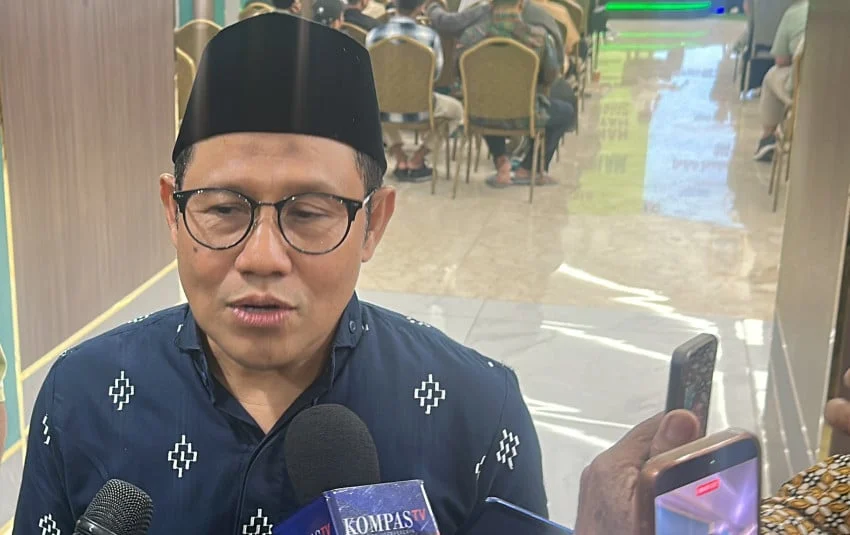
The Chairman of the Central Board of the National Awakening Party (PKB), Abdul Muhaimin Iskandar, has officially voiced his robust endorsement of President Prabowo Subianto’s ongoing initiative to reform and restructure the governance of Indonesia’s vast natural resources. Commonly known as Cak Imin, the senior political figure emphasized that transforming the oversight of the nation’s commodities and extractive industries is not merely an economic adjustment, but a vital strategic maneuver designed to diversify state revenues beyond conventional taxation. Furthermore, this policy serves as a foundational pillar for securing robust, long-term financing models aimed at expanding healthcare guarantees for underprivileged populations across the archipelago.
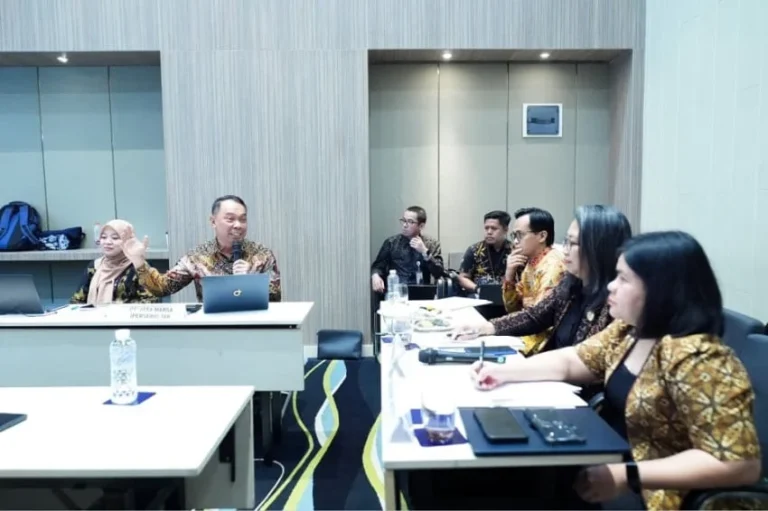
Cak Imin articulated his stance following his attendance at an intensive academic and policy forum titled “Islamic Socialism in Practice,” centered around the theme “From Health Guarantees to Universal Health Rights.” During the event, policymakers, economists, and social advocates engaged in rigorous dialogue regarding the efficacy of existing welfare frameworks, the necessity of rigorous policy evaluation, and the imperative to align national legislation with the fundamental mandates enshrined in the 1945 Constitution. Central to these constitutional mandates is the state’s obligation to ensure comprehensive health coverage under the National Health Insurance (JKN) scheme, particularly for vulnerable and low-income demographics who often bear the brunt of systemic economic disparities.
The Impetus for Reform: Funding Universal Healthcare Through Natural Wealth
Speaking to reporters after the forum concluded, Cak Imin underscored the mathematical realities of financing a truly universal healthcare system for Indonesia’s population of over 275 million people. He revealed that the academic symposium involved detailed fiscal simulations calculating the exact budgetary requirements needed to sustain and expand the JKN program, alongside identifying sustainable revenue streams capable of underwriting these costs without overburdening taxpayers or expanding the national deficit dangerously.
According to Cak Imin, the fiscal mapping exercise pointed unequivocally toward the nation’s abundant natural wealth as the most viable and logical solution. By reclaiming state control and optimizing the economic yields generated from extractive sectors—including mining, forestry, oil, gas, and maritime commodities—the Indonesian government can secure the substantial capital inflows required to subsidize and fortify public welfare initiatives. This approach moves the state away from over-reliance on individual and corporate income taxes, creating a more resilient fiscal architecture insulated from domestic consumption fluctuations.
Addressing Decades of Mismanagement and Under-Evaluation
A core component of Cak Imin’s commentary focused on the historical trajectory of natural resource exploitation in Indonesia. He pointedly observed that the management, distribution, and profitability of the country’s natural assets had suffered from a lack of comprehensive, institutional evaluation over the past three decades. This prolonged oversight vacuum fostered a widespread public perception that the nation’s immense wealth—traditionally described as flowing with milk and honey—was being funneled into the hands of a privileged few, rather than contributing equitably to the collective prosperity of the republic.
For generations, critics have argued that foreign conglomerates and domestic oligarchies reaped disproportionate rewards from Indonesia’s mineral and energy sectors, leaving local communities to deal with environmental degradation and limited infrastructure development. Cak Imin noted that the current administration under President Prabowo Subianto represents a significant departure from past practices. By initiating bold, structural interventions, the executive branch has begun to reassert state sovereignty over strategic commodities, ensuring that the economic rents derived from these assets directly benefit the public purse.
Prabowo’s Concrete Policy Shifts: The Single-Door Export Policy and State Reclamation
The endorsement from PKB’s leadership comes at a time when the Prabowo administration is actively rolling out systemic policy changes designed to overhaul the extractive industry. Among the most prominent of these measures is the implementation of a centralized, single-door export policy for critical minerals and natural resources. This mechanism is engineered to curb illegal smuggling, enhance pricing power on the international stage, ensure accurate royalty collections, and mandate domestic processing to maximize value addition before raw materials leave Indonesian shores.

This aggressive posture aligns with broader national aspirations for resource nationalism, a movement that seeks to transition Indonesia from a mere exporter of raw commodities into a dominant global hub for downstream manufacturing, particularly in the electric vehicle (EV) battery supply chain, green energy components, and advanced industrial metals. By tightening regulatory compliance, auditing existing concession licenses, and revoking permits held by dormant or non-compliant corporations, the government is systematically reclaiming control over millions of hectares of productive land and maritime zones.
Implications for the National Economy and Social Welfare
The intersection of natural resource governance and universal healthcare financing carries profound implications for Indonesia’s socioeconomic landscape. Analysts note that while downstreaming policies and resource nationalism have successfully boosted macroeconomic indicators and foreign direct investment in processing hubs, translating these capital gains into tangible welfare benefits for the average citizen remains the ultimate test for the administration.
By tying resource revenues directly to the JKN expansion, the government is attempting to construct a direct feedback loop between the nation’s subterranean wealth and the daily livelihood of its people. If executed successfully, this strategy could alleviate the financial strains currently facing the Healthcare and Social Security Agency (BPJS Kesehatan), which has frequently grappled with deficit management and provider reimbursement delays. Furthermore, enhanced state revenues from reformed resource management could free up national budget allocations for other critical human capital development sectors, such as education, nutritional programs for children, and poverty alleviation initiatives.
Political Alignment and Coalition Dynamics
Cak Imin’s vocal and public support for President Prabowo’s resource governance agenda also highlights the ongoing consolidation of political alignment within the ruling coalition. As the leader of PKB—a party with deep historical roots in Indonesia’s traditionalist Islamic communities and a vast grassroots network—Cak Imin’s backing provides crucial legislative and social legitimacy for executive policies that might otherwise face pushback from entrenched business interests.
The convergence of religious-social thought, as explored in the "Islamic Socialism in Practice" forum, and pragmatic statecraft demonstrates an ideological effort to frame resource redistribution not merely as a technocratic economic policy, but as a moral and constitutional imperative. By emphasizing that the state’s control over natural resources must translate into the alleviation of poverty and the guarantee of universal human rights, political leaders are building a broad-based consensus that spans both secular governance and faith-based community organizations.
Future Outlook and Challenges Ahead
Despite the optimistic outlook presented by political leaders, experts caution that reforming Indonesia’s natural resource sector is fraught with complex structural challenges. Bureaucratic inertia, potential resistance from vested economic interests, international trade disputes, and the enforcement of environmental standards across remote regions will require unwavering administrative resolve.
Nevertheless, with high-profile political figures like Cak Imin lending institutional weight to President Prabowo’s reform agenda, the momentum for resource nationalism and welfare-oriented fiscal policy appears firmly established. As the government continues to refine its regulatory frameworks and roll out its financial simulations into actionable state budgets, the coming years will serve as a definitive litmus test for whether Indonesia can successfully harness its natural wealth to forge a more equitable, healthy, and prosperous society for all its citizens.