Geopolitical tensions in the Middle East reached a critical new phase following a series of maritime security incidents and high-level military declarations originating from Tehran. The Iranian military asserted absolute authority over a vast expanse of strategic maritime territory stretching from the eastern approaches of the Strait of Hormuz to the northern reaches of the Indian Ocean. This assertive posture coincided with official state commemorations observing the annual National Navy Day of Iran.
The official declaration, delivered via public digital platforms by senior military spokesperson Mohammad Akraminia, underscores Tehran’s persistent strategic focus on securing its coastal perimeters and projecting power across vital energy transit corridors. However, this projection of maritime dominance was dramatically underscored by simultaneous reports from the Islamic Revolutionary Guard Corps (IRGC) detailing operational kinetic events involving commercial shipping assets operating within the broader Persian Gulf and Gulf of Oman theater.
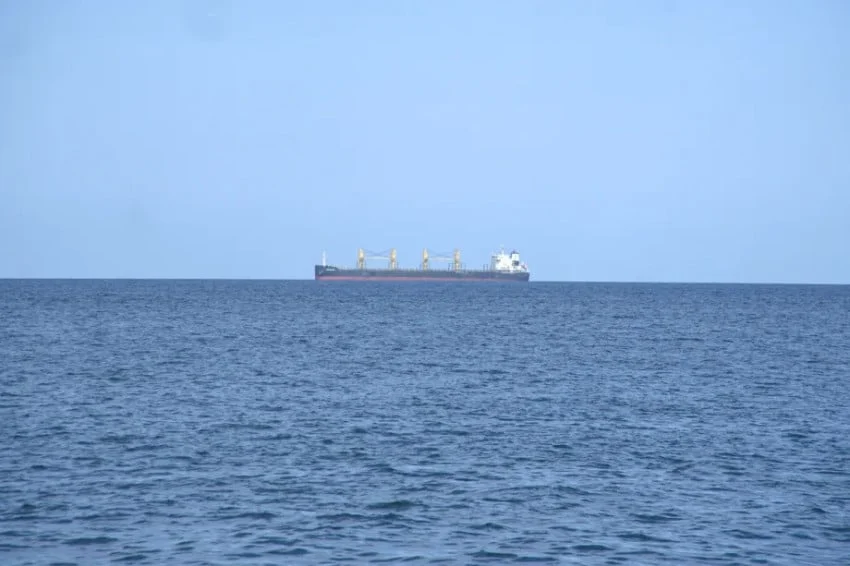
According to official dispatches released through Iran’s state-run broadcasting network, IRIB, two distinct oil tankers suffered catastrophic hull breaches resulting in explosions and subsequent fires. The vessels reportedly struck underwater ordnance—specifically naval mines—while navigating through sensitive choke points near the Omani port city of Khasab and the eastern waterways of the Strait of Hormuz. These developments have immediately galvanized international maritime security agencies, prompting emergency warnings, heightened surveillance protocols, and urgent risk assessments across the global shipping and energy sectors.
The Geopolitical Significance of the Strait of Hormuz
To fully contextualize the gravity of the recent naval incidents, one must examine the disproportionate economic and strategic importance of the Strait of Hormuz. Serving as the world’s most critical petroleum transit chokepoint, the narrow waterway connects the Persian Gulf with the Gulf of Oman and the Arabian Sea. At its narrowest point, the channel is merely 21 miles wide, with inbound and outbound shipping lanes each only two miles wide, separated by a two-mile buffer zone.
Historically, approximately one-fifth of the world’s total petroleum consumption passes through this maritime artery daily. Major producers including Saudi Arabia, the United Arab Emirates, Kuwait, Iraq, and Iran itself rely heavily on the strait to export crude oil and liquefied natural gas (LNG) to global markets, particularly across energy-hungry economies in Asia, Europe, and North America. Any disruption, real or perceived, within this corridor instantly triggers volatility in global crude futures, driving up insurance premiums for commercial vessels and threatening worldwide supply chain stability.
In recent years, the maritime theater surrounding the Strait of Hormuz has frequently served as a flashpoint for asymmetric naval confrontations, vessel seizures, and electronic warfare. The introduction of physical naval mines into this equation marks a severe escalation in tactical complexity, shifting the threat matrix from electronic harassment and surface-vessel intercepts to indiscriminate sub-surface hazards capable of crippling multi-million-dollar commercial assets regardless of national registry or cargo destination.
Chronology of Events and the IRGC Operations Report
The sequence of security disruptions unfolded rapidly, drawing immediate attention from regional observers and international naval coalitions. The timeline of the crisis highlights a coordinated operational narrative presented by Iranian military forces coupled with urgent distress calls monitored by international maritime authorities.
According to the IRGC Navy’s official statements broadcast via IRIB, the first incident occurred during the early hours when an unspecified commercial oil tanker made direct contact with an underwater explosive device in the immediate vicinity of the port of Khasab, located on the Musandam Peninsula of Oman. The vessel sustained significant structural damage along its starboard waterline, igniting fuel tanks and triggering an emergency distress response from the crew.
Hours later, a second maritime asset—identified broadly as a commercial oil tanker navigating through a secondary, non-official shipping route east of the Strait of Hormuz—encountered a similar fate. The IRGC asserted that this second vessel detonated a marine mine while attempting to bypass standard routing protocols.
Crucially, the Iranian paramilitary branch levied specific accusations against the targeted vessels, claiming that both ships had deliberately deactivated their Automatic Identification System (AIS) transponders. By disabling their tracking systems, the operators allegedly sought to slip through the guarded waters undetected, circumventing regional monitoring frameworks.
Following the dual blasts, the IRGC Navy issued a sweeping and unambiguous warning to commercial shipping operators and external military actors alike. The command explicitly stated that the secondary transit corridors east of the strait are heavily saturated with defensive naval ordnance. Furthermore, the IRGC direct-addressed foreign military involvement, asserting that regional air cover and defensive escorts provided by United States military assets would prove wholly ineffective in shielding vessels attempting unauthorized transits through the mined zones.
International Maritime Monitoring and Allied Responses
The turbulence in the Gulf of Oman did not go unnoticed by international oversight bodies tasked with safeguarding global commerce. The United Kingdom Maritime Trade Operations (UKMTO), an organization operating under the Royal Navy that acts as the primary communication channel between military forces and merchant shipping, issued a formal security advisory confirming receipt of critical incident reports.
The UKMTO bulletin noted that maritime authorities had logged emergency signals regarding a disturbance “involving one cargo vessel and military forces in the Gulf of Oman.” While initial advisories focused on verifying the status of the affected crews and coordinating potential search-and-rescue or firefighting operations, the broader international community quickly mobilized intelligence assets to ascertain the exact nature of the explosive devices and verify the safety of surrounding commercial traffic.
Naval coalitions operating in the region, including the United States Fifth Fleet headquartered in Bahrain and the European-led European Maritime Awareness in the Strait of Hormuz (EMASOH), faced immediate operational challenges. Maritime security analysts pointed out that the deployment of sea mines introduces extreme complications for mine countermeasures (MCM) vessels. Detecting and clearing moored or drifting contact mines in deep and shallow littoral waters requires specialized robotic and acoustic sweeping equipment, a process that can take days or weeks, thereby paralyzing commercial traffic in the interim.
Strategic Implications and Economic Fallout
The convergence of Iran’s declaration of operational control from the eastern Strait of Hormuz to the northern Indian Ocean and the physical mining incidents carries profound economic and geopolitical implications.
1. Surging Energy Markets and Insurance Premiums
The immediate economic shockwave of the explosions registered almost instantaneously across global commodities exchanges. Brent Crude and West Texas Intermediate (WTI) futures experienced upward pressure as energy traders factored in the heightened risk premium associated with Persian Gulf shipping. Furthermore, marine war risk insurance underwriters are expected to exponentially increase rates for vessels operating within the designated high-risk zones, severely squeezing profit margins for shipowners and inflating retail energy costs worldwide.
2. Militarization of Global Trade Routes
The incident highlights the vulnerability of global trade to asymmetric warfare tactics. The use of low-cost naval mines to disrupt high-value commercial shipping demonstrates an asymmetric capability that can paralyze regional commerce without requiring a symmetric blue-water naval engagement. This development is likely to accelerate calls from maritime nations for enhanced naval escorts, mandatory tracking protocols, and expanded intelligence-sharing agreements among allied naval forces operating in the Indo-Pacific and Middle Eastern theaters.
3. Escalation of Diplomatic Strains
Diplomatically, the assertions made by military officials like Mohammad Akraminia, combined with the aggressive posture of the IRGC, complicate ongoing diplomatic efforts aimed at regional de-escalation. Neighboring Gulf states—particularly Oman, whose territorial waters and adjacent maritime zones played host to the kinetic events—face delicate balancing acts as they strive to maintain neutrality while safeguarding their own coastal infrastructure and economic stability.
As regional authorities work to secure the affected waterways, account for missing or injured crew members, and conduct sweeping operations to neutralize remaining sub-surface threats, the international community remains on high alert. The events in the Gulf of Oman serve as a stark reminder of the fragility of maritime security along the world’s most vital energy corridors, where a single localized explosion can send reverberations across the entire global economy.