Socio Today
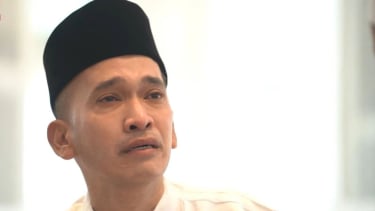
The entertainment industry in Indonesia is once again focusing its attention on the personal life of television personality Ruben Onsu, following a public statement he made regarding his daughter, Thania, and her interactions with family acquaintance Giorgio Antonio. On Saturday, September 12, 2026, Ruben Onsu took to his personal Instagram account to express his disapproval after a video surfaced showing Thania being held on the lap of Giorgio Antonio during a meal. The incident has triggered a broader discourse regarding the upbringing of children, the necessity of establishing social boundaries, and the nuances of parental influence, all occurring against the backdrop of an ongoing legal separation and custody dispute between Ruben Onsu and his wife, Sarwendah.
The Instagram Post and Public Reaction
In his social media post, Ruben Onsu highlighted his stance on child independence. Addressing the situation directly, he stated that while he appreciates the camaraderie of those dining with his children, he believes it is vital for adults to foster independence in children. He explicitly noted that his daughter, Thania, is at an age where she is fully capable of sitting independently beside her siblings, suggesting that the act of placing her on an adult’s lap is unnecessary and potentially counterproductive to her development.
"The happiness of an uncle being able to eat with my children is appreciated, but there is no need for her to be held on a lap. Thania can sit by herself next to her sister. Do not say that it is what the child wants; it is the adults who must teach them," Ruben wrote.
The post immediately garnered significant traction, prompting thousands of comments from followers and casual observers. The discourse quickly bifurcated; while some users supported Ruben’s call for maturity and the establishment of physical boundaries, others criticized the public nature of the critique, suggesting that such matters should be handled within the family circle. A segment of the audience redirected their commentary toward Sarwendah, questioning her supervision during the event. This public scrutiny reflects the heightened sensitivity surrounding the family’s private life, which has been under intense media observation since the initiation of their legal proceedings.
Background and Context: A Family Under Public Scrutiny
To understand the intensity of the public reaction, one must consider the timeline of the events currently surrounding the Onsu family. In 2026, the couple, who were once considered a benchmark for harmonious celebrity marriages, entered into a complex legal separation. The focus of the current legal tension is primarily the custody of their children, a matter that has become a recurring topic in domestic media.

The legal proceedings, which began in early 2026, have been marked by a series of mediations. These sessions are intended to resolve disputes regarding parental rights and the future living arrangements of the children. However, the media coverage of these mediations has often been sensationalized, leading to a public that is hyper-aware of every interaction involving the family members. The recent Instagram post by Ruben is seen by many analysts as an extension of the underlying tension between the parents regarding their respective philosophies on childcare and social conduct.
The Role of Boundaries in Child Development
Psychologists and parenting experts often emphasize that teaching children about physical boundaries is a critical component of their social and emotional growth. As children transition out of early childhood, the reinforcement of independence—such as sitting in a separate chair during meals—is a common practice used to foster self-reliance.
However, the debate triggered by Ruben Onsu’s post goes beyond simple physical independence. It touches upon the cultural expectations of "public figures" in Indonesia. In the Indonesian cultural context, displays of affection toward children by close friends or family friends (often referred to as "uncles" or "aunties") are common. By publicly challenging this norm, Ruben has inadvertently sparked a debate about whether such traditional norms should evolve. Critics of the incident argue that as children grow older, constant physical proximity to adults—other than parents or close relatives—should be limited to protect the child’s autonomy. Conversely, defenders of the status quo argue that such interactions are benign expressions of familial warmth, and that framing them as a failure of parenting is an overreach.
Legal and Social Implications
The ongoing custody battle adds a layer of gravity to every public action taken by both Ruben Onsu and Sarwendah. In family law, specifically in cases involving custody, any public statement regarding the upbringing or the welfare of the children can be scrutinized by legal counsel.
On September 10, 2026, just two days prior to the Instagram post, legal representatives for Ruben Onsu, led by Minola Sebayang, addressed the media regarding the progress of the mediation process. They clarified several points, including debunking rumors that Ruben had refused health screenings required for the custody process. This context suggests that the atmosphere between the two parties is currently strained. The decision by Ruben to address the "lap-sitting" incident publicly, rather than privately with Sarwendah, suggests a potential breakdown in direct communication channels between the parents.
Broader Impact on Celebrity Parenting Narratives
This event serves as a case study in how social media has changed the landscape for celebrity parents. Historically, private disagreements were shielded from the public eye. Today, the platform provides an arena for parents to exert their influence or express their grievances, often with the public acting as a jury.
For the public, this incident serves as a reminder of the pressures faced by children of celebrities. While the debate regarding "boundaries" and "independence" is valid in a developmental context, the public nature of the discourse places the child in the center of a narrative they cannot control. Media analysts suggest that this specific incident will likely increase the scrutiny on any future appearances involving the children, as the public now expects to see how these "boundaries" are enforced in real-time.
Analysis of the Media Response
The discourse surrounding this event has been characterized by a high volume of anecdotal commentary. A common sentiment expressed by netizens is the comparison between age groups. Many comments noted that while it is standard for a two-year-old to be held, a child entering the school-age phase should be encouraged to interact independently. This indicates that the public is not necessarily against affection, but is specifically concerned with the developmental appropriateness of the behavior in question.
However, the politicization of these comments is notable. Because the family is currently involved in a high-profile custody dispute, every comment directed at Sarwendah—such as those urging her to teach the children "boundaries"—is viewed as an indirect commentary on her fitness as a parent. This creates a toxic feedback loop where public criticism is used as a tool to validate one parent’s position over the other.
Conclusion and Future Outlook
As the legal proceedings between Ruben Onsu and Sarwendah continue, the public remains deeply invested in the outcome. The Instagram post regarding Thania is not merely a comment on a mealtime interaction; it is a symptom of a larger, ongoing shift in the family dynamic.
Experts in family mediation often advise that during custody battles, parents should refrain from making public comments that could be construed as criticizing the other parent’s style of child-rearing. Such actions can often complicate the mediation process and increase the emotional burden on the children involved. Whether this incident will influence the upcoming court sessions remains to be seen, but it has certainly cemented the fact that for the Onsu family, the line between private parenting and public discourse has effectively vanished.
Moving forward, the public and media are expected to continue monitoring the family’s situation. The focus will likely shift from the minor details of daily interactions to the broader legal developments as the courts work toward a resolution that prioritizes the welfare of the children. For now, the incident remains a stark example of the challenges inherent in modern parenting, particularly when that parenting occurs in the unforgiving glare of the public spotlight. As the case progresses, the priority for all parties involved, including the legal representatives and the parents, remains the stability and well-being of the children, regardless of the differing philosophies regarding their upbringing.