Socio Today
Deep-sea explorers and maritime historians have confirmed the discovery of the wreckage of a Pan American Airways Douglas DC-4 that vanished over seven decades ago, marking the end of one of the most significant mysteries in mid-century aviation. The debris was located at a depth of approximately 610 meters (2,000 feet) on the ocean floor, situated off the rugged northern coast of Puerto Rico. This discovery, facilitated by advanced autonomous underwater technology, brings a somber resolution to a tragedy that occurred in 1952 and subsequently reshaped the landscape of global aviation safety standards.
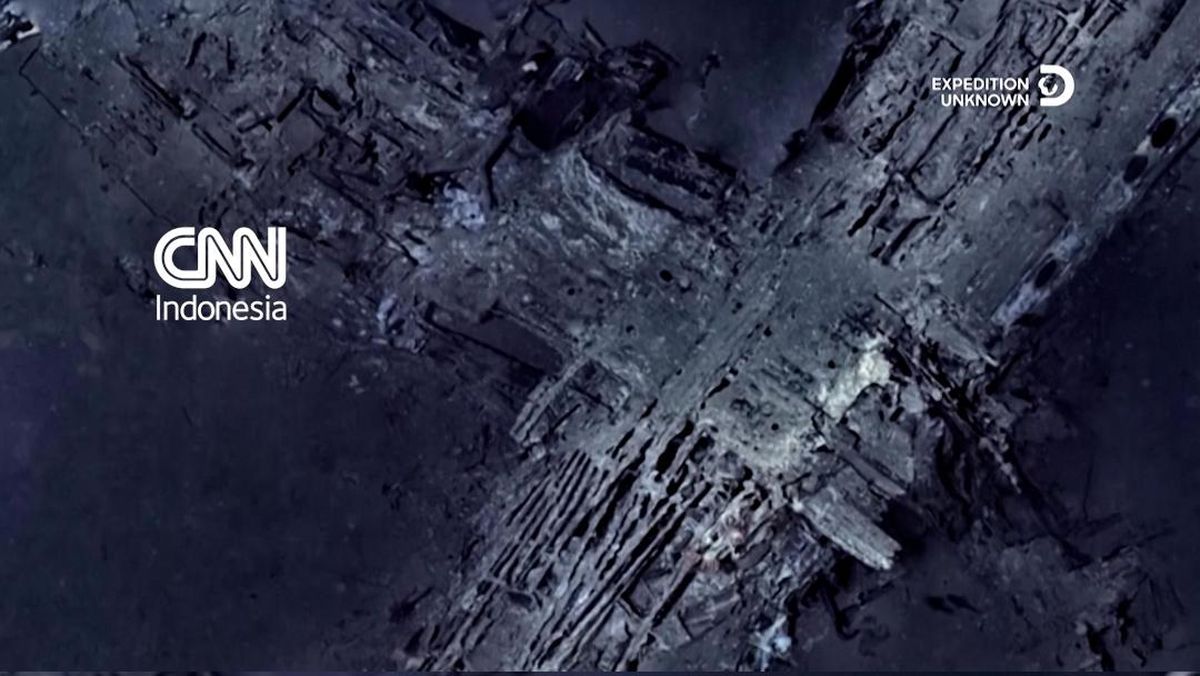
The identification of the aircraft was made possible by an Autonomous Underwater Vehicle (AUV) equipped with high-resolution imaging systems. During a targeted sweep of the seabed, the drone captured clear footage of the aircraft’s fuselage, specifically the distinctive Pan American "Clipper" logo still visible on the nose of the wreckage. The discovery concludes a 72-year search for the final resting place of the 52 passengers and crew members who perished in the disaster, an event that served as a catalyst for the rigorous safety protocols that modern air travelers now take for granted.
The Discovery Mission: Merging History with High-Tech Exploration
The successful location of the Pan Am wreckage is the result of a sophisticated maritime search operation involving underwater archaeologists and specialized recovery teams. Utilizing a combination of historical flight data, oceanographic current modeling, and state-of-the-art sonar, the team narrowed the search area to a specific corridor north of San Juan. The Puerto Rico Trench, which lies nearby, is known for its extreme depths and volatile underwater topography, making any search in this region a logistical challenge.
The AUV used in the mission was programmed to conduct "mowing the lawn" patterns across the seabed, using side-scan sonar to detect anomalies in the terrain. When the sonar picked up a large metallic signature inconsistent with natural rock formations, the team deployed a Remotely Operated Vehicle (ROV) to take visual samples. The images returned were striking: despite 72 years of immersion in saltwater, the structural integrity of the Douglas DC-4 remained remarkably recognizable. The presence of the iconic Pan American Airways branding provided the definitive evidence needed to confirm the aircraft’s identity.
Historians involved in the project noted that the cold, high-pressure environment at 610 meters helped preserve certain elements of the aircraft. While the wings and tail sections showed significant damage consistent with a high-impact water landing, the forward section of the cabin remained largely intact, serving as a silent monument to the 1952 tragedy.
Chronology of the 1952 Disaster: Pan Am Flight 526A
To understand the weight of this discovery, one must look back to the morning of April 11, 1952. Pan American World Airways Flight 526A was scheduled for a routine flight from San Juan, Puerto Rico, to Idlewild Airport (now John F. Kennedy International Airport) in New York City. The aircraft, a Douglas DC-4 dubbed the "Clipper Endeavor," carried 64 passengers and five crew members.
The flight took off at approximately 12:11 PM. However, within minutes of departure, the crew experienced a catastrophic mechanical failure. The number three engine began to fail, followed shortly by complications with the number four engine. Realizing that the aircraft could not maintain altitude or return to the runway at Isla Grande Airport, the pilot, Captain John Burn, made the harrowing decision to attempt an emergency "ditching" in the Atlantic Ocean.
The ditching occurred roughly 11 miles north of San Juan. The sea conditions at the time were reported as rough, with swells reaching heights of 15 feet. Despite the violent impact, Captain Burn managed to bring the aircraft down in a way that allowed it to remain afloat for several minutes. However, the chaos that followed revealed a lethal gap in aviation preparedness.
The Struggle for Survival and the Toll of the Crash
While the aircraft stayed buoyant for a short window, the lack of accessible life rafts and life vests proved fatal for the majority of those on board. In the panic of the sinking cabin, many passengers were unable to evacuate before the DC-4 slipped beneath the waves. Of the 69 people on board, only 17 survived. The remaining 52 individuals, including children and infants, were lost to the sea.
The rescue operation was hampered by the heavy swells, which made it difficult for Coast Guard vessels and nearby merchant ships to locate survivors in the water. The survivors who were pulled from the ocean recounted stories of extreme bravery and desperation, describing how the aircraft’s lights failed almost immediately after impact, leaving them in near-total darkness as the cabin filled with water.
The loss of 52 lives sent shockwaves through the United States and the Caribbean. At the time, Pan Am was considered the "World’s Most Experienced Airline," and a disaster of this magnitude on a routine route prompted an immediate and intense investigation by the Civil Aeronautics Board (CAB), the predecessor to the modern National Transportation Safety Board (NTSB).
A Turning Point for Global Aviation Safety
The discovery of the wreckage serves as a reminder of why Flight 526A is cited in nearly every history of aviation safety. The investigation into the crash revealed that while the mechanical failure was the primary cause of the ditching, the high death toll was a direct result of inadequate safety equipment and lack of passenger briefing.
Prior to 1952, safety demonstrations—now a ubiquitous part of the pre-flight routine—were not standardized. Many passengers on Flight 526A did not know where the life vests were located or how to properly secure them. Furthermore, the life rafts were stored in a manner that made them difficult to deploy during a rapid sinking.
As a direct consequence of the Pan Am Flight 526A disaster, the CAB implemented sweeping reforms:
- Mandatory Safety Briefings: Airlines were required to provide oral and visual instructions to passengers regarding emergency exits and the use of flotation devices before every takeoff.
- Accessible Life Vests: Regulations were changed to ensure that life vests were stored under each individual seat, rather than in overhead bins or remote lockers.
- Improved Ditching Procedures: Training for flight crews was overhauled to include specific drills for water landings, focusing on rapid evacuation and raft deployment.
- Enhanced Raft Design: The industry moved toward self-inflating rafts that could be deployed more quickly in rough seas.
These changes transformed the "survival culture" of the airline industry. Experts estimate that the protocols established in the wake of the 1952 crash have saved thousands of lives in subsequent water-related incidents, including the famous "Miracle on the Hudson" in 2009.
Technical Specifications: The Douglas DC-4 "Skymaster"
The aircraft found on the seabed, the Douglas DC-4, was a workhorse of the post-World War II era. Originally developed as a military transport (the C-54), the DC-4 played a pivotal role in the expansion of commercial transoceanic travel.
- Engine Type: Four Pratt & Whitney R-2000 radial engines.
- Capacity: Typically 44 to 86 passengers.
- Range: Approximately 3,300 miles, making it ideal for the New York-San Juan corridor.
- Cruising Speed: 227 mph.
The DC-4 was noted for its reliability, but its lack of pressurization meant it flew at lower altitudes, often exposing it to more turbulent weather and making engine performance critical. The failure of two engines on the "Clipper Endeavor" was an extremely rare and catastrophic occurrence for this model, suggesting that either fuel contamination or a severe mechanical synchronization error occurred shortly after takeoff.
Implications of the Discovery and Closure for Families
For the descendants of the 52 victims, the discovery of the wreckage provides a long-overdue sense of closure. For decades, the Atlantic Ocean was a vast, unmarked grave. The confirmation of the plane’s location allows for the site to be officially recognized as a maritime memorial.
Legal and archaeological experts have indicated that the site will likely be protected under the Sunken Military Craft Act or similar international maritime heritage laws, even though it was a commercial vessel, due to its historical significance and the fact that it contains human remains. There are currently no plans to raise the wreckage, as the depth and the fragile state of the aluminum fuselage would make a recovery effort prohibitively expensive and technically risky.
Instead, the focus will remain on documentation. The expedition team plans to create a 3D photogrammetric model of the site, allowing historians and the public to "visit" the wreckage virtually without disturbing the environment. This digital preservation ensures that the lessons learned from Flight 526A are never forgotten.
Conclusion: A Legacy Beneath the Waves
The discovery of the Pan Am Douglas DC-4 off the coast of Puerto Rico is more than a feat of modern underwater engineering; it is a bridge to a formative era of the jet age. It serves as a stark reminder of the costs of progress and the lives lost in the pursuit of safer skies.
As the aviation industry continues to evolve with satellite-based tracking and automated flight systems, the image of the Pan Am logo resting 610 meters below the surface stands as a testament to the endurance of history. The 1952 crash was a tragedy of mechanical failure and procedural inadequacy, but the reforms it birthed have ensured that for the millions of passengers who fly today, the "safety briefing" is not just a formality, but a life-saving legacy of the 52 souls lost north of San Juan.