Socio Today
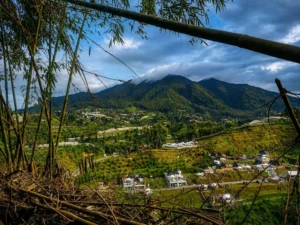
The village of Warangan, situated in the fertile highlands of the Magelang Regency, became the epicenter of an extraordinary cultural gathering from July 10 to July 12, 2026. This period marked the 25th anniversary of the Festival Lima Gunung (Five Mountains Festival), a silver jubilee for an event that has grown from a grassroots community initiative into one of Indonesia’s most significant independent cultural spectacles. Organized by the Komunitas Lima Gunung (Five Mountains Community), the festival serves as a collaborative platform for various art groups residing on the slopes of five major peaks in Central Java: Mount Merapi, Mount Merbabu, Mount Andong, Mount Sumbing, and the Menoreh Hills. Unlike many modern festivals that rely on corporate sponsorship or state-driven tourism agendas, this event remains a testament to the power of independent, community-funded cultural preservation.
The 25th edition of the festival adopted a provocative and counter-intuitive theme: "Makin Goblok Bareng," which translates roughly to "Becoming More Foolish Together." Far from being an endorsement of ignorance, the theme was designed as a profound social critique of the contemporary digital age. Organizers and community elders conceptualized the theme as a call for radical humility. In an era where social media often encourages individuals to project an image of omniscience and moral superiority, "Makin Goblok Bareng" invites participants to shed their egos, acknowledge their limitations, and remain open to continuous learning. It is a philosophical return to the roots of human connection, where wisdom is found in collective experience rather than individual posturing.

The Philosophical Foundations and Context of the Five Mountains Community
The Festival Lima Gunung was founded at the turn of the millennium, born from the vision of local artists and thinkers such as Sutanto Mendut and other village leaders who sought to bridge the gap between traditional agrarian life and the rapidly changing modern world. Over the past two and a half decades, the festival has moved from village to village, ensuring that the cultural and economic benefits of the event are distributed among the various mountain communities. The selection of Warangan as the host for the 25th anniversary is significant; the village is known for its deep-rooted traditions and its ability to mobilize its residents for large-scale communal efforts.
The community operates on a principle of "independent culture." There are no tickets sold, no high-profile corporate logos plastered on stages, and no government-mandated programming. Instead, the festival is fueled by the spirit of "gotong royong" (mutual cooperation). Each participating group brings their own costumes, props, and food, while the host village provides the space, logistics, and hospitality. This model has allowed the festival to maintain a level of creative freedom and authenticity that is increasingly rare in the globalized art world.
Chronology of the Three-Day Celebration
The festival’s timeline was meticulously planned to showcase a blend of ritual, performance, and social gathering. The first day, July 10, focused on the "opening of the gates," where visitors were greeted by massive art installations made from organic materials found in the surrounding forests and fields. These structures, primarily crafted from bamboo, straw, and palm fibers, served as both landmarks and symbols of the community’s bond with the environment.

By the second day, July 11, the festival reached its artistic peak. From dawn until late into the night, the main stage and various clearings throughout Warangan were filled with the sounds of gamelan, drums, and the rhythmic chanting of performers. This was the day of the major dance dramas and contemporary interpretations of ancient myths. Despite the intense heat of the midday sun, which forced many spectators to seek shade or use umbrellas, the attendance remained high, with thousands of visitors from neighboring regencies and international tourists filling the village lanes.
The final day, July 12, was dedicated to the "Arak-arakan Hasil Bumi" or the parade of the earth’s harvest. This ritualistic procession is the emotional heart of the festival, representing the agrarian community’s gratitude for the fertility of the volcanic soil. The festival concluded with a communal feast and a closing ceremony that emphasized the theme of humility, reminding everyone that while the performances were over, the work of "learning together" would continue in their daily lives.
Artistic Innovation through Natural Materials
One of the most striking features of the 25th Festival Lima Gunung was the integration of art into the natural landscape of Warangan. The village was transformed into a living gallery. Before reaching the main performance area, visitors navigated through a series of unique installations. These were not permanent structures but ephemeral creations that would eventually return to the earth.

The use of bamboo and straw was not merely a matter of convenience; it was a deliberate choice to highlight the sustainability of mountain life. Elaborate arches, humanoid figures, and abstract shapes were woven together with intricate techniques passed down through generations. These installations provided a backdrop for a small gallery that housed documentation of the festival’s 25-year history. This archive allowed younger participants to see the evolution of the event, from its humble beginnings to its current status as a cultural powerhouse.
Symbolism in Performance: The Mahesasura Dance
Among the dozens of performances that took place, the presentation by the Mahesasura group from Sanggar Seni Batara was particularly resonant with the festival’s theme. The dancers were adorned in costumes that blurred the line between the human and the elemental. Utilizing dry grass, coarse fibers, and dark leaves, the performers transformed into "Mahesa" or buffalo-like figures. Their masks, characterized by fierce, determined expressions, were carved with meticulous detail.
The Mahesasura dance is a traditional narrative that explores the duality of human nature. The buffalo, while a symbol of strength and the backbone of agrarian labor, also represents raw impulse and untamed anger in Javanese mythology. The choreography depicted a struggle to control these "wild" traits. In the context of the theme "Makin Goblok Bareng," the dance served as a reminder that the greatest obstacle to wisdom is the inability to control one’s own ego and base desires. It suggested that true harmony in a community can only be achieved when individuals master their internal "beasts" and approach one another with a spirit of service.

The Arak-arakan: A Ritual of Agrarian Gratitude
The agricultural identity of the Five Mountains was most visible during the harvest parade. Residents dressed in traditional Javanese attire, such as "beskap" and "kebaya," processed through the village carrying "gunungan"—tall, mountain-shaped structures made entirely of agricultural produce. These gunungan were laden with corn, long beans, eggplants, chilies, and various tubers.
This parade is more than just a visual spectacle; it is a sacred act of thanksgiving. The communities living on the slopes of Merapi and Merbabu are acutely aware of the precarious nature of their existence, living in the shadow of active volcanoes. The fertility provided by volcanic ash is a gift that is never taken for granted. By parading their crops, the villagers acknowledge their dependence on the land and their responsibility to steward it. At the end of the parade, the produce is often distributed among the crowd, symbolizing the redistribution of wealth and the importance of ensuring that no one in the community goes hungry.
Socio-Economic Impact and the Power of Gotong Royong
While the Festival Lima Gunung is primarily a cultural event, its socio-economic implications for the Magelang Regency are profound. For three days, Warangan became a hub of micro-economic activity. Local households opened their doors as homestays, and small-scale vendors sold traditional snacks and handmade crafts. However, unlike commercial festivals that seek to maximize profit, the economic activity here is viewed as a byproduct of hospitality rather than the main goal.

The "gotong royong" model of the festival offers a compelling alternative to the commercialization of culture. In a world where "festivalization" often leads to the sanitization of local traditions for tourist consumption, the Five Mountains Community has managed to keep its rituals raw and authentic. The funding comes from the "jimpitan" (small community collections) and the personal contributions of the artists themselves. This financial independence ensures that the festival’s message remains untainted by external interests.
Broader Implications and Cultural Analysis
The success of the 25th Festival Lima Gunung provides several key insights into the state of contemporary Indonesian culture. First, it demonstrates that traditional arts are not static relics of the past but are dynamic tools for social commentary. By using ancient dance forms to critique modern digital behavior, the community proves that tradition can be more "current" than the latest viral trend.
Second, the festival highlights the importance of "place-based" culture. The five mountains are not just geographical markers; they are spiritual and cultural anchors for the people who live there. The festival reinforces this connection to the land, providing a sense of identity and belonging in an increasingly fragmented world.

Finally, the theme "Makin Goblok Bareng" serves as a vital reminder for the broader global community. In an age of polarization, the invitation to "be foolish together"—to admit we do not have all the answers—is perhaps the most sophisticated message one could offer. It is a call for a "digital detox" of the soul, urging people to replace online arrogance with face-to-face empathy and shared labor.
As the final echoes of the gamelan faded into the mountain mist on the evening of July 12, the 25th Festival Lima Gunung left behind more than just memories. It reinforced a blueprint for how communities can preserve their heritage through self-reliance and collective will. For the visitors who descended from Warangan back to the cities, the festival offered a rare opportunity to pause, reflect, and perhaps embrace a little more of that "foolishness" that leads to true wisdom. The legacy of the Five Mountains continues to grow, not through the expansion of its budget, but through the deepening of its roots and the humility of its practitioners.