
The 17th Conference of the Parties to the United Nations Convention on Biological Diversity (CBD COP 17), convening from October 19 to 30, 2026, in Yerevan, Armenia, has emerged as a defining moment for the future of global ecological order. This landmark summit serves as the platform where the UN Convention on Biological Diversity will conclude its first-ever Global Review of collective progress toward the Kunming-Montreal Global Biodiversity Framework (KM-GBF). Adopted during COP15, the KM-GBF set forth ambitious targets to halt and reverse nature loss by the end of the decade. However, as international delegates gather in Yerevan to evaluate these commitments, grassroots voices and civil society organizations have brought to light a stark discrepancy between high-level political rhetoric and the grim realities unfolding on the ground.
While the Global Review is structurally designed to measure whether nations are translating international pledges into tangible environmental action, a coalition of non-governmental organizations argues that systemic policy failures continue to accelerate ecological degradation. Activists, indigenous leaders, and environmental watchdogs have underscored that meaningful biodiversity conservation is impossible without foundational reforms. Chief among these demands are the complete elimination of harmful state subsidies, the rejection of artificial commercial compensation schemes such as biodiversity offsets, and the unconditional legal recognition of Indigenous Peoples and local communities as stewards and leaders of conservation.
The Fiscal Paradox: Subsidizing Ecological Destruction
One of the most formidable hurdles hindering the achievement of the KM-GBF targets is the pervasive misalignment of national budgets and fiscal incentives. During the Yerevan conference, environmental policy organizations brought sharp focus to the paradoxical financial flows maintained by governments, particularly in nations endowed with critical tropical rainforests. Despite international agreements to protect ecosystems, many developing and emerging economies continue to channel trillions of local currency units and fiscal incentives into industrial sectors that drive environmental destruction.
Spatial analyses presented by civil society groups, such as MADANI Berkelanjutan, reveal alarming overlaps between protected biomes and commercial activities. In Indonesia, for instance, approximately 5.9 million hectares of key conservation areas sit within active industrial concessions. Of this expansive acreage, roughly 2.12 million hectares overlap with government-designated National Strategic Projects (PSN) focused on food and energy expansion. Top-down state policies frequently employ the justification of national development to legitimize intensive land conversion.
Financial tracking reports further illustrate this systemic misalignment. Data from state plantation fund management bodies indicate that biofuel development initiatives—such as the ambitious B50 program, projected to require between 4.1 million and 11.2 million hectares of land—have secured fiscal incentives valued at up to 50.3 trillion rupiah. Such robust financial backing directly stimulates large-scale deforestation and ecosystem fragmentation.
This financial reality flies in the face of Target 18 of the KM-GBF, which explicitly mandates that governments identify, phase out, or reform harmful incentives and subsidies by at least $500 billion per year by 2030. Giorgio Budi Indrarto, a board member of MADANI Berkelanjutan, emphasized during a side event at CBD COP 17 that very few tropical rainforest nations have demonstrated genuine political will to curb subsidies that harm nature. Instead, state funds continue to flow toward plantations and extractive industries that fuel deforestation.
"Governments hold the money, but they are moving in the wrong direction," Indrarto stated. "Misdirected fiscal incentives are exacerbating ecosystem degradation and accelerating the loss of biological diversity."

This fiscal contradiction is not unique to Indonesia. In Colombia, overzealous agricultural subsidies have catalyzed heavy reliance on chemical fertilizers and monoculture farming, severely disrupting natural habitats. Meanwhile, in Brazil, an analysis by the Institute of Socioeconomic Studies (INESC) highlighted that federal subsidies allocated to fossil fuels outpace investments in renewable energy sources by more than two to one. Carolina Alves, Executive Director of INESC, noted that the core challenge of environmental financing is not merely securing additional funds for nature, but rather arresting the financial streams that actively accelerate its destruction.
The 30×30 Target Under Scrutiny: Rhetoric Versus Ecological Reality
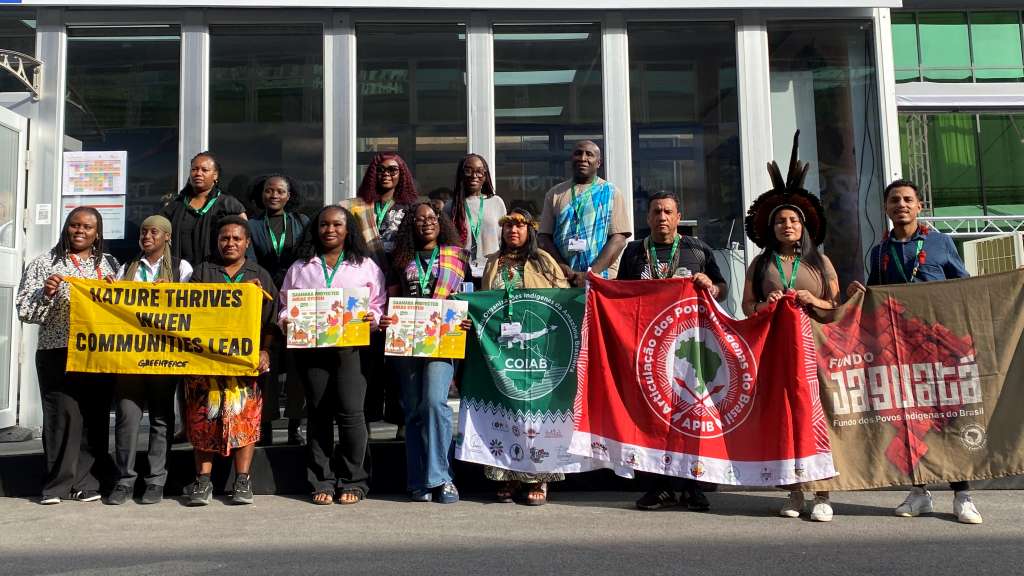
Beyond financial reform, the implementation of Target 3 of the KM-GBF—commonly referred to as the "30×30" target, which aims to effectively conserve 30 percent of the world’s terrestrial and marine areas by 2030—has drawn intense critical evaluation. Greenpeace delegates attending COP 17 expressed deep concern that global progress remains woefully insufficient given the proximity of the 2030 deadline.
Delegates at the conference are facing intense pressure to agree on concrete measures that address the root drivers of biodiversity loss, scale up biodiversity financing, and redirect public funds toward protective measures. Syahrul Fitra, Senior Forest Campaigner at Greenpeace Indonesia, stressed that verbal commitments are hollow when governments simultaneously support extractive industries through targeted incentives.
"Promises alone are not enough to protect nature, especially when governments continue to back destruction through harmful subsidies and incentives for extractive industries that clearly undermine biodiversity," Fitra asserted. He added that the success of conservation initiatives relies fundamentally on honoring and protecting Indigenous Peoples and local communities, who have historically acted as the frontline defenders and originators of sophisticated conservation systems.

Echoing this sentiment, Fajri Fadhillah, Political and Legal Campaigner for Greenpeace Southeast Asia, underscored that environmental protection must be anchored in climate justice, equity, and the direct participation of traditional stewards in decision-making processes. For generations, Indigenous Peoples and local communities have nurtured terrestrial and aquatic ecosystems, yet their traditional knowledge, legal rights, and leadership roles are routinely marginalized by centralized bureaucratic planning.
Furthermore, campaigners cautioned against treating the 30% metric as a simplistic statistical quota that governments can manipulate to justify ecological degradation in uncounted areas. In regions like Papua, where forest cover remains high, conservation targets must not be interpreted as a legal license to diminish existing high-density forest cover to meet a standardized national percentage. Ecological protection must be tailored to the distinct biological realities of each distinct ecosystem.
The Dangers of Commercialized Conservation and Biodiversity Offsets
As governments and corporations search for mechanisms to reconcile industrial expansion with environmental commitments, civil society groups have raised alarms over the growing adoption of market-based compensatory systems. Organizations such as WALHI (The Indonesian Forum for Environment) launched scathing critiques against the institutionalization of "biodiversity offsets," arguing that the mechanism serves as a corporate shield to legitimize environmental destruction through financial transactions.
A prime illustration of this controversy is the unfolding ecological pressure on the Batang Toru ecosystem in North Sumatra. Serving as the sole remaining natural habitat for the critically endangered Tapanuli orangutan—whose population hovered around an estimated 719 individuals as of 2023—the region is also home to critical populations of the Sumatran tiger, siamang, agile gibbon, and Sunda pangolin.

The survival of these endemic species faces immediate disruption due to proposed mining expansions by PT Agincourt Resources (PTAR), including the construction of a tailings management facility and the expansion of the Tor Ulu Ala pit. These industrial maneuvers threaten to clear hundreds of hectares of primary forest and sever vital wildlife corridors. To mitigate the foreseeable environmental damage, the corporate entity has proposed utilizing biodiversity offset frameworks to compensate for the loss of critical habitat.
Uli Arta Siagian, National Campaign Coordinator for WALHI, questioned the fundamental logic of attempting to substitute the irreplaceable habitat of a critically endangered species through land acquisition elsewhere. She emphasized that biodiversity offsets risk morphing into a system that grants retroactive absolution for preventable ecological destruction.
"Forests are not numbers that can be traded, and the habitat of the Tapanuli orangutan cannot simply be replaced by acquiring hectares in a different location," Siagian stated.
Rianda Purba, Executive Director of WALHI North Sumatra, reinforced this position, declaring that the survival of the Tapanuli orangutan and the integrity of Batang Toru cannot be bartered away through financial compensation or corporate offsetting schemes. He argued that allowing corporations to trade environmental damage for monetary investments effectively monetizes ecological guilt, creating a false illusion of sustainability for the public.

The Imperative for Unified Global Action
The mounting frequency of catastrophic climate events—including severe peatland and forest fires across Sumatra, Kalimantan, and Papua, alongside recurring hydrometeorological disasters that devastate local communities—underscores the failure of fragmented environmental governance. Destructive development paradigms continue to marginalize Indigenous communities while accelerating species extinction.
Historically, international policy frameworks addressing biodiversity loss, climate change, and land degradation have operated in isolation. Observers at CBD COP 17 argue that Yerevan must serve as a critical turning point to synchronize the agendas of the three major environmental Rio conventions: UNCCD COP 17, CBD COP 17, and UNFCCC COP 31. The outcomes of the biodiversity convention must translate into coordinated, cross-border political commitments rather than non-binding targets confined to paper.
As global leaders deliberate through the final days of the summit, civil society groups maintain that genuine ecological recovery requires decisive political courage. Governments worldwide must dismantle environmentally destructive financial flows, implement progressive environmental taxation on heavy polluters, and channel public funds directly into the hands of local communities who have demonstrated an unmatched capacity to preserve the earth’s remaining vital ecosystems.