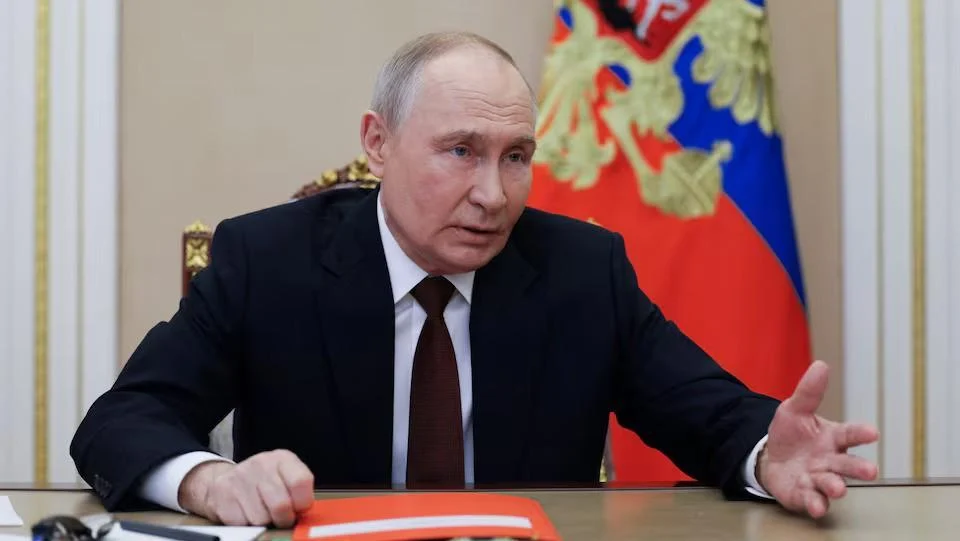
In a dramatic shift that could potentially alter the trajectory of one of the most devastating geopolitical conflicts of the twenty-first century, Russian President Vladimir Putin has formally invited Ukrainian President Volodymyr Zelensky to Moscow for direct, high-level peace negotiations. The development, which surfaced late Wednesday, October 28, 2026, marks a rare and critical opening for bilateral dialogue between the warring neighbors after years of relentless military hostilities, profound diplomatic deadlock, and immense human suffering.
According to statements released by the Kremlin and corroborated by international media outlets, the invitation was publicly disclosed by Yuri Ushakov, a senior presidential aide to the Russian leader. Speaking to reporters, Ushakov emphasized that Moscow is prepared to guarantee the comprehensive safety and security of the Ukrainian head of state should he choose to make the historic journey to the Russian capital. This unprecedented gesture follows intense diplomatic backchannel communications involving European mediators, which reportedly indicated a growing willingness on the part of Kyiv to engage in face-to-face talks with the Kremlin.
Background and Context of the Escalating Conflict
To fully understand the weight of this potential summit, one must look back at the origins and evolution of the Russia-Ukraine war. The conflict escalated dramatically in February 2022, when Russian forces launched a full-scale invasion of Ukraine, following years of simmering tensions that began with the illegal annexation of Crimea and the war in the Donbas region in 2014. Since then, tens of thousands of soldiers and civilians have lost their lives, millions have been displaced across Europe, and vast swaths of Ukrainian infrastructure have been systematically destroyed.
Throughout the nearly five years of intense warfare, direct contact between Putin and Zelensky has been virtually nonexistent, mediated instead through sporadic, largely unsuccessful negotiation rounds held in border countries like Belarus and Turkey during the early months of 2022. While low-level delegations have occasionally met to negotiate grain corridors, prisoner exchanges, and limited humanitarian initiatives, substantive political talks aimed at ending the war have remained entirely stalled. The insistence by Moscow that Zelensky travel to Russia—combined with Kyiv’s previous reluctance to negotiate on Russian soil—has long been a major stumbling block in diplomatic efforts.
The Diplomatic Catalyst: European and American Mediation
The renewed momentum toward a potential Putin-Zelensky summit did not emerge in a vacuum. It is the direct result of intensive shuttle diplomacy conducted by European leaders and the renewed diplomatic push from the United States.
According to Yuri Ushakov, the invitation to Moscow was crystallized following a crucial 90-minute trilateral telephone conversation between Vladimir Putin, Norwegian Prime Minister Jonas Gahr Støre, and Finnish President Alexander Stubb. During this substantive call, the two Nordic leaders informed the Russian president that Volodymyr Zelensky had expressed a genuine interest in exploring direct, high-level talks with the Kremlin to find a political solution to the bloodshed.
While European intermediaries have played a vital role in keeping communication channels open, the United States has also stepped up its involvement under the administration of President Donald Trump. Speaking to reporters on Wednesday, President Trump asserted that a meeting between Putin and Zelensky would be arranged in the near future.
"Will there be a meeting? Yes, there will be a meeting arranged very quickly, and I think great progress can be made," Trump told journalists, though he refrained from specifying a potential venue.
Trump’s optimistic outlook aligns with statements previously made by President Zelensky, who indicated that upcoming trilateral meetings involving representatives from Ukraine, Russia, and the United States are scheduled to take place in November. Separate briefings from the Kremlin confirmed that these crucial trilateral talks are slated to be hosted in the United Arab Emirates (UAE) next month, serving as a stepping stone toward a broader peace framework.
The Logistics and Security Dilemma of a Moscow Summit
The prospect of President Zelensky traveling to Moscow raises profound security, political, and logistical challenges. For Kyiv, the notion of the Ukrainian leader setting foot in the capital of the invading nation carries immense domestic political risk. Zelensky has consistently positioned himself as the defiant wartime leader of a sovereign nation resisting foreign aggression; appearing in Moscow could spark intense political backlash at home unless framed within strict international guarantees and clear parameters.
Recognizing these sensitivities, Yuri Ushakov was careful to emphasize that Moscow is fully prepared to accommodate security demands.
"Our superior reiterated that if Zelenskyy genuinely wants to hold direct negotiations, he must come to Moscow. There, all the necessary conditions—including those related to his safety—will be provided for him," Ushakov stated, citing reports from the state-run Tass news agency.
Despite these assurances, skepticism remains high among international observers and Ukrainian allies. Many geopolitical analysts view the invitation as a tactical maneuver by Moscow to project an image of diplomatic openness while placing the onus—and potential blame for a deadlock—back onto Kyiv. Furthermore, the question of whether European representatives will have a seat at the negotiating table remains unresolved. Ushakov noted that the issue of European participation has not yet been formally considered and will only be addressed during later stages of the diplomatic process.
Chronology of Recent Diplomatic Developments
To trace the rapid acceleration of these peace efforts, a clear timeline emerges from recent weeks:
- Mid-October 2026: Backchannel communications intensify between Western intermediaries and Moscow regarding the necessity of reviving stagnant peace talks.
- Late October 2026 (Approximately October 25-27): Norwegian Prime Minister Jonas Gahr Støre and Finnish President Alexander Stubb hold a detailed 90-minute phone call with Russian President Vladimir Putin, conveying Ukrainian interest in direct dialogue.
- Wednesday, October 28, 2026: Kremlin aide Yuri Ushakov publicly announces Putin’s invitation to Zelensky, guaranteeing security for a visit to Moscow. Simultaneously, discussions are confirmed regarding a November trilateral meeting in the United Arab Emirates involving Russia, Ukraine, and the United States.
- Wednesday, October 28, 2026: U.S. President Donald Trump publicly reacts to the developments, stating that a meeting between the two leaders will be organized shortly and expressing confidence that substantial progress can be achieved.
- Upcoming November 2026: Scheduled trilateral talks in the UAE intended to lay the groundwork for future high-level engagements and potential peace negotiations.
Implications and the Road Ahead
The unfolding diplomatic developments represent both a fragile opportunity and a high-stakes gamble for global stability. Should the planned trilateral talks in the United Arab Emirates proceed successfully in November, they could establish a viable pathway toward bridging the vast chasm between Moscow’s territorial demands and Kyiv’s insistence on the restoration of its internationally recognized borders.
However, significant hurdles remain. Core disagreements persist regarding the status of occupied territories, security guarantees for Ukraine, the future architecture of European security, and the lifting or maintenance of international economic sanctions against Russia.
From an economic and humanitarian standpoint, the urgency for a negotiated settlement has never been greater. The prolonged conflict continues to exert heavy tolls on global energy markets, food security, and regional stability. While a meeting between Putin and Zelensky in Moscow—or any other neutral venue—would not instantly resolve the deeply entrenched grievances of both sides, it would represent a psychological and political turning point, shifting the paradigm from the battlefield back to the negotiating table.
As the international community watches closely, the coming weeks will determine whether this flurry of diplomatic activity can transcend political rhetoric and translate into a sustainable framework for peace in Eastern Europe. For now, the world waits to see if the leaders of Russia and Ukraine will take the historic, perilous step toward direct engagement.