Iran Offers Five-Year Uranium Enrichment Halt as United States Demands Twenty-Year Commitment

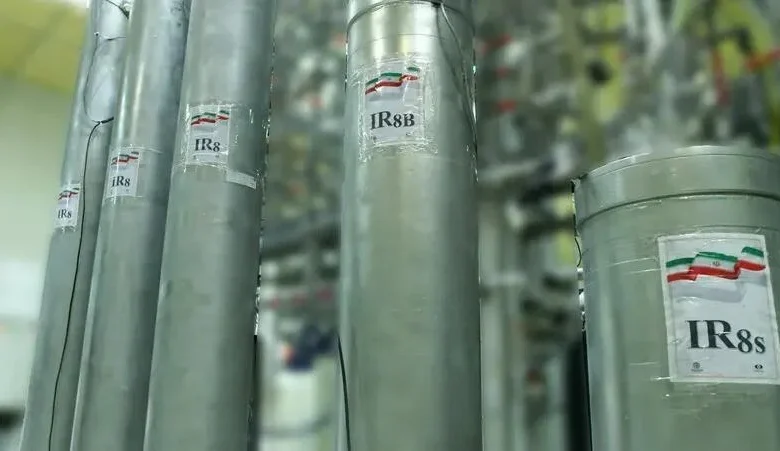
The diplomatic landscape between Washington and Tehran has reached a critical impasse following the collapse of high-stakes negotiations in Islamabad, Pakistan, where a fundamental disagreement over the duration of a nuclear freeze has triggered a significant escalation in hostilities. Reports emerging from the weekend summit indicate that while the Islamic Republic of Iran proposed a five-year suspension of its controversial uranium enrichment program, the United States, under the administration of President Donald Trump, has remained steadfast in demanding a minimum twenty-year moratorium. The failure to bridge this fifteen-year gap led directly to a presidential order for a naval blockade of Iranian ports, a move that has sent shockwaves through global energy markets and heightened fears of a direct military confrontation in the Persian Gulf.
According to investigative reporting by the New York Times, which cited multiple senior officials from both the American and Iranian delegations, the Islamabad talks were intended to be a definitive roadmap toward regional de-escalation. However, the chasm between the two nations’ timelines for nuclear restraint proved insurmountable. In a formal response delivered on Monday, April 13, 2026, Tehran officially proposed a five-year "cooling-off period" during which enrichment activities would be frozen at current levels. The Trump administration, viewing a five-year window as insufficient to ensure long-term global security, rejected the proposal, insisting that only a two-decade commitment would provide the necessary guarantees that Iran would not pursue a "breakout" capability toward a nuclear weapon.
The Stalemate Over Enrichment and Stockpiles
The disagreement extends beyond the mere duration of the freeze. A central pillar of the U.S. demand involves the physical removal of Iran’s existing stockpile of highly enriched uranium. Washington has demanded that these materials be transported to a neutral third-party country to ensure they cannot be quickly repurposed for military use. Iranian negotiators, however, have remained firm in their refusal to allow any nuclear material to leave their sovereign territory. As a counter-offer, Tehran suggested a process of significant dilution, whereby the highly enriched uranium would be processed back down to a low-level concentration suitable only for civilian power generation or medical research, rendering it "unfit for weaponry."
U.S. intelligence and nuclear experts remain skeptical of the dilution offer. Officials cited in the New York Times report expressed concerns that the technical infrastructure to re-enrich diluted uranium remains intact within Iran’s hardened facilities, such as Fordow and Natanz. From the American perspective, as long as the material remains on Iranian soil, the "breakout time"—the duration required to produce enough weapons-grade material for a single nuclear device—remains unacceptably short. The U.S. position is that a twenty-year freeze, combined with the removal of materials, is the only way to dismantle the institutional and technical momentum of Iran’s nuclear ambitions.
Diplomatic Maneuvers and the Role of JD Vance
Vice President JD Vance, who led the American delegation in Islamabad, has attempted to maintain a posture of "tough but open" diplomacy. Following the conclusion of the talks, Vance characterized the discussions as "substantive" and noted that there had been "a number of good conversations" with Iranian representatives. Despite the lack of a signed agreement, the Vice President suggested that the dialogue itself represented a form of progress compared to the total silence of previous months.
In an interview with Fox News on Monday, Vance stated that "the ball is now in Iran’s court," placing the burden of the next move squarely on the shoulders of the Iranian leadership. While acknowledging that Tehran showed some willingness to adjust its initial positions, Vance emphasized that they had not "moved far enough" to satisfy American national security requirements. He noted that the central question remains whether the Iranian government can demonstrate the "flexibility" required to sustain a long-term peace process or if they are merely seeking temporary sanctions relief to bolster their struggling economy.
The Blockade and Economic Implications
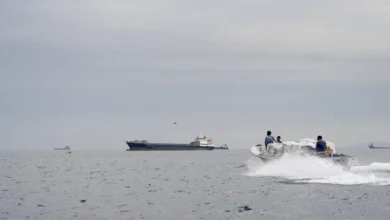
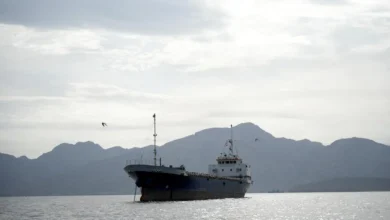
The immediate fallout of the failed Islamabad talks was President Trump’s executive order to implement a "maritime enforcement zone" around key Iranian ports. This blockade is designed to halt the export of Iranian crude oil and the import of essential industrial components, effectively tightening the "maximum pressure" campaign to its most restrictive level since 2018. The blockade targets the Port of Bandar Abbas and the Chabahar Port, which are vital for Iran’s international trade.
The economic implications are twofold. For Iran, the blockade threatens to paralyze an already fragile economy suffering from hyperinflation and currency devaluation. For the rest of the world, the threat of disrupted shipping lanes in the Strait of Hormuz—through which one-fifth of the world’s oil passes—has already caused a spike in Brent Crude prices. Analysts warn that if Iran retaliates by attempting to close the Strait or by deploying sea mines, the resulting energy crisis could trigger a global recession.
A Timeline of Escalation: 2024–2026
To understand the gravity of the current situation, it is essential to look at the chronology of events leading to the Islamabad summit:
- Late 2024: Following a series of regional skirmishes, Iran announces it has reached 60% enrichment levels at several sites, nearing the 90% threshold required for weapons-grade material.
- Early 2025: The U.S. administration increases its naval presence in the Eastern Mediterranean and the Persian Gulf, citing "credible threats" to commercial shipping.
- October 2025: Neutral intermediaries, including Pakistan and Qatar, begin brokering a "back-channel" dialogue to prevent a full-scale war.
- January 2026: Both nations agree to a face-to-face summit in Islamabad to discuss a "New Nuclear Framework."
- April 11–12, 2026: The Islamabad Summit takes place. Discussions stall on the 5-year vs. 20-year duration.
- April 13, 2026: Iran officially submits its 5-year freeze proposal; President Trump rejects it and orders the port blockade.
Regional Reactions and the Israeli Factor
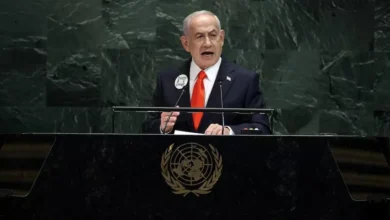
The collapse of the talks has been met with mixed reactions globally. Israeli Prime Minister Benjamin Netanyahu, in a televised address, reiterated his stance that Iran remains the primary threat to Middle Eastern stability. Netanyahu claimed that despite the diplomatic posturing, Iran’s infrastructure is such that they are "no longer just seeking the ability to enrich uranium, but are actively refining the production of ballistic missile delivery systems." The Israeli government has consistently lobbied Washington to accept nothing less than a total and permanent cessation of all Iranian nuclear activity.
Conversely, European allies and regional powers like Pakistan have expressed concern that the U.S. demand for a twenty-year freeze may be functionally impossible for any Iranian administration to accept without facing an internal coup or massive domestic unrest. Diplomatic sources in Islamabad suggested that the five-year offer was a "significant concession" from the Iranian Supreme Leader’s office, and that the American rejection might close the door on diplomacy for the foreseeable future.
Analysis: The "Breakout" Calculus
The core of this dispute is a mathematical and strategic calculation known as "breakout time." Under the original 2015 Joint Comprehensive Plan of Action (JCPOA), Iran’s breakout time was extended to approximately one year. Since the U.S. withdrawal from that deal and Iran’s subsequent breach of its limits, experts estimate that the breakout time has shrunk to a matter of weeks, if not days.
A five-year freeze, as proposed by Iran, would provide a temporary reprieve but would not dismantle the centrifuges or the technical knowledge acquired by Iranian scientists over the last decade. By the time the freeze ended, Iran would arguably be in an even stronger position to sprint toward a weapon. A twenty-year freeze, however, is designed to span an entire generation, effectively forcing the Iranian nuclear program into obsolescence and allowing for a fundamental shift in the country’s political landscape.
The Path Forward: Direct Negotiations?
Despite the current tension and the implementation of the blockade, the New York Times report indicates that "talks about talks" are still occurring. Negotiators are reportedly discussing the possibility of a second round of face-to-face meetings, potentially in a different neutral venue such as Geneva or Muscat. However, no date has been set, and the rhetoric from both sides has turned increasingly bellicose.
The international community now watches closely to see if Iran will blink under the pressure of the port blockade or if it will choose to escalate its enrichment activities as a form of "counter-pressure." With the "ball in Iran’s court," the next 48 to 72 hours are expected to be some of the most consequential in the history of Middle Eastern diplomacy. The conflict is no longer just about nuclear physics; it is a test of wills between a superpower demanding a long-term strategic surrender and a regional power fighting for its perceived right to sovereign technological development.