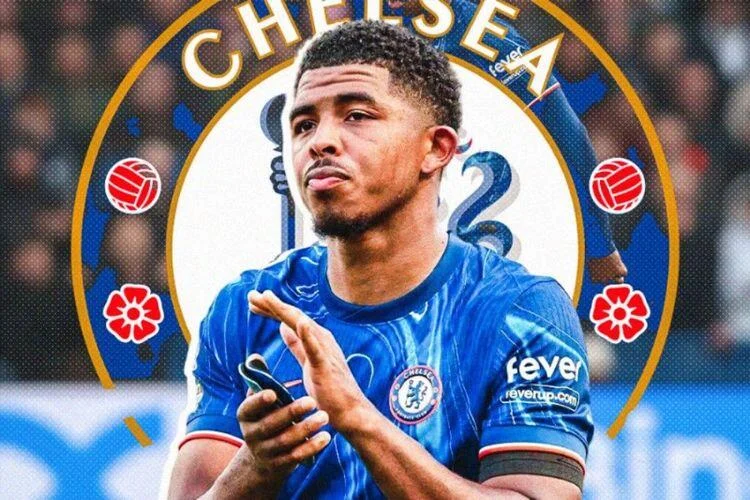
The atmosphere inside the City Ground on Saturday, November 28, 2026, was nothing short of hostile for Chelsea defender Wesley Fofana, who found himself subjected to sustained and vehement abuse from his own supporters during a 3-2 defeat to Nottingham Forest in the 2026-2027 Premier League season. In what unfolded as a nightmarish week for the French center-back, every touch of the ball during the Week 12 fixture was greeted with resounding jeers and sarcastic catcalls from the traveling Chelsea contingent.
The animosity reached a crescendo as thousands of Blues fans packed into the away section began chanting explicit demands for the 25-year-old defender to leave the club immediately. This visceral reaction was not merely a byproduct of a disappointing defensive performance on the pitch, but rather the culmination of simmering tensions sparked by media transgressions earlier in the week, poor sporting form, and a disastrous sequence of events on the turf that ultimately forced manager Xabi Alonso into a premature tactical substitution.
The Anatomy of a Crisis: An Unauthorized Interview and Insensitive Remarks
To understand the depth of the betrayal felt by the Chelsea faithful, one must look back to the early days of the week preceding the match at the City Ground. The root cause of the supporters’ wrath stemmed from a nearly two-hour-long podcast interview conducted by Wesley Fofana with prominent French YouTuber Zack Nani.
According to club sources, the interview was arranged and executed entirely on a unilateral basis, without securing the mandatory clearance or formal approval from Chelsea’s internal communications and media relations department. While unauthorized media appearances by high-profile athletes are often met with internal disciplinary fines, the content of Fofana’s conversation escalated the situation from a minor procedural infraction into a full-scale public relations disaster.
During the expansive discussion, the defender touched upon various aspects of his career at Stamford Bridge. However, public outrage was instantaneously triggered when Fofana casually laughed while recounting his costly penalty miss during Chelsea’s elimination against Liverpool in the League Cup the previous month. In a climate where supporters invest heavily—both financially and emotionally—into the club’s pursuit of silverware, seeing an underperforming player chuckle about a crucial competitive failure struck a raw nerve.
The casual demeanor displayed by the Frenchman during a period when manager Xabi Alonso’s side was struggling to maintain consistency in the Premier League was widely interpreted as a lack of professionalism and commitment. Although Fofana swiftly issued an internal apology to the coaching staff and squad, and manager Xabi Alonso attempted to shield his player during subsequent pre-match media obligations, the damage to the player’s relationship with the fanbase was already irreversible.
Matchday Chronology: From Bad to Worse at the City Ground
The psychological burden of the week clearly weighed heavily on the pitch as Chelsea traveled to Nottinghamshire aiming to arrest a concerning slide in domestic form. From the opening whistle, the City Ground served as an unforgiving amphitheater. The traveling Chelsea fans made good on their threats expressed on social media platforms in the days prior, immediately signaling their displeasure whenever the defender received possession.
The match itself hung in a delicate balance during the opening exchanges, but the tension surrounding Fofana translated into defensive fragility. The pivotal turning point arrived in the 49th minute of the encounter. As Nottingham Forest pressed forward with intensity, Fofana misjudged a defensive challenge inside his own penalty area, bringing down Forest forward Liam Delap with a clumsy and mistimed tackle.
Without hesitation, the match official pointed directly to the penalty spot. Morgan Gibbs-White stepped up in the 51st minute and calmly slotted the resulting spot-kick past the Chelsea goalkeeper, doubling Nottingham Forest’s advantage to 2-0 and compounding the visitors’ misery.
Realizing that the atmosphere had become toxic and that his defender was psychologically compromised, manager Xabi Alonso acted decisively just five minutes later. In the 56th minute, Fofana was mercifully hooked from the action, replaced by English center-back Levi Colwill to try and salvage the tactical shape of the team.
The statistical autopsy of Fofana’s abbreviated 56-minute appearance made for grim reading. The center-back registered a catastrophic zero percent success rate in his attempted tackles and managed a meager two defensive clearances throughout the entire duration of his time on the pitch.
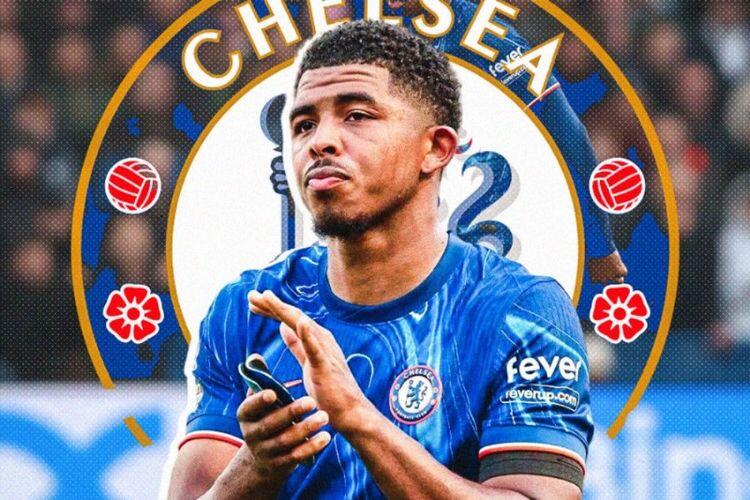
Despite a valiant second-half tactical shift by Chelsea—featuring a spirited brace from Emmanuel Emegha in the 54th and 89th minutes, sandwiched around a second goal from Nottingham Forest’s Morgan Gibbs-White in the 73rd minute—the Blues ultimately succumbed to a 3-2 defeat. The loss extended Chelsea’s dismal domestic run to three consecutive defeats in the Premier League, leaving the West London club languishing in eighth place in the league standings with a meager 16 points accumulated from their opening 12 matches of the campaign.
Tactical Implications and the Road Ahead for Xabi Alonso
The unfolding crisis surrounding Wesley Fofana presents a multi-layered headache for manager Xabi Alonso, whose tactical blueprint relies heavily on psychological stability, defensive cohesion, and absolute unity within the dressing room. Alonso, who inherited a complex squad following his arrival at Stamford Bridge, has consistently preached accountability and mental resilience.
Publicly, Alonso’s initial defense of Fofana in the wake of the Zack Nani podcast controversy was designed to protect squad harmony and prevent external distractions from destabilizing training ground preparations. However, the hostile reception from the away supporters and the subsequent high-profile defensive error against Nottingham Forest have rendered the situation untenable for a quiet internal resolution.
Football analysts point out that when a player loses the trust of the supporters in such a vocal and public manner, the pressure shifts heavily to the club’s hierarchy to manage the asset carefully. With the January transfer window looming on the horizon, speculations regarding Fofana’s long-term future in West London are bound to intensify. The club’s management must weigh whether reintegrating a player subjected to such intense animosity is viable, or if an eventual parting of ways represents the most pragmatic solution to restore harmony in the stands.
A Career Marked by Resilience and Physical Setbacks
The friction between Fofana and the Chelsea supporters stands in stark contrast to the immense promise that accompanied his arrival at Stamford Bridge. Born in Marseille, France, the central defender was long regarded as one of the most promising young defensive talents in European football.
His journey to West London was forged through standout performances in Ligue 1 with Saint-Étienne before making a high-profile move to the Premier League with Leicester City in October 2020. During his tenure with the Foxes, Fofana quickly established himself as a dominant aerial presence and a progressive ball-playing center-back, culminating in his crowning domestic achievement: lifting the FA Cup trophy in the 2020-2021 season after defeating Chelsea in the final.
Recognizing his immense ceiling, Chelsea secured his signature in August 2022 for a substantial transfer fee. However, the trajectory of his career in the capital has been severely disrupted by persistent injury problems. Standing at 1.88 meters tall, Fofana’s physical attributes have often been undermined by long-term fitness battles, most notably a severe anterior cruciate ligament (ACL) injury that wiped out the entirety of the 2023-2024 campaign.
Up until the end of November 2026, these recurring physical setbacks have limited the French defender to just 82 total appearances across all competitions for Chelsea. Despite these stop-start periods, Fofana has managed to engrave his name into the club’s modern history books, contributing to two major continental and global honors: the UEFA Conference League title during the 2024-2025 season and the prestigious FIFA Club World Cup crown in 2025.
Broader Context of Player Communications in Modern Football
The controversy surrounding Wesley Fofana’s unauthorised podcast appearance highlights a broader, systemic challenge facing modern football clubs: the clash between traditional institutional control and the rise of direct-to-consumer digital media. In an era where professional athletes possess massive social media followings and frequently bypass traditional sports journalism by appearing on independent podcasts, YouTube shows, and streaming platforms, the risk of unscripted, unfiltered commentary has never been higher.
For elite clubs like Chelsea, maintaining brand integrity and managing dressing-room narratives require strict protocols regarding media access. When players choose to air internal sentiments, trivialize competitive failures, or discuss club dynamics without the safety net of club PR oversight, the fallout often destabilizes the delicate ecosystem between the team, the coaching staff, and the paying public.
As Chelsea prepares for its upcoming fixtures, the spotlight will remain firmly fixed on how the club administration, Xabi Alonso, and Wesley Fofana navigate the aftermath of the City Ground confrontation. Whether through disciplinary action, strategic reintegration, or potential market operations when the transfer window opens, the resolution of this episode will serve as a crucial test of cultural stability for a club striving to return to the upper echelons of English and European football.