Socio Today
A routine commercial flight operated by flydubai from Dubai, United Arab Emirates, to Tel Aviv, Israel, transformed into a terrifying mid-air crisis after a violent altercation broke out inside the cockpit. According to Israeli Prime Minister Benjamin Netanyahu and harrowing accounts from passengers on board, one of the pilots allegedly attempted to crash the aircraft and kill everyone on board by carrying out a deliberate stabbing attack against his colleague. The flight, carrying 174 occupants—the vast majority of whom were Israeli citizens—was forced to make an emergency diversion to the Kingdom of Saudi Arabia, a nation with which Israel historically maintains no formal diplomatic ties.
The incident has sent shockwaves through international aviation circles, raising serious questions regarding cockpit security protocols, commercial airline safety standards, and geopolitical complexities in the Middle East. While aviation authorities, law enforcement agencies, and the airline continue to investigate the exact motivations behind the attack, the swift heroism of passengers and remaining crew members averted what could have been one of the deadliest aviation disasters in recent regional history.
Chronology of a Mid-Air Nightmare
The events unfolded rapidly as flydubai flight approached its destination airspace, transitioning over the Middle East region. Based on flight tracking data from specialized aviation monitoring services such as Flightradar24 and statements provided by eyewitnesses, the crisis began while the aircraft was navigating through Jordanian airspace.
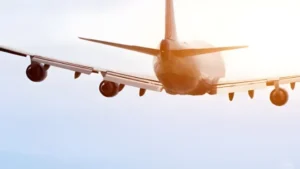
Without warning, the aircraft experienced an aggressive and erratic maneuver. Flight data indicates that the commercial airliner plummeted precipitously, losing approximately 17,000 feet of altitude in the span of a single minute. Inside the cabin, passengers experienced sudden, violent weightlessness and severe turbulence as the nose of the plane was pushed sharply downward.
Amid the chaos and panic in the passenger cabin, it was discovered that a violent struggle had erupted inside the cockpit. According to Israeli Prime Minister Benjamin Netanyahu, who later addressed the nation regarding the incident, one of the pilots reportedly drew a blade and stabbed the other pilot in an apparent suicide-and-mass-casualty attempt.
Realizing that the aircraft was being directed downward toward the ground at a lethal rate, a group of brave passengers—including an individual who managed to breach the cockpit door—rushed forward to intervene. Eyewitnesses reported that passengers engaged in a desperate physical struggle with the rogue pilot, ultimately subduing and restraining him before he could execute the full extent of his destructive plan. During the scuffle, both the captain and the first officer sustained injuries.
With the primary controls temporarily compromised, other qualified personnel inside the cockpit managed to stabilize the aircraft, pull it out of its fatal descent, and alter the flight path. Due to the proximity of the airspace and the immediate emergency status of the aircraft, the flight crew made the decision to divert toward the nearest suitable landing facility, landing safely at Tabuk Regional Airport in northwestern Saudi Arabia at approximately 09:45 local time.
Passenger Testimonies and Harrowing Accounts
The human toll of the ordeal is best understood through the stark, firsthand testimonies of those who lived through the terrifying descent. Miryam Shira Ohayon, a passenger on the flight, recounted the harrowing moments to reporters via a telephone call held by her mother while awaiting her return at Ben Gurion International Airport near Tel Aviv.
"The kopilot tried to kill the pilot and on a fundamental level attempted to commit mass murder using the aircraft," Ohayon explained. "The plane came extraordinarily close to crashing, and it was solely due to the immediate vigilance of multiple people who managed to overpower the copilot and immobilize him that the situation was successfully resolved."
Ohayon noted that a medical professional traveling on the flight immediately stepped forward to administer first aid to the wounded crew members, working frantically to stabilize both men while managing the mounting panic among the terrified passengers. "Aside from the pilot, there were no other physical injuries, but the overwhelming fear of everyone on board was that the aircraft would hit the ground—which was clearly the objective of the perpetrator’s actions," she added.
Social media footage shared widely by Israeli users captured the immediate aftermath inside the cabin. One video depicted a passenger with a severe head wound, blood streaming down his face, frantically pleading for assistance while explaining that the aircraft was descending into Saudi territory. "We are experiencing an attack inside the plane. We just subdued the terrorist and are preparing to land," the bloodied passenger stated in Hebrew. "Whoever hears me, we need help. We are going to land in Tabuk, which appears to be in Saudi Arabia—a foreign territory. Everyone is safe and sound, except for the pilot. We need help."
For families waiting on the ground, the wait was agonizing. Yasmin Abukasis, mother of passenger Miryam Shira Ohayon, revealed that her daughter had boarded the flight to attend a memorial ceremony dedicated to her relative, who was tragically killed during the October 7, 2003, Hamas attacks. "My daughter genuinely believed they were going to die," Abukasis told journalists, describing how passengers witnessed blood near the cockpit before realizing the magnitude of the emergency.
Official Responses and Government Reactions
Prime Minister Benjamin Netanyahu released a formal video statement praising the extraordinary bravery of the Israeli citizens who intervened to prevent a catastrophic disaster. Netanyahu confirmed that he personally spoke with one of the passengers who stormed the cockpit during the descent.
"During the flight, as they approached the destination country, one of the pilots stabbed the other pilot and seemingly attempted to bring down the plane along with everyone on board," Netanyahu stated. "I pay tribute to these heroes, who demonstrated exceptional resourcefulness and immense courage. They saved numerous lives and prevented a massive tragedy."
flydubai issued a comprehensive official statement confirming that all 174 occupants on board—comprising 166 Israeli nationals and other passengers—were safely accounted for following the emergency landing in Tabuk. The airline acknowledged that the captain and the first officer sustained injuries during the onboard disturbance and were immediately transported to a local medical facility for emergency treatment. However, flydubai initially maintained a cautious stance regarding the exact trigger of the altercation, stating that internal investigations are ongoing in cooperation with international aviation security authorities.
Diplomatic Nuances of the Saudi Diversion
The decision to divert the flydubai aircraft to Tabuk, Saudi Arabia, introduced a complex geopolitical dimension to an already extraordinary aviation crisis. Israel and Saudi Arabia do not maintain official diplomatic relations, rendering unscheduled arrivals of Israeli-heavy commercial flights exceptionally rare and procedurally sensitive.
Despite the lack of formal ties, Saudi aviation authorities and local emergency services in Tabuk acted in accordance with international civil aviation obligations under the Chicago Convention, which mandates that any state must render assistance to aircraft in distress, regardless of the nationality of the passengers or the geopolitical alignment of the carrier. Local medical teams at Tabuk Regional Airport swiftly processed the injured flight crew, while Saudi border and security officials coordinated temporary shelter and logistical support for the stranded passengers before they were able to secure alternative transportation arrangements to continue their journey safely to Tel Aviv.
Broader Implications for Aviation Security
The incident has triggered widespread discussions among global aviation security experts regarding the perennial vulnerability of cockpit doors and the psychological screening processes utilized for commercial airline pilots.
Following major historical security reforms implemented globally after the turn of the century, commercial cockpit doors were heavily reinforced with electronic locking mechanisms designed to prevent unauthorized physical entry from the passenger cabin. However, this safety measure—intended to protect flight crews from external threats—has occasionally created unique operational vulnerabilities when threats originate inside the secure flight deck.
Aviation analysts note that psychological wellness monitoring, routine mental health evaluations, and peer-reporting mechanisms for commercial pilots will likely face heightened scrutiny from regulatory bodies such as the International Civil Aviation Organization (ICAO) and the Federal Aviation Administration (FAA) in the wake of this event. Ensuring that co-pilots and captains undergo rigorous psychological assessments remains a critical priority for maintaining public trust in global commercial air travel.
As international investigations proceed, the primary narrative remains defined by the remarkable intervention of ordinary travelers who stepped into the role of first responders at 30,000 feet, averting a tragedy of historic proportions.