The evening air in Malang carries a distinct chill as street lamps illuminate the historic avenues, setting a picturesque stage for culinary exploration. Nestled within a modest alleyway just off Jalan Jaksa Agung Suprapto, a vibrant scene unfolds nightly that defies the quiet hour. Long before the storefront officially opens its shutters, a dense queue of eager patrons spills out of the narrow corridor. This enduring nocturnal pilgrimage is dedicated to Puthu Lanang, a legendary traditional confectionary establishment that has anchored the East Java city’s rich gastronomic identity for close to a century. At the heart of this bustling operation stands Siswoyo, the second-generation custodian of the family business, whose hands move with practiced precision—scooping freshly steamed rice flour, layering molten palm sugar, dusting the creation with grated coconut, and balancing transactions with seamless efficiency. The enduring popularity of Puthu Lanang offers a compelling case study in culinary longevity, highlighting how uncompromising adherence to traditional preparation methods and local heritage can withstand the relentless tide of modern commercialization.
Historical Chronology: From Italicized Carts to a Fixed Culinary Landmark
The genesis of Puthu Lanang traces back to 1935, an era when Malang was still navigating the complexities of the late colonial period. Founded by the entrepreneurial couple Supiah and Abdul Jalal, the enterprise began humbly as a mobile operation. Armed with a traditional wooden shoulder pole (pikulan), the founders traversed Malang’s winding streets, introducing the aromatic warmth of freshly steamed rice cake delicacies directly to neighborhood doorsteps. As the business gradually established a dedicated customer base, the family settled into the densely populated Celaket district, where locals affectionately dubbed the delicacy "Puthu Celaket." This moniker achieved such widespread cultural resonance that numerous independent vendors across the region eventually adopted the name to capitalize on its associative prestige.
The trajectory of the business shifted in 1985 when Siswoyo, the son of Supiah, made the definitive decision to take over operations. Having assisted his mother since childhood and having completed higher education, Siswoyo viewed the family trade not merely as a livelihood, but as a cultural stewardship. Under his leadership, the enterprise expanded its market reach beyond street-level retail by catering to formal events, regional hotels, local restaurants, and large-scale cultural gatherings, including traditional market snack tumpengs.
It was not until the early 2000s that the current brand identity crystallized. Driven by a casual family conversation noting that Supiah had not yet been blessed with a grandson, Siswoyo proposed the name "Puthu Lanang"—where lanang translates to male in the Javanese language—serving as a masculine counterpart to the widely recognized puthu ayu. Formalizing this transition, the business officially trademarked the name Puthu Lanang in 2003, aided by a regular patron who practiced as a notary. This strategic branding cemented its transformation from a neighborhood itinerant stall into an institutional landmark of Malang’s intangible cultural heritage.
The Art of Artisanal Production and Gastronomic Integrity
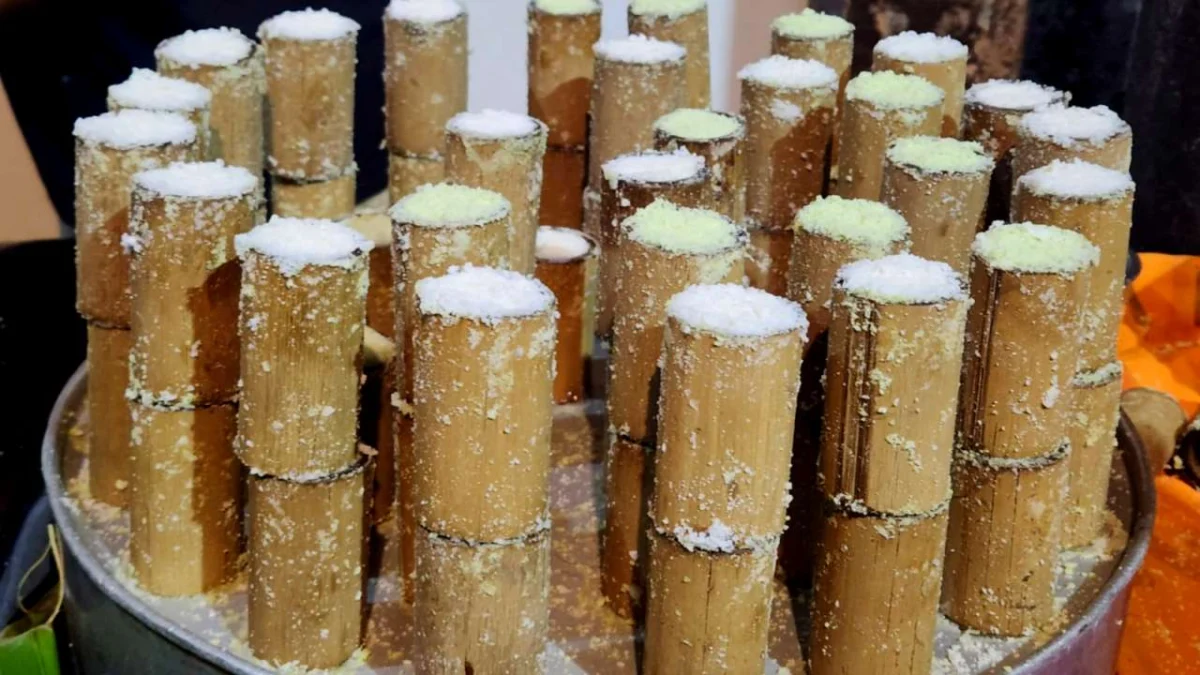
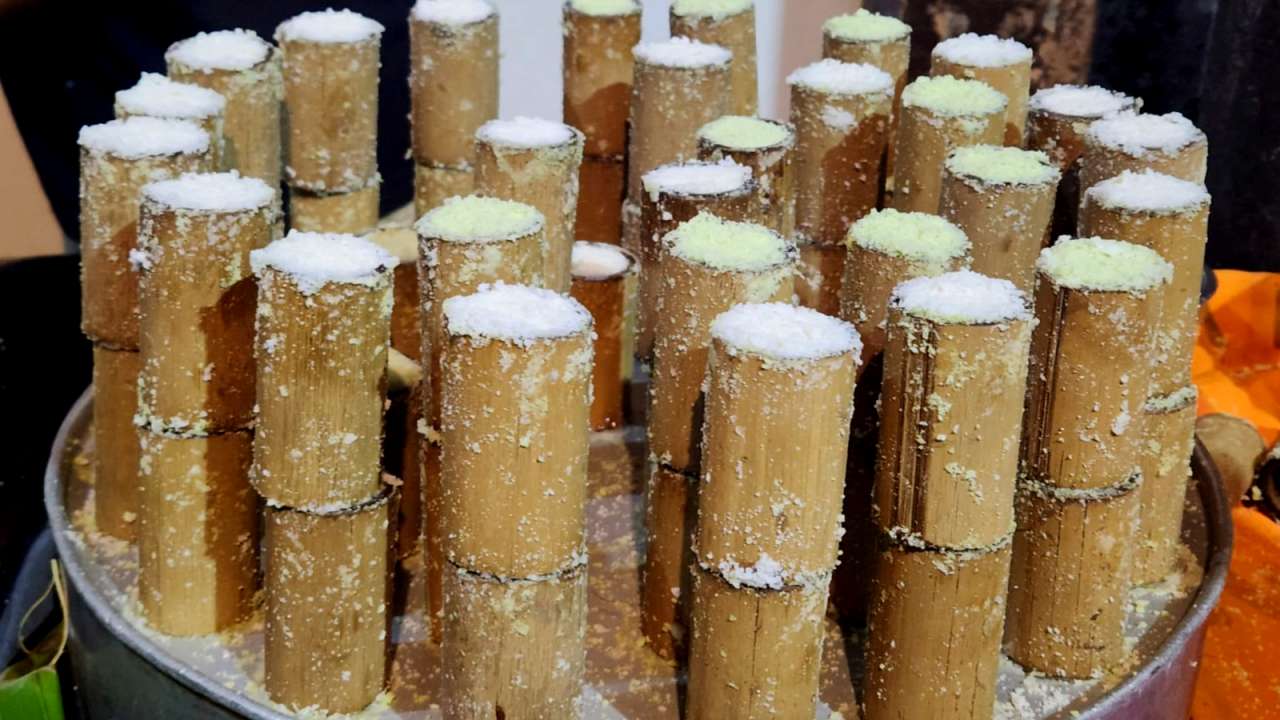
What distinguishes Puthu Lanang within the contemporary food and beverage landscape is its absolute rejection of industrial shortcuts in favor of rigorous, artisanal craftsmanship. The production process begins with finely milled rice flour, which is meticulously tamped into cylindrical bamboo tubes. A core of dark palm sugar is introduced into the center of the flour matrix before the entire apparatus is subjected to high-pressure steaming over boiling water.

Within minutes, the steaming process releases a signature, multi-sensory profile: the earthy fragrance of heated bamboo mingling with the sweet, caramelized notes of melting palm sugar and toasted grain. Upon extraction from the molds, the cylindrical cakes are blanketed in freshly grated coconut. Alongside the classic white variant, Puthu Lanang produces a vibrant green iteration infused with natural pandan extract, yielding a pillowy texture that contrasts with the liquid sweetness of the molten sugar core and the savory, oil-rich profile of the coconut garnish.
Beyond the flagship puthu, the establishment offers a curated selection of complementary traditional snacks, including lupis (glutinous rice wrapped in banana leaves), cenil (chewy, brightly colored starch confections), and klepon (sweet rice balls bursting with liquid palm sugar). Demonstrating culinary accessibility, these items are frequently consolidated into a mixed portion priced uniformly at IDR 18,000, catering to both purists and culinary tourists seeking a comprehensive tasting of Javanese market sweets.
Operational Philosophy and Presidential Patronage
At the core of Puthu Lanang’s operational philosophy lies a strict family axiom: "jual mau, beli mau"—translating loosely to the conviction that whatever is prepared for the public must be entirely worthy of consumption by the proprietors’ own family. This uncompromising standard governs raw material procurement. Coconut must be freshly grated daily, sugar sources must maintain uniform quality standards, and kitchen hygiene remains paramount, irrespective of external economic fluctuations or rising ingredient costs.

This dedication to quality has cultivated deep brand loyalty, bridging generations of consumers. It is common for elderly residents who frequented the stall in their youth to return with their children and grandchildren, passing down a sensory memory rooted in the alleyways of Jalan Jaksa Agung Suprapto.
Furthermore, this unyielding commitment to excellence has attracted high-profile clientele over the decades. Historical accounts from the business note that during the 1980s, former Indonesian President Suharto commissioned private orders, requesting that the preparation be brought directly to the Cendana presidential residence. Subsequent leaders, including former President Megawati Soekarnoputri and current political figures such as Joko Widodo, have likewise sought out the confection, establishing Puthu Lanang as a quiet epicenter where national elite culture intersects with grassroots heritage.
Economic Implications of Controlled Expansion
In an era defined by rapid franchising, venture capital-backed culinary chains, and aggressive geographic expansion, Puthu Lanang presents a fascinating economic counter-narrative. Siswoyo has repeatedly declined lucrative offers from investors to open branches in major metropolitan centers such as Jakarta. His refusal is rooted in a fundamental understanding of product degradation: authentic puthu relies entirely on immediate consumption while hot and fresh from the bamboo steamer, a quality control metric that cannot be safely scaled across mass logistics chains.

By intentionally capping its commercial footprint to a single location in Gang Buntu, the enterprise prioritizes brand equity and product authenticity over short-term revenue maximization. This conservative growth strategy generates a scarcity effect, driving organic foot traffic and positioning the stall as an essential tourist destination that significantly contributes to Malang’s local hospitality economy. Hotels in the surrounding district frequently direct out-of-town guests to the alleyway, recognizing the vendor as a vital anchor of the city’s evening tourism sector.
Sociological Impact and Urban Preservation
As Malang undergoes rapid modernization characterized by infrastructural expansion, commercial real estate development, and shifting consumer demographics, spaces that preserve pre-industrial urban textures are increasingly rare. Puthu Lanang functions as a living museum of intangible cultural heritage, where the rhythmic sounds of preparation, the billowing steam, and the communal patience of the queuing crowd create a shared civic space.
The sociological implications of such establishments extend far beyond commercial transactions. They act as social equalizers where diverse segments of society—from university students and local laborers to visiting dignitaries and tourists—stand shoulder-to-shoulder in a narrow alleyway, united by a shared appreciation for historical gastronomy.

Nearly a century after its inception, Puthu Lanang demonstrates that commercial survival does not invariably require surrender to contemporary market trends. By steadfastly maintaining its foundational recipe, resisting the temptations of mass industrialization, and honoring a strict ethical code of production, the enterprise has secured its place not merely as a purveyor of sweets, but as a resilient pillar of Indonesian cultural identity. As long as the bamboo tubes continue to release their fragrant steam into the cool Malang evening, Puthu Lanang will remain a testament to the enduring power of authenticity.