Socio Today
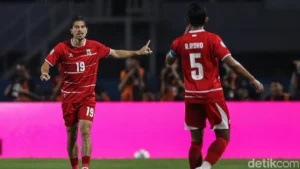
The structural intensity of the FIFA ASEAN Cup 2026 reaches an early crescendo as the national team of Indonesia prepares to host traditional regional rivals Malaysia in a high-stakes Group A fixture. Scheduled for Monday, September 28, 2026, at 19.30 Western Indonesia Time (WIB), the match will unfold at the iconic Gelora Bung Karno Main Stadium (SUGBK) in Jakarta. As both squads eye a coveted pathway toward the tournament’s final stage, strategic adjustments are anticipated within the Indonesian camp. Head coach John Herdman is widely projected to implement calculated tactical rotations, most notably between the goalposts, to manage player fatigue and counter the specific tactical threats posed by the visiting Malaysian side, colloquially known as the Harimau Malaya.
This encounter carries immense weight not only due to the historical sporting rivalry between the two Southeast Asian neighbors but also because of the immediate implications for the Group A standings. Currently, the group is tightly contested, fueled by promising opening-round performances from both contenders. Indonesia enters this crucial matchday sitting comfortably with three points accumulated from a solid 2-0 victory over Singapore in their tournament opener. Meanwhile, Malaysia occupies the summit of the Group A table. The neighboring side also holds three points but edges ahead of the Skuad Garuda on goal difference, courtesy of a commanding 3-0 triumph over Bangladesh in their respective first fixture. Consequently, the clash at SUGBK serves as an early battle for supremacy, where a victory for either side would significantly bolster their chances of securing direct progression to the knockout and ultimate championship rounds.
Tactical Blueprint and Expected Lineup Adjustments
Deep analysis of training sessions and tactical preparations suggests that John Herdman will make pivotal changes to his starting XI while maintaining the structural integrity of his preferred formation. The most prominent talking point centers on the goalkeeping department. Emil Audero, whose extensive experience in top-tier European competitions brings immense composure, is heavily favored to start. His potential inclusion would see Maarten Paes—who guarded the net during the opening win against Singapore—concede the starting gloves, allowing the coaching staff to assess depth and utilize specific stylistic advantages against Malaysia’s attacking unit.
Despite potential tweaks elsewhere, the defensive foundation is expected to remain stable. Herdman is widely tipped to persist with a resilient three-man central defense. This unit will be anchored by team captain Kevin Diks, whose leadership and organizational skills are critical for maintaining defensive discipline. Alongside Diks, established center-backs Elkan Baggott and Justin Hubner will complete the formidable defensive trio tasked with neutralizing Malaysia’s forward line.
In the engine room, tactical continuity combined with fresh energy will dictate the midfield battle. Thom Haye, renowned for his exceptional vision, passing range, and tempo-controlling abilities, is slated to orchestrate proceedings from the center of the pitch. He is expected to partner with Joey Pelupessy, whose tireless work rate and defensive shielding will be essential in disrupting transitional plays from the Malaysian midfield. On the flanks, tactical reconfiguration will see Calvin Verdonk revert to his natural and highly effective role as a left winger. This adjustment relieves Dean James of starting duties on the flank, leveraging Verdonk’s dual-threat capability to both support the defense and aggressively overlap in the attacking third.
Meanwhile, the offensive spearhead is anticipated to remain untouched, preserving the chemistry that yielded positive results in the tournament opener. The dynamic attacking trio consisting of Ole Romeny, Ragnar Oratmangoen, and Mitchell Baker retains the confidence of the technical staff. Their collective pace, movement off the ball, and technical proficiency will be vital weapons as the Skuad Garuda attempts to dismantle a disciplined Malaysian defensive block.

John Herdman Addresses the Media: The Quest for Peak Performance
Ahead of this monumental fixture, head coach John Herdman addressed the media in a candid press conference, acknowledging that while results have been satisfactory, the team is still evolving. Herdman offered a transparent assessment of Indonesia’s current trajectory within the FIFA ASEAN Cup 2026, admitting that the squad has yet to display its absolute best football on a consistent basis.
"Jelang duel lawan Timnas Malaysia, Pelatih John Herdman blak-blakan sebut Timnas Indonesia belum tampilkan tim terbaik secara penuh di FIFA ASEAN Cup 2026," highlighted team insiders following the pre-match briefing. The manager emphasized that tournament football requires a pragmatic approach, where building momentum progressively is just as important as explosive initial displays. Herdman noted that the integration of new tactical concepts and the blending of locally based talents with overseas professionals remain a work in progress. However, he expressed complete confidence that the upcoming match against Malaysia would serve as a catalyst for a more synchronized and dominant performance from the national team.
The coach’s remarks underscore the high standards within the national camp. Rather than resting on the laurels of their clean-sheet victory against Singapore, the coaching staff has utilized the intervening days to meticulously review defensive lapses and attacking inefficiencies. The psychological readiness of the squad has been a primary focus, ensuring that the players remain immune to the immense external pressures and charged atmospheres historically associated with matches against Malaysia.
Chronology of Group A and Tournament Context
The journey toward the FIFA ASEAN Cup 2026 has been marked by rigorous preparations and high expectations from millions of supporters across the region. For Indonesia, the tournament represents a prime opportunity to cement its status as a rising force in Asian football, backed by a strategic talent-pipeline that has successfully integrated dual-national professionals and domestic standouts.
The tournament schedule commenced with opening fixtures designed to test the readiness of all participating nations. Indonesia’s campaign began on a positive note with a disciplined 2-0 defeat of Singapore. During that match, the Skuad Garuda demonstrated defensive solidity and clinical finishing, neutralizing the opposition’s threats while capitalizing on key transitional moments. The three points secured laid a stable foundation, allowing the technical team to manage player workloads effectively ahead of the arduous schedule.
Concurrently, group rivals Malaysia made a resounding statement in their opening fixture against Bangladesh. Displaying clinical efficiency in front of goal and defensive resilience, the Harimau Malaya cruised to a 3-0 victory. This emphatic result not only secured maximum points but also propelled them to the top of Group A due to a superior goal difference over Indonesia.

The convergence of these results sets up a classic group-stage showdown. With both teams possessing identical point tallies, the matchday two encounter at the SUGBK assumes decisive significance. A victory for Indonesia would not only propel them to the top of the group but also place them within touching distance of securing qualification for the knockout phase with one match remaining. Conversely, a loss or a draw would leave the group delicately balanced, intensifying the pressure heading into the final round of group-stage fixtures.
Implications for the Skuad Garuda and Broader Regional Standings
The implications of the Indonesia-Malaysia fixture extend far beyond the immediate context of the Group A standings. Nationally, the match serves as a barometer of the progress achieved under the current sporting administration and coaching regime. A strong performance against a traditional regional rival validates the structural investments made in player development, naturalization programs, and elite coaching infrastructure.
Tactically, the decision by John Herdman to implement player rotation reflects a modern, scientific approach to tournament management. In a compressed competition schedule where recovery time is limited, managing the physical loads of key players—such as transitioning between Maarten Paes and Emil Audero, or adjusting Calvin Verdonk’s positional responsibilities—mitigates the risk of soft-tissue injuries and ensures sustained high-intensity pressing throughout the 90 minutes.
Moreover, the psychological dimension cannot be understated. Playing under the immense pressure of a packed Gelora Bung Karno Stadium—housing tens of thousands of passionate Garuda supporters—demands elite emotional regulation. A positive result achieved through tactical discipline and cohesive teamwork would reinforce the players’ belief in the overarching system, boosting morale as the tournament progresses toward its business end.
As the clock ticks down to kickoff on Monday, September 28, 2026, anticipation reaches a fever pitch across the archipelago. The tactical chess match between the technical benches, the individual battles across every sector of the pitch, and the sheer weight of historical expectation combine to make this encounter a defining chapter in the current footballing calendar. Whether the predicted alterations yield the desired tactical supremacy will soon be revealed on the hallowed turf of Jakarta, where the Skuad Garuda aims to claim regional dominance and secure their path toward ultimate glory in the FIFA ASEAN Cup 2026.