Socio Today
The dream of securing a medal for Indonesia in the women’s 4×100 meter medley relay at the 2026 Asian Games in Aichi-Nagoya came to a premature and heartbreaking conclusion on Friday, September 25, 2026. Following an impressive performance in the qualifying rounds at the Tokyo Aquatics Centre, the Indonesian quartet was forced to withdraw from the final due to a medical emergency involving one of its key swimmers, Adellia. The incident has sent shockwaves through the Indonesian contingent, marking a somber end to what had been a promising campaign for the national swimming team.
A Sudden Turn of Events at Tokyo Aquatics Centre
The withdrawal was announced officially by the national governing body, Akuatik Indonesia, via their official social media channels. The decision was not made lightly, but it was deemed necessary to prioritize the health and physical well-being of the athlete. Adellia, who was tasked with the breaststroke leg of the relay, suffered severe cramping in both her right and left thighs shortly before the final session.
In competitive swimming, particularly at the elite level of the Asian Games, the 4×100 meter medley relay requires peak physiological performance from all four athletes. With a specialist like Adellia unable to perform the explosive movements required for the breaststroke, the team had no viable path to compete safely or effectively. Consequently, the coaching staff made the difficult decision to scratch the team from the start list, effectively ending their journey in the event.
The Journey to the Final: A Performance of Promise
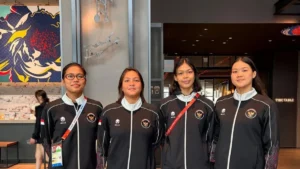
The disappointment of the withdrawal is compounded by the fact that the Indonesian team—consisting of Flairene Candra (backstroke), Adellia (breaststroke), Nadia Aisha Nurazmi (butterfly), and Adelia Chantika Aulia (freestyle)—had performed remarkably well to earn their spot in the final.
During the qualifying heats, the quartet clocked a time of 4 minutes and 15.90 seconds. This performance was sufficient to place them eighth overall, successfully navigating a field that included regional powerhouses such as China, South Korea, and Hong Kong. Swimming in the second heat, the Indonesians finished fifth, trailing the dominant Chinese squad by 16.11 seconds. However, their consistency and technical execution throughout the four legs were enough to secure a berth in the eight-team final, a significant achievement for Indonesian swimming on the continental stage.

Chronology of the Crisis
The sequence of events leading to the withdrawal unfolded rapidly on Friday afternoon. Following the morning qualifying sessions, the team entered a period of recovery and preparation for the evening final. It was during the pre-race warm-up and medical evaluation that the severity of Adellia’s muscle spasms became apparent.
- Morning Session: The Indonesian quartet successfully completes the qualifying heat with a time of 4:15.90, securing the eighth and final spot for the championship race.
- Post-Qualifying: The athletes undergo standard recovery protocols. Initial reports suggest high morale and focus on improving their split times for the final.
- Pre-Final Warm-up: During final preparations at the Tokyo Aquatics Centre, Adellia experiences acute, bilateral thigh cramps. Medical staff conduct an immediate assessment.
- Final Decision: The medical team determines that the risk of further injury—and the inability to maintain the required competitive pace—is too high. Indonesia officially notifies the technical delegate of their withdrawal.
- Aftermath: The announcement is made public via Akuatik Indonesia’s platforms, and the vacant lane is reallocated to Macau, the first reserve team, who had recorded a time of 4:19.84 in the heats.
Personal Accountability and Public Reaction
In a video statement released by Akuatik Indonesia, Adellia expressed profound remorse for the situation. "Adellia apologizes to all the people of Indonesia, the swimming fans in the country, and especially to her three teammates, Flairene, Nadia, and Chantika," the statement read.
Her teammates have reportedly stood by her, acknowledging that injuries are an inherent risk in high-intensity sports. The camaraderie within the Indonesian squad has been a focal point of their 2026 Asian Games journey, and this collective resilience is expected to be a primary focus as the athletes move forward toward their next events. The swimming community in Indonesia has largely responded with messages of support, emphasizing that the health of the athlete must remain the priority over podium aspirations.
Broader Context: The Challenges of the 2026 Asian Games
The 2026 Asian Games in Aichi-Nagoya represent the pinnacle of regional athletic competition. For a nation like Indonesia, where swimming infrastructure and high-performance training have seen consistent investment, reaching a final in a relay event is a significant indicator of progress.
The 4×100 meter medley relay is arguably the most complex event in swimming, requiring four distinct disciplines to work in near-perfect synchronization. The transition between legs and the individual technical proficiency required make it a high-pressure environment. For the Indonesian team, the ability to qualify at 4:15.90 demonstrates that the current training regime is yielding results. The loss of a final spot is not merely a missed opportunity for a medal, but also a loss of valuable "big-race" experience against the best in Asia.
Analysis of Implications for Indonesian Swimming
While the withdrawal from the 4×100 meter medley relay is a setback, analysts suggest that the broader trajectory of the Indonesian swimming team remains positive. The performance of individuals like Nadia Aisha Nurazmi, who has been noted for sharpening her personal records in other events, indicates that the depth of the talent pool is expanding.

However, the incident highlights the fragility of relay teams in international competition. Unlike individual events where an athlete can sometimes compete through minor discomfort, a relay is only as strong as its weakest link. The reliance on four specific specialists means that a single injury can collapse the entire entry.
Moving forward, Akuatik Indonesia will likely evaluate its medical and recovery support systems to ensure that athletes are better prepared for the physiological demands of multi-day championship meets. Nutrition, electrolyte management, and post-heat recovery are areas that international programs often emphasize to prevent the exact type of severe cramping that sidelined Adellia.
Moving Toward the Future
As the Asian Games continue, the focus for the Indonesian swimming contingent will shift to individual events and potential redemption in other relay categories. The maturity shown by the young squad in handling this disappointment will be a test of their character.
The inclusion of Macau into the final slot, while technically correct under the rules of the Asian Games, underscores the "next-man-up" reality of elite sports. For the Indonesian team, the focus will now shift toward rehabilitation for Adellia and ensuring that the rest of the squad remains focused on their upcoming competitions.
The 2026 Asian Games remain a crucial stepping stone for these athletes as they look toward future World Championships and Olympic cycles. While the result in the 4×100 meter medley relay will go down in the record books as a "Did Not Finish" or "Withdrawn," the experience gained in the qualifying heat provides a clear blueprint for what is possible. The resilience of the team, their technical growth, and their ability to navigate the highs and lows of international competition will ultimately define their legacy in this tournament.
As the sun sets on the Tokyo Aquatics Centre for the evening session, the Indonesian team leaves with their heads held high, supported by a nation that recognizes the immense effort and dedication required to reach the world’s most prestigious sporting stages. Their story in Aichi-Nagoya is far from over, and the lessons learned from this sudden departure will undoubtedly serve as fuel for their future endeavors.