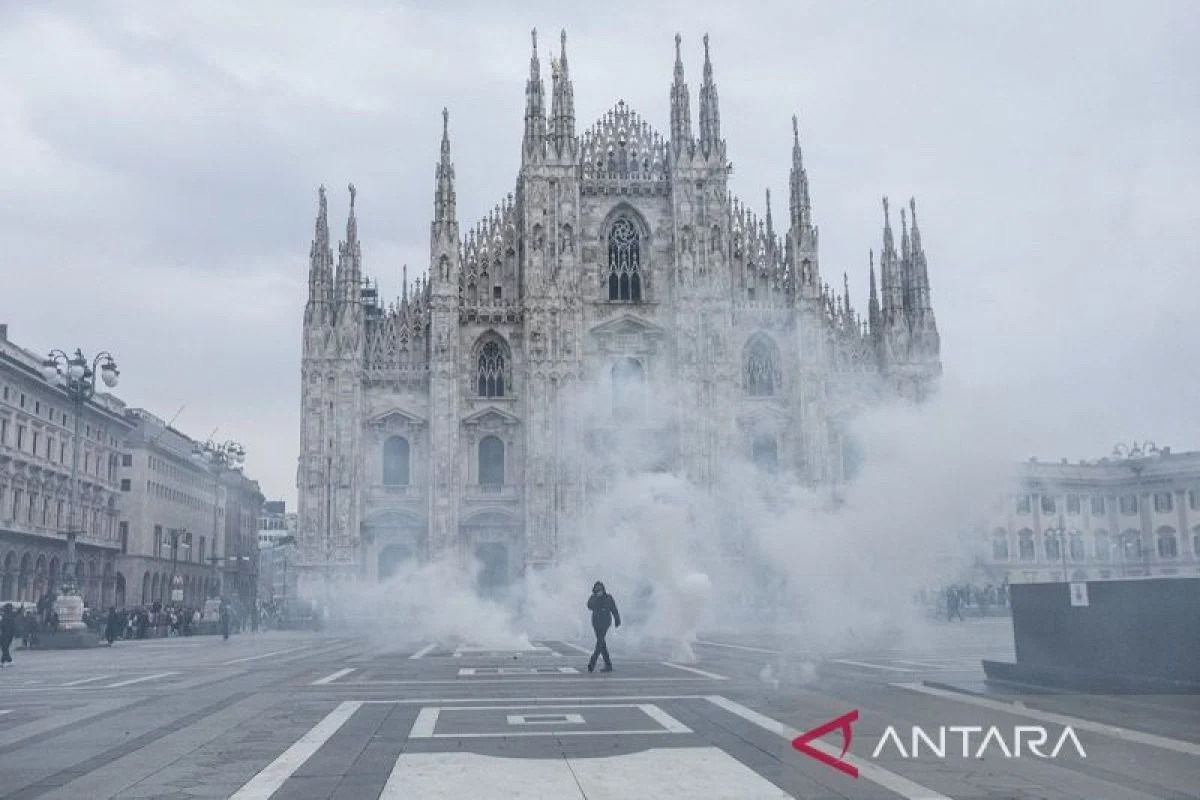
The streets of Milan, Italy, transformed into a theater of chaos this past weekend as mounting public frustration over the cost of living crisis erupted into violent clashes between protesters and law enforcement. The events, which unfolded on October 17 and 18, 2026, saw the iconic Piazza del Duomo and surrounding luxury retail corridors subjected to looting, vandalism, and arson. This surge in civil disobedience in Italy mirrors a broader, more intense wave of unrest currently sweeping across Europe, most notably in France, where systemic dissatisfaction with public services and inflationary pressures have pushed social tensions to a breaking point.
Chronology of the Milanese Uprising
The unrest in Milan began on Saturday, October 17, as a demonstration initially intended to voice grievances regarding the escalating costs of energy, housing, and food. However, the nature of the protest shifted rapidly by mid-afternoon. According to reports from the ground, groups of masked individuals—distinct from the primary body of peaceful demonstrators—began deploying aggressive tactics.
By late afternoon, the scene had devolved into a full-scale riot. Protesters utilized street furniture, including tables and chairs from nearby cafes, to construct barricades, which were subsequently set ablaze. High-end storefronts surrounding the Galleria Vittorio Emanuele II were targeted; windows were shattered, and merchandise was looted. In response, Italian police utilized standard riot control measures, including the deployment of tear gas and high-pressure water cannons, to clear the central district. The usually bustling tourist hub was effectively placed under lockdown.
By the evening of October 17, authorities reported that at least 50 individuals had been taken into custody, including several minors. Medical reports indicated that at least two police officers were injured in the fray. Despite the heavy police presence, the respite was short-lived. On Sunday, October 18, the unrest reignited. Hundreds of demonstrators, primarily consisting of younger individuals, reconvened near the Duomo. The pattern of destruction repeated, with reports of overturned refuse bins, destroyed urban infrastructure, and renewed physical confrontations with the Carabinieri and state police. By the end of the second day, the number of detainees exceeded 60, and total injuries across the weekend had climbed to 25, including ten law enforcement personnel.
The Economic Catalyst: Why Milan?
To understand the volatility in Milan, one must examine the socioeconomic pressures currently squeezing the Italian middle and working classes. Milan, long considered the engine of the Italian economy and a global capital for fashion and finance, has become increasingly unaffordable for its residents.
Recent economic data suggests that wage growth has remained largely stagnant for the better part of the decade, failing to keep pace with the hyper-inflation of essential goods. The housing market in Milan has seen a drastic escalation in rental prices, effectively pricing out younger professionals and low-income families. When coupled with rising utility costs—a byproduct of the broader energy crisis affecting the European Union—the standard of living for the average Milanese citizen has undergone a significant contraction.
Furthermore, there is a deep-seated perception that the government’s fiscal policies have prioritized institutional stability over the immediate survival of its citizens. This sentiment was echoed in the protesters’ slogans, which expanded beyond pure economic demands to include criticisms of international military expenditures and foreign policy decisions. For many in the streets, the perceived disconnect between the government’s geopolitical priorities and the domestic reality of empty cupboards served as a primary ignition point for the protests.
Comparative Analysis: The European Context
The timing of the Milan riots, coinciding with massive, state-paralyzing protests in France, has prompted analysts to investigate whether a centralized, pan-European movement is coordinating these efforts. In France, the situation has been significantly more severe. Demonstrations on October 17 saw hundreds of thousands of people across multiple cities demanding reforms in education and public services.
By October 18, the scale of the French protests had resulted in over 2,400 arrests and nearly 1,000 police injuries. The tragic death of one demonstrator in Paris due to cardiac distress during the chaos has further radicalized the discourse. While Italy, Belgium, and Portugal have all seen similar, albeit smaller, demonstrations, experts remain cautious about labeling these as a single, orchestrated revolt. Instead, the consensus among political scientists is that these events represent a "contagion of discontent." The shared experience of post-pandemic inflation and the erosion of public service quality has created a fertile environment for social unrest across the continent.
Official Responses and Government Stance
The response from the Italian government has been firm and condemnatory. Prime Minister Giorgia Meloni issued a strong rebuke of the violence, distinguishing clearly between the right to peaceful assembly and the criminal acts of looting and arson. "Freedom of expression is a cornerstone of our democracy," Meloni stated in a preliminary briefing, "but there is no democratic justification for the destruction of public property or the assault of those who protect our safety."
Milan’s Mayor, Giuseppe Sala, echoed these sentiments, expressing empathy for the economic hardships faced by his constituents while decrying the destruction of the city’s historic center. "We hear the concerns of the people, but the path of violence is a dead end that only serves to harm the very community the protesters claim to represent," Sala noted.
In an effort to stabilize the situation, Prime Minister Meloni scheduled an emergency cabinet meeting for October 19. The agenda focused on two critical fronts: maintaining public order through increased surveillance and security deployments, and addressing the underlying economic grievances that have provided the fuel for these riots. The government faces a delicate balancing act: failure to address the economic crisis risks further radicalization, while failing to control the streets risks losing public confidence in the state’s ability to govern.
Broader Implications and Future Outlook
The events of mid-October 2026 serve as a stark warning to the European Union and its member states. The volatility in Milan, Turin, and Bologna, when placed alongside the systemic upheaval in France, suggests that the "social contract" in Europe is under extreme duress.
The immediate implications are likely to be twofold. First, there will be a sharp increase in security expenditures as cities attempt to fortify their centers against further opportunistic looting. Second, there will be increased pressure on national governments to implement populist or emergency economic measures to quell public anger.
However, the deeper, structural issue remains: how can European nations maintain their current levels of social services and infrastructure while navigating an era of high costs and global economic instability? If the current trend of using violence as a vehicle for political change continues, it may lead to a cycle of state over-correction and further civil friction.
As of late October 2026, the situation in Milan remains fragile. While the immediate riots have been contained through significant police presence, the underlying economic anxieties have not dissipated. Observers will be closely watching the government’s upcoming fiscal proposals to see if they offer a genuine solution to the cost-of-living crisis or merely a temporary reprieve. For now, the streets of Italy’s financial capital remain a silent witness to a populace that is increasingly willing to risk everything to have their voices heard. The coming weeks will be decisive in determining whether this represents a temporary flare-up or the beginning of a sustained period of European social and political transformation.