The weekend in Saudi Arabia, long a subject of curiosity for international observers, is defined by a unique intersection of religious tradition, economic pragmatism, and global integration. While it is widely recognized that Friday holds a sacred position in Islam, the administrative reality of the Kingdom’s work week is more nuanced. Since 2013, Saudi Arabia has officially designated Friday and Saturday as its weekend, with the professional work week spanning from Sunday through Thursday. This shift represented a pivotal moment in the Kingdom’s history, marking a departure from the traditional Thursday-Friday weekend that had defined the nation’s professional and social rhythm for decades. To understand why this change occurred and how it influences the current landscape, one must look at the convergence of religious observance, geopolitical alignment, and the demands of an increasingly globalized economy.
A Historical Shift: The 2013 Royal Decree
For many years, the standard weekend in the Middle East, including Saudi Arabia, was Thursday and Friday. This arrangement was deeply rooted in Islamic tradition, where Friday is the day of communal prayer, and Thursday allowed for a longer transition into the weekend. However, as the Saudi economy became more deeply integrated into the global financial system, the disparity between the local work week and international business hours became a tangible barrier to growth.
On June 23, 2013, the late King Abdullah bin Abdulaziz Al Saud issued a landmark royal decree that altered the landscape of the Saudi labor market. The decree mandated that the official work week for all ministries, government agencies, financial institutions, and the Saudi stock market (Tadawul) would shift to Sunday through Thursday. This effectively established Friday and Saturday as the new weekend, a move designed to harmonize Saudi Arabia’s operating hours with the rest of the world.
The implementation was swift. By June 29, 2013, the new schedule was in full effect across government sectors and major financial institutions. Educational institutions, including schools and universities, were given a transition period to align their schedules with the start of the following academic year. This decision was not merely a logistical update; it was a structural realignment intended to reduce the "lost" days of business. When the weekend was Thursday and Friday, Saudi Arabia was closed for business on Thursdays while the rest of the world was working, and it was closed on Sundays while the West was on its own weekend. The shift to Friday-Saturday allowed for a greater overlap with global markets, effectively increasing the number of days the Kingdom could engage in synchronous international commerce.
The Religious Significance of Friday
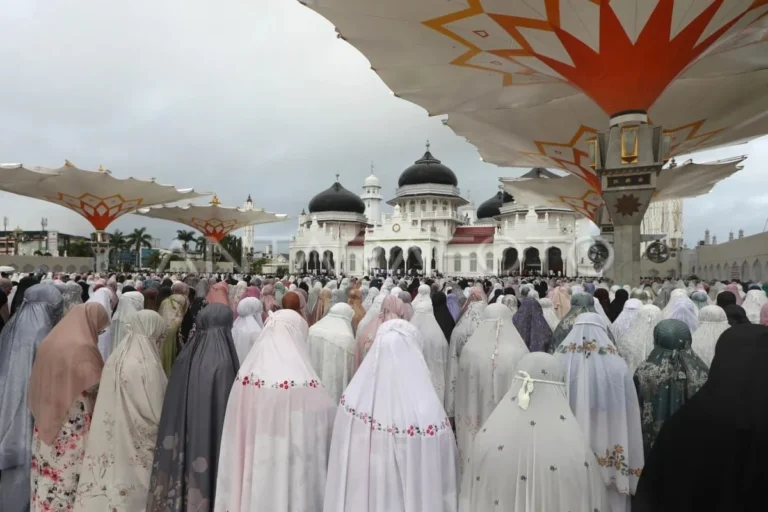
Despite the transition to a Friday-Saturday weekend, the spiritual status of Friday remains unchanged. In Islamic tradition, Friday—or Yawm al-Jumu’ah—is the holiest day of the week. It is characterized by the congregational Friday prayer (Salat al-Jumu’ah), which replaces the midday prayer (Dhuhr) for men who meet specific criteria.
The Saudi government’s decision to maintain Friday as a non-working day reflects a commitment to preserving the religious character of the state even as it pursues modernization. Labor laws in the Kingdom underscore this priority. Under the current Saudi Labor Law, employees are entitled to a weekly rest period with full pay, and the law explicitly mandates that one of these days must be Friday. While there are provisions for essential services or specific industries to designate alternative rest days, the law ensures that the religious obligations of the workforce are protected. This ensures that the professional shift does not come at the cost of the fundamental spiritual requirements of the citizenry.
Economic Implications and Global Alignment
The economic logic behind the 2013 reform was straightforward: minimizing the divergence from international business calendars. Before 2013, the mismatch between Saudi office hours and those of its international partners created significant friction in trade, banking, and investment.
By aligning with the Friday-Saturday weekend model, Saudi Arabia mirrored the practices of its neighbors in the Gulf Cooperation Council (GCC), such as the United Arab Emirates, Kuwait, and Qatar. This regional uniformity facilitated smoother intra-regional trade and institutional cooperation. The move also sent a clear signal to foreign investors that the Kingdom was prepared to adapt its administrative structures to better facilitate international partnerships.
From a macroeconomic perspective, the "time-gap" that existed under the old system was estimated to be a hindrance to the efficiency of the Saudi stock market. Financial analysts at the time noted that because the Saudi market was closed on Thursdays and Fridays, it could not react to international market movements in real-time, leading to potential volatility or delayed responses when the market reopened on Saturday. By shifting to a Sunday-Thursday week, the Kingdom aligned itself more closely with global financial centers, allowing for better synchronization with European and Asian markets.
Comparative Perspective: The Global Weekend
The concept of a "weekend" is a modern social construct, and its implementation varies significantly across the globe. In Western nations, the Saturday-Sunday weekend is the standard, largely rooted in the post-industrial labor movement and, in some contexts, the Judeo-Christian tradition of Sunday as a day of rest.
In contrast, the Middle Eastern model reflects a different historical and cultural trajectory. By observing Friday as a day of rest, Saudi Arabia adheres to its cultural identity. However, by adopting Saturday as the second day of the weekend, it acknowledges the reality of a globalized world where Saturday is a universal day for rest and non-essential commerce. This hybrid model—preserving the religious Friday while adopting the global Saturday—is a testament to the Kingdom’s ability to balance tradition with pragmatic development.
It is worth noting that some countries, such as the UAE, have even recently experimented with further adjustments. In early 2022, the UAE shifted to a four-and-a-half-day work week, with a half-day on Friday, a full Saturday, and a full Sunday off. This represents the cutting edge of global labor trends, showing how states in the region are continuously reassessing their work-life balance and economic efficiency. While Saudi Arabia has remained steady with the Friday-Saturday model since 2013, the regional discourse suggests that these structures are not static and remain subject to evolving economic strategies.
The Impact on Public and Private Sectors
The transition to a Friday-Saturday weekend fundamentally changed the rhythm of daily life in Saudi Arabia. For families, it provided a more standardized schedule that matched the academic year. In the early days of the transition, there was a period of adjustment as businesses and individuals realigned their social lives. However, over a decade later, the Friday-Saturday cycle is fully embedded in the social fabric.
In the private sector, the shift allowed for more consistent engagement with international vendors and clients. Companies operating in the Kingdom found it easier to coordinate meetings and transactions with partners in Europe and North America, who previously had to navigate the "lost" days of the Saudi weekend. This has been particularly critical as Saudi Arabia diversifies its economy under the Vision 2030 framework, which places a heavy emphasis on attracting foreign direct investment, expanding the tourism sector, and fostering international partnerships.
Conclusion: A Dynamic Balance
The perception that Saudi Arabia is "off" on Friday is both true and incomplete. It is a day of profound religious importance, and its status as a rest day is protected by law and custom. However, the addition of Saturday to the weekend represents a strategic evolution, acknowledging that for a nation to thrive in the 21st century, it must maintain a rhythm that is both internally consistent with its faith and externally compatible with the global economy.
The 2013 reform remains a benchmark for how the Kingdom approaches structural change: with clear royal authority, a focus on national interest, and a careful balance between preserving traditional values and meeting the needs of a modern, interconnected world. As Saudi Arabia continues to open its doors to the world, the Friday-Saturday weekend stands as a clear example of how the Kingdom manages its dual identity as a center of the Islamic world and a burgeoning global economic player.
Ultimately, the weekend in Saudi Arabia is a reflection of a society that is deeply grounded in its religious heritage while remaining pragmatically focused on its future. Whether for prayer, family, or the demands of global business, the current structure serves as a functional framework that supports the nation’s ongoing transformation. As history has shown, these administrative choices are not merely about days off; they are about aligning the nation’s pulse with the requirements of growth, stability, and cultural preservation.