
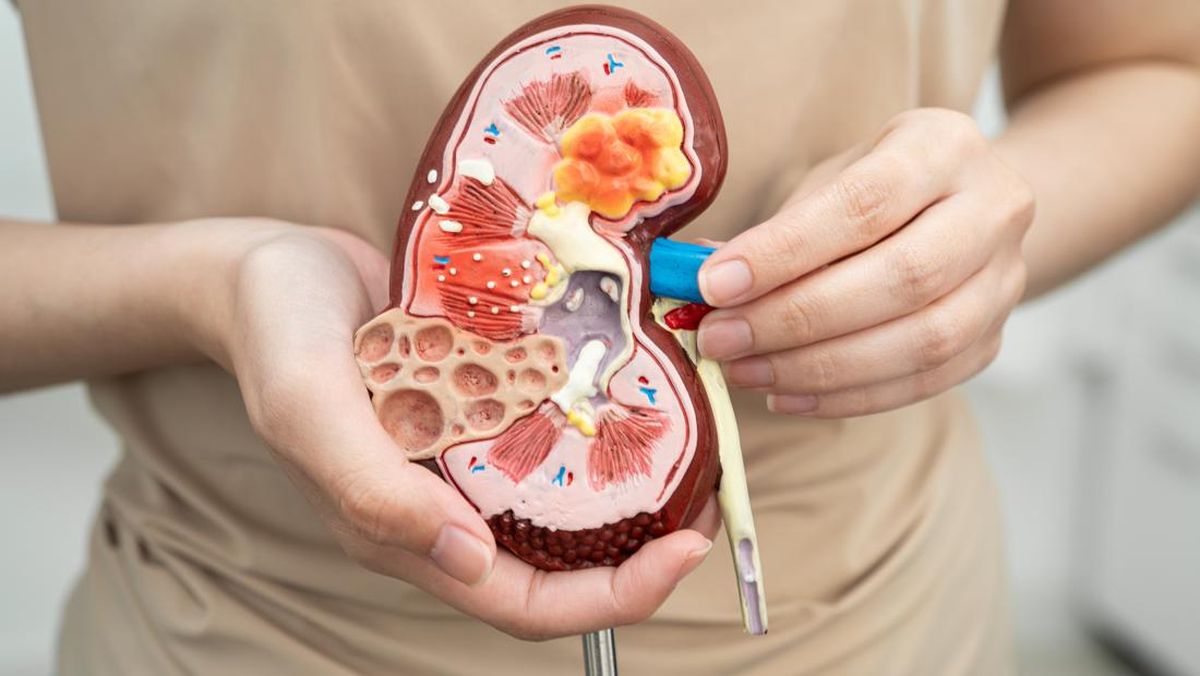
Kidney failure, a medical condition traditionally associated with the aging population, has increasingly emerged as a formidable threat among children and adolescents in Indonesia. Driven largely by non-communicable diseases (NCDs) such as hypertension and diabetes, pediatric renal deterioration often progresses silently, fueled by a severe lack of public awareness and delayed medical intervention. The harrowing experiences of young patients highlight a broader public health crisis that is testing the limits of early detection and preventative healthcare across the archipelago.
The Human Toll: Case Studies of Agistina and Rahmat
The devastating impact of this trend is exemplified by the struggles of teenagers like Agistina Kamila and M. Rahmat, both of whom faced near-fatal health collapses before receiving their diagnoses.
Agistina, a 17-year-old vocational school student from Tangerang, is forced to undergo hemodialysis at least twice a week. Her condition has temporarily derailed her education, as her kidneys are entirely incapable of filtering waste without mechanical intervention. Last year, Agistina suffered a week-long coma prior to being diagnosed with chronic kidney failure.
Her mother, Lisna, recounted that her eldest daughter initially lost consciousness and required intensive care unit (ICU) hospitalization. During her comatose state, Agistina underwent emergency dialysis, a grueling procedure that doctors initially limited to two hours due to her fragile physical condition—well short of the standard three-to-five-hour duration. Although she briefly regained consciousness to call for her mother, she relapsed into a coma before stabilizing after a follow-up hemodialysis session on Monday.
Reflecting on Agistina’s medical history, Lisna noted that her daughter had always been more frail than her peers, a vulnerability previously attributed by doctors to recurring tonsillitis. However, this assumption was shattered when Agistina was diagnosed with kidney stones during her first year of vocational school. Although initial treatments provided temporary relief, her condition deteriorated sharply in September of the following year due to a severe urinary tract infection (UTI) complicated by recurrent kidney stones that obstructed her urinary tract. Before the infection could be fully treated, she slipped into a coma. Subsequent evaluations revealed that the root cause of her catastrophic decline was unmanaged hypertension that had permanently compromised her renal function.
A parallel narrative unfolds in Makassar, South Sulawesi, where M. Rahmat undergoes regular, life-sustaining dialysis. Rahmat was diagnosed with end-stage renal disease at just 15 years old, during his first year of high school. He admitted that from the seventh grade, he regularly stayed up late, consuming packaged sugary drinks and heavily salted snacks.
When he reached the tenth grade, Rahmat experienced persistent nausea, vomiting, paleness, lethargy, and sudden seizures, prompting his parents to rush him to the emergency room. Laboratory tests revealed that his creatinine levels were thirty times higher than the normal range for his age, accompanied by a dangerously elevated blood pressure reading of 172/93. Tests confirmed that his kidney function had plummeted below 15 percent. Physicians concluded that years of uncontrolled hypertension, exacerbated by poor dietary habits, had systematically destroyed his renal tissues.
The Etiology of Pediatric Renal Decline
While hypertension and diabetes were once considered exclusive to older demographics, shifting lifestyle factors, poor dietary habits, and genetic predispositions have lowered the age of onset for non-communicable diseases. In pediatric cases, chronic kidney disease is not solely linked to acquired lifestyle factors; it can also stem from congenital anomalies, genetic disorders, immune-mediated inflammations of the renal filters (glomerulonephritis), and nephrotic syndrome.
However, when lifestyle-induced hypertension and diabetes go unchecked in children, the trajectory toward chronic renal failure accelerates rapidly. The Indonesian Ministry of Health estimates that only about one-third of hypertension cases nationwide are formally diagnosed. To capture early-stage anomalies among youth, the government has leveraged the School Free Health Check (Cek Kesehatan Gratis/CKG Sekolah) initiative.
Data compiled through July 2026 reveals the scale of the hidden crisis: out of 14.64 million children and adolescents screened, approximately 2.21 million—or roughly 15 percent—exhibited blood pressure readings above normal parameters. While these elevated readings do not immediately constitute a formal hypertension diagnosis, they serve as a critical red flag for healthcare providers.
The Role of Public Awareness and Institutional Response

According to the Indonesian Children’s Kidney Foundation (Yayasan Ginjal Anak Indonesia – Yagina), a fundamental driver of late-stage diagnoses is the widespread misconception among parents that children are immune to adult-onset chronic diseases. Agustia Sumariati, head of the foundation, emphasizes that bridging the knowledge gap in rural and underserved areas remains an urgent priority. Over the past decade, Yagina has witnessed a steady upward trajectory in pediatric kidney cases across the Greater Jakarta area, with its network currently supporting approximately 80 children afflicted with renal failure.
Public health officials stress that the epidemiological shift from infectious diseases to non-communicable diseases has created a landscape dominated by silent killers. Deputy Minister of Health Dante Saksono Harbuwono noted that patients with hypertension or diabetes frequently remain asymptomatic during the early stages of disease progression. Consequently, relying solely on patient complaints is insufficient, making proactive population-wide screenings essential for catching complications before irreversible organ damage occurs.
Preventative Strategies and Moving Forward
To curb the rising tide of pediatric renal failure, public health experts and advocacy groups agree that preventative measures must be scaled up significantly. The expansion of the School Free Health Check program is widely regarded as a cornerstone of this defense. Initially targeted to reach 16.9 million children ranging from kindergarten to high school in 2026, the program has surpassed expectations, screening more than 25 million children nationwide—a testament to the high demand for accessible primary diagnostics.
In addition to institutional screenings, Yagina advocates for targeted regulatory and educational interventions to alter children’s dietary environments. Recommendations include reviving nationwide campaigns encouraging students to carry personal water bottles, restricting access to high-sodium and high-sugar convenience foods in school environments, and mandating clearer, larger, and more legible nutritional labeling on commercial food and beverage packaging to help both children and parents navigate dietary choices safely.
Despite his own physical vulnerabilities and frequent hospitalizations, M. Rahmat continues to champion health advocacy among his peers. Operating the TikTok account @pejuangdialisis, which boasts over 10,000 followers, he uses his platform to share his lived experience and educate other teenagers about the silent dangers of poor dietary habits and neglected hypertension. Through the voices of young survivors and the concerted efforts of health authorities and advocacy foundations, the medical community hopes to transform public awareness and prevent future generations from falling victim to this preventable crisis.