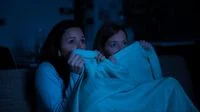
While some people instinctively close their eyes, plug their ears, or flee at the mere hint of a jump scare, millions of others willingly pay good money to be terrified. From packed theater screenings of psychological thrillers and slasher franchises to labyrinthine, pitch-black haunted houses during the autumn season, a massive demographic actively seeks out terror. For these individuals, the rapid spike in heart rate, the sudden adrenaline surge, and the lingering sense of dread are not deterrents—they are the primary objective.
Historically, mainstream society often viewed this penchant for fright with mild bewilderment. Why would anyone voluntarily subject themselves to psychological distress? However, contemporary psychological and neurological research suggests that the human relationship with fear is remarkably complex. When sought out in controlled environments, fear transitions from a vital evolutionary warning mechanism into a recreational pursuit. Understanding this phenomenon requires an examination of behavioral science, physiological monitoring during extreme stress, and the profound differences in individual personality traits that dictate how human beings process menace.
Defining Recreational Fear: The Science of Controlled Terror
In psychological literature, the pursuit of terrifying experiences for pleasure is categorized as "recreational fear." Unlike real-world threats—which trigger debilitating anxiety, helplessness, and long-term trauma—recreational fear occurs within a tightly regulated, safe framework. Participants consciously know they are in a simulated environment where safety exits exist and ultimate harm is structurally impossible.
This conceptual framework was rigorously tested in a landmark field study published in the journal Psychological Science, titled Playing With Fear: A Field Study in Recreational Horror. Rather than relying on traditional methodologies—such as retrospective surveys or laboratory simulations where participants merely watch clips on a monitor—researchers took their investigation directly into the field: a commercial, highly immersive haunted house.
By embedding themselves within a real-world attraction, the research team was able to capture authentic physiological and emotional responses in real time. Participants were equipped with wearable heart-rate monitors to track cardiovascular fluctuations as they navigated pitch-black corridors, narrow passages, and unexpected actors lunging from the shadows. Simultaneously, researchers administered periodic psychological assessments to measure reported levels of fear and enjoyment at various milestones within the labyrinth.
The empirical data yielded a fascinating psychological blueprint. The relationship between fear and enjoyment was found to map closely onto an inverted U-shaped curve.
According to this model, pleasure increases in direct proportion to fear, scaling upward until it hits an optimal equilibrium point. Within this "sweet zone," the adrenaline, suspense, and sudden shocks provide an exhilarating rush. However, once fear crosses a certain threshold and becomes overwhelming, the trajectory reverses sharply. When terror surpasses the individual’s capacity to process it as safe, enjoyment plummets, transforming recreation into genuine distress.
Furthermore, the study revealed that physiological markers closely mirrored this emotional dichotomy. Large-scale cardiovascular fluctuations—measured as sudden, steep spikes in heart rate—correlated strongly with raw, unprocessed fear. Conversely, smaller, more rhythmic physiological modulations tracked with the inverted U-shaped curve of sustained enjoyment, indicating that the human body can consciously differentiate between manageable suspense and distressing panic.
Autonomy and Agency: Why Voluntary Participation Amplifies Thrills
Beyond physiological triggers, the cognitive framing of an experience heavily dictates whether an individual will enjoy a horror attraction. A critical finding from the haunted house field study involved the motivational background of the participants.
When data was analyzed based on how visitors arrived at the attraction, a stark divide emerged. Approximately 56.5 percent of the participants reported visiting the haunted house entirely of their own volition, driven by an intrinsic desire for a scare. Meanwhile, the remaining 43.5 percent attended out of compliance, persuaded by the social pressure of friends, romantic partners, or family members.
Across the board, participants rated their overall enjoyment quite high, registering an average of 6.95 out of a possible nine points, while self-reported fear averaged 5.71 out of nine. However, when researchers cross-referenced these scores with motivation, a clear psychological discrepancy surfaced: individuals who chose to enter the attraction independently reported significantly higher levels of enjoyment compared to those who attended due to external social coercion.
This distinction highlights the vital role of perceived agency. Psychological research consistently demonstrates that human beings tolerate and even relish high-stress scenarios much better when they feel a sense of control over their exposure. Choosing to step into a haunted house or press play on a horror movie creates a mental buffer. The participant mentally prepares themselves to be scared, framing the impending dread as a game rather than an assault. Conversely, being dragged into a terrifying environment against one’s will strips away this vital cognitive armor, turning what should be a fun adrenaline sport into an exercise in anxiety.
Sensation-Seeking and Personality: Who Enjoys the Dark?
While situational agency matters, deep-seated personality traits ultimately dictate why one person seeks out gore and ghosts while another retreats to romantic comedies. Psychological research summarized in the journal Frontiers in Psychology explores the concept of "sensation-seeking"—a personality trait characterized by the continuous search for novel, complex, and intense sensations and experiences, along with the willingness to take physical, social, and financial risks for the sake of such experiences.
Individuals scoring high on sensation-seeking scales are naturally drawn to high-arousal environments. For these personalities, horror films, roller coasters, and extreme sports serve a functional purpose: they satiate an underlying neurological craving for stimulation. When confronted with cinematic violence, sudden jump scares, or eerie sound design, their nervous systems process the adrenaline surge as a rewarding, highly engaging experience rather than an unbearable threat.
Yet, sensation-seeking alone cannot entirely explain the vast demographic appeal of the horror genre. Emotional resonance, personal trauma histories, empathy levels, and specific triggers also heavily influence individual media consumption habits.
Psychologists note that horror is not a monolithic genre; rather, it encompasses a vast sub-genre ecosystem. A viewer who thoroughly enjoys atmospheric, slow-burn psychological mysteries or supernatural thrillers might actively despise graphic slashers or body horror. Similarly, some audience members thrive on unpredictable jump scares, while others prefer deeply unsettling narrative tension that probes the darker corners of human morality.
Consequently, an individual’s affinity for fear is highly nuanced. Enjoying a specific type of horror does not inherently mean a person is fearless, reckless, or emotionally detached. Often, it simply reflects a well-calibrated preference for how they choose to process simulated vulnerability.
The Evolutionary Paradox: Why Does Fear Feel Good?
At first glance, enjoying fear appears to run counter to evolutionary logic. For millennia, the physiological mechanisms of fear—such as the fight-or-flight response, cortisol release, and rapid heart rate—evolved strictly to keep human beings alive in the face of mortal predators and environmental hazards. In ancestral times, miscalculating a threat could mean death.
So, how did a survival mechanism transform into a multi-billion-dollar entertainment industry?
Evolutionary psychologists suggest that recreational fear acts as a safe, low-stakes simulation training ground. Throughout human history, play has served as a primary method for young mammals to practice essential survival skills without actual consequence. Lion cubs playfully stalk and tackle one another, learning the mechanics of predation in a secure environment.
Similarly, modern humans use horror media and haunted attractions as a cognitive playground. By exposing themselves to controlled doses of mortal peril, individuals mentally rehearse threat detection, emotional regulation, and crisis response. When the movie ends or the exit doors of the haunted house open, the brain performs a rapid reality check, reassuring the individual that they are safe. This cognitive shift releases a flood of dopamine—the brain’s reward neurotransmitter—turning the preceding terror into an intoxicating sense of triumph and relief.
Broader Implications and Mental Health Applications
The growing body of scientific literature surrounding recreational fear extends far beyond pop-culture analysis; it holds practical implications for clinical psychology and emotional regulation.
In recent years, therapists have begun exploring how controlled exposure to fear in safe environments can help individuals build emotional resilience. By learning to navigate simulated terror, people often improve their ability to self-soothe during high-stress real-world situations. The ability to separate physiological arousal from psychological panic—recognizing that a racing heart does not necessarily mean imminent danger—is a core skill taught in cognitive behavioral therapy (CBT).
Ultimately, the enduring popularity of horror films and haunted attractions underscores a fundamental truth about human psychology: humans possess a deep-seated need to confront the dark. By placing fear within a predictable, voluntary boundary, individuals reclaim agency over their anxieties. They transform a primitive, paralyzing emotion into a thrilling, manageable adventure, proving that sometimes, the safest place to explore the unknown is right in the heart of the terror.