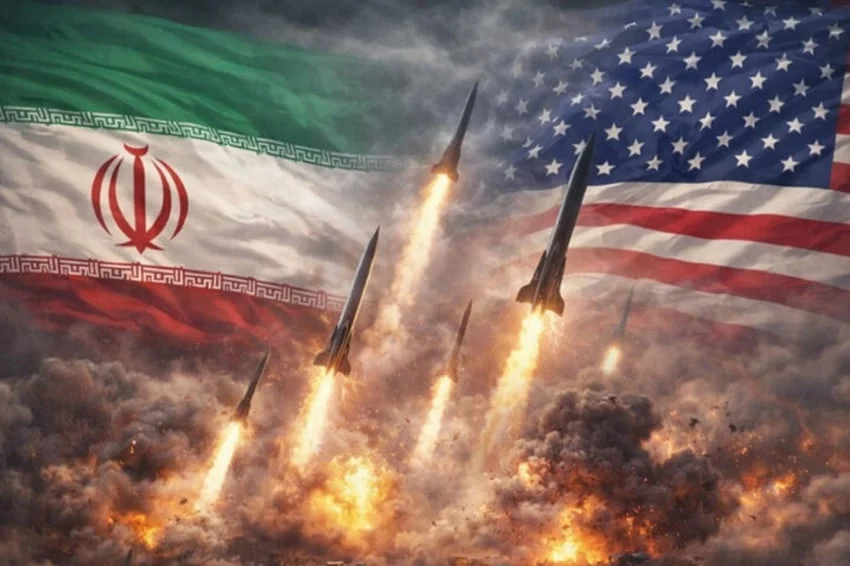
TEHRAN — Amid intensifying geopolitical friction and direct military escalations in the Middle East, the Islamic Republic of Iran has formally acknowledged internal deliberations regarding a potential reversal of its long-standing religious and political prohibition against the acquisition of nuclear weapons.
Senior Iranian officials have confirmed that the nation is actively debating whether to maintain its self-imposed ban on weaponized nuclear technology if regional warfare continues to expand. While Tehran emphasizes that no definitive policy shift has been formally ratified, the mere public acknowledgment of this debate marks a significant departure from decades of official rhetoric branding nuclear weapons as contrary to Islamic jurisprudence and national security principles.
The discourse reflects a growing hardening of domestic sentiment within Iran, fueled by persistent military strikes, cyber warfare, and targeted sabotage against its critical infrastructure and nuclear facilities by adversaries, primarily Israel and the United States. As conventional deterrence models face mounting strain, the calculus surrounding Iran’s strategic posture is undergoing unprecedented internal scrutiny.
Evolving Rhetoric from the Supreme National Security Council
The debate surrounding Iran’s nuclear threshold came to light following statements made by Major General Mohsen Rezaei, Secretary of the Supreme National Security Council of Iran and a former commander of the Islamic Revolutionary Guard Corps (IRGC). Speaking in a televised interview broadcast on state television, Rezaei addressed the foundational tenets of the nation’s nuclear policy.
"No new decision has been made regarding a change in our nuclear doctrine," Rezaei stated. However, he immediately introduced a provocative caveat that has drawn international alarm: "Yet, the question has naturally arisen: if a war breaks out again, do we wish to maintain our previous doctrine or not?"
Rezaei framed the internal debate not merely as a top-down military calculation, but as a reflection of shifting public opinion and profound disillusionment with international diplomatic frameworks. According to the senior security official, the Iranian populace is increasingly questioning the utility of remaining compliant with international non-proliferation agreements when the country continues to face external aggression.
"The Iranian nation has its own demands," Rezaei explained. "The public observes that enemies have targeted our nuclear facilities. They ask why these facilities are attacked. We have complied with all inspections by the International Atomic Energy Agency [IAEA] and even facilitated access for their inspectors. Therefore, when people see such things, it is natural for them to ask why we should allow this situation to persist."
Historical Context and the Fatwa Against Nuclear Weapons
To understand the weight of Iran’s current deliberations, it is necessary to examine the historical architecture of its nuclear policy. For decades, Tehran’s official stance has been anchored by a religious decree, or fatwa, issued by Supreme Leader Ayatollah Ali Khamenei in the early 2000s.
The fatwa explicitly declares the production, stockpiling, and use of weapons of mass destruction—including nuclear arms—to be haram (forbidden) under Islamic law. Iranian leadership has repeatedly cited this religious edict as the ultimate guarantee of the exclusively peaceful nature of its nuclear program.
However, the line between a civilian nuclear program with advanced enrichment capabilities and a threshold weapon state has long been a subject of intense international dispute. Iran currently enriches uranium up to 60% purity—technically close to the 90% weapons-grade threshold, far beyond the needs of civilian nuclear energy generation. Western intelligence agencies and the IAEA have frequently raised concerns about the accelerating pace and technical capability of Iran’s nuclear advancements.
The recent public discourse initiated by figures like Rezaei suggests that the political and security elite are testing the waters for a post-fatwa strategic reality, where traditional religious constraints could be reinterpreted or superseded by existential security imperatives in the face of all-out war.
Chronology of Escalation: From JCPOA to Active Confrontation
The re-evaluation of Iran’s nuclear doctrine does not occur in a vacuum; it is the culmination of a multi-year breakdown in diplomatic solutions and a rapid escalation of direct kinetic warfare in the region.
- 2015 (The JCPOA Era): Iran and world powers—including the US, UK, France, Germany, Russia, China, and the European Union—sign the Joint Comprehensive Plan of Action (JCPOA). Under this accord, Iran curtails its uranium enrichment and grants intrusive access to IAEA inspectors in exchange for the lifting of crippling economic sanctions.
- May 2018: The United States, under the administration of President Donald Trump, unilaterally withdraws from the JCPOA and implements a policy of "maximum pressure," re-imposing severe economic sanctions on Tehran.
- 2019–2020: In response to the failure of European signatories to shield Iran from US sanctions, Tehran begins systematically breaching the limits of the JCPOA, restarting advanced centrifuge research and increasing uranium enrichment levels. The tensions peak in January 2020 with the US assassination of IRGC commander General Qasem Soleimani in Baghdad.
- 2021–2023: Indirect talks to revive the nuclear deal stall repeatedly. Meanwhile, sabotage operations targeting Iranian nuclear sites—such as Natanz—and the assassination of prominent Iranian nuclear scientists like Mohsen Fakhrizadeh are widely attributed to foreign intelligence services, amplifying demands within Iran for enhanced security measures.
- 2024–2026: Direct military exchanges between Iran and Israel shatter long-standing norms of shadow warfare. With missile and drone barrages exchanged across regional borders and critical infrastructure placed in the crosshairs, domestic pressure within Iran mounts against adherence to international non-proliferation norms. The public and hardline factions increasingly view self-imposed nuclear restraint as a strategic vulnerability rather than a diplomatic asset.
International Reactions and Non-Proliferation Concerns
The signal from Tehran that its nuclear doctrine is up for debate has triggered immediate concern among Western capitals, regional allies, and global non-proliferation watchdogs.
The International Atomic Energy Agency, tasked with monitoring global nuclear activities, has consistently warned that Iran’s accumulation of near-weapons-grade enriched uranium reduces its "breakout time"—the period required to produce enough fissile material for a nuclear weapon—to mere weeks or days.
While Western governments have not yet formally declared that Iran has crossed the threshold into weaponization, intelligence assessments from the US and European allies indicate that Tehran has maintained all the necessary technological, scientific, and industrial infrastructure to weaponize its program relatively quickly should the political leadership give the final order.
Neighboring nations in the Gulf, while pursuing diplomatic channels to de-escalate regional tensions, remain deeply anxious over the prospect of a nuclear-armed Iran. Such a development could trigger a broader regional arms race, with other Middle Eastern powers seeking their own nuclear deterrent capabilities to maintain strategic balance.
Strategic Implications and Future Outlook
A formal decision by Iran to abandon its non-nuclear policy would fundamentally alter the security architecture of the Middle East and deliver a fatal blow to the global non-proliferation regime.
Analysts suggest that if Iran were to cross the nuclear threshold, it would likely invite preventive military actions from Israel and the United States, designed to physically incapacitate its nuclear infrastructure before a warhead could be successfully finalized and deployed. Conversely, hardliners within Iran argue that acquiring a nuclear deterrent is the only definitive method to prevent foreign military intervention and ensure regime survival against technologically superior adversaries.
As the debate continues behind closed doors in Tehran, the international community faces a critical window of uncertainty. The rhetoric from senior figures like Mohsen Rezaei signals that the psychological and political taboos surrounding nuclear weapons within the Iranian establishment are eroding under the pressure of prolonged conflict. Whether this rhetoric serves as a tactical bargaining chip to extract concessions or foreshadows a historic shift in global security will depend heavily on the trajectory of the ongoing conflicts in the Middle East.