Ngawi, a historic regency in the East Java province of Indonesia, often evokes images of the colonial-era fortress Benteng Pendem or the melancholic campursari melodies popularized by the legendary Didi Kempot. However, beyond its modern vibrancy and cultural landmarks, the heart of the city holds layers of deep historical significance. For travelers and historians alike, a journey through Ngawi invariably begins at its bustling town square, the Alun-alun Ngawi, which serves as the geographic and social epicenter of the regency. Beyond the culinary stalls and recreational spaces, this central hub provides a gateway to exploring the region’s profound religious and administrative evolution.
In recent historical excursions conducted by local heritage enthusiasts, including researchers from the "Sadar Lestari" community alongside regional historians, deeper light has been shed on the structural and spiritual cornerstones of Ngawi. By examining centuries-old artifacts, architectural symbolism, and aristocratic burial grounds, contemporary scholars are piecing together the intricate socio-political dynamics of the Madiun residency during the 19th and early 20th centuries.
Architectural and Epigraphic Evidence at Masjid Agung Ngawi
Situated immediately to the west of the central Alun-alun lies the venerable Masjid Agung Ngawi, historically known to locals as Masjid Gedhe before its eventual renaming to Masjid Agung Baiturrahman in 2010. While successive modern renovations have significantly transformed the original fabric of the structure, subtle historical markers survive to tell the tale of its origins.
Upon entering the front veranda, visitors encounter a preserved wooden plaque functioning as the founding inscription of the mosque. Written in Arabic Pegon—a modified Arabic script used to write indigenous Southeast Asian languages—the epigraph records that the mosque was commissioned by Regent Brotodiningrat, who governed Ngawi from 1877 to 1885. Specifically, the establishment was marked on Tuesday Kliwon, November 25, 1879 AD, corresponding to the 10th of Dhu al-Hijjah 1296 AH.
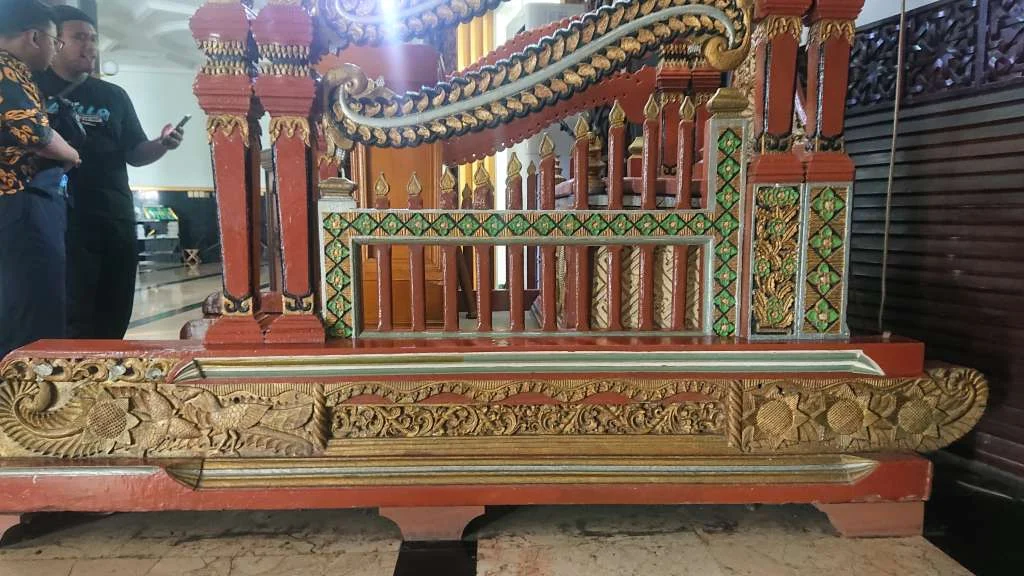
Further historical clues are embedded within the intricate carvings of the mosque’s interior pulpit. Art historians and heritage conservationists have identified a rich tapestry of decorative motifs, including scrolling flora, sun symbols, peacocks, and a distinct carving depicting a three-headed fish known locally as iwak telu sirah sanunggal. According to regional researchers, this specific aquatic symbolism points toward the historical presence and influence of the Syattariyah Sufi order, which flourished across various pockets of the Ngawi region during the colonial era.
The Political Turmoil of the Colonial Era: The Brotodiningrat Affair
The founding figure of the mosque, Regent Brotodiningrat, was a prominent and charismatic local leader whose influence extended far beyond administrative duties. His leadership style and widespread authority eventually drew intense scrutiny and suspicion from Dutch colonial administrators, most notably the Resident of Madiun, J. J. Donner.
This friction culminated in a historical episode documented in academic literature, such as Ong Hok Ham’s seminal work Madiun dalam Kemelut Sejarah, commonly referred to as the "Brotodiningrat Affair." Colonial records indicate that Resident Donner lodged severe accusations against the regent, alleging that Brotodiningrat had organized underground networks and fostered resistance movements across the regency and neighboring Magetan.

Compounding these political tensions, colonial authorities also targeted prominent spiritual figures linked to the local elite. Among them was Kiai Kasan Ngalwi, a spiritual mentor associated with the regional leadership, who was subsequently arrested by colonial police. The Dutch administration accused the religious teacher of imparting esoteric knowledge—such as invulnerability rituals and tactical evasion techniques—to local anti-colonial resistance groups and agrarian insurgents operating throughout the Madiun and Ngawi territories. This intersection of religious authority, indigenous governance, and colonial anxiety illustrates the volatile political landscape of 19th-century Java.
The Concept of Catur Gatra and the Sacred Landscape of Kauman
The layout of historic Javanese towns typically adhered to the traditional "Catur Gatra" urban planning model. As detailed by cultural historian Denys Lombard in his comprehensive study Nusa Jawa Silang Budaya, this traditional framework revolves around four core urban elements: the royal palace or administrative center (keraton or regency office), the central market (pasar), the central public square (alun-alun), and the principal mosque (masjid).
In alignment with this urban design paradigm, the establishment of the grand mosque invariably fostered the creation of a specialized religious settlement known as Kauman. Derived from the word kaum (denoting religious adherents or santri), Kauman communities served as residential and intellectual hubs for Islamic scholars, religious teachers, and administrative officials tied to the mosque’s administration. In Ngawi, the Kauman district evolved into a quiet enclave directly adjacent to the center of civic life, preserving the memory of the region’s early religious intelligentsia.
Inside the Somber Gates of Pesarean Purwodipradjan

Just a short distance from the dynamic pulse of the town center lies the serene and contemplative Makam Kauman (Kauman Cemetery). Enclosed by historic gates bearing the inscription "Pesarean Purwodipradjan," this burial complex serves as the final resting place for many of the regency’s historical elite, including colonial-era administrators, regents, local patihs (chief ministers), and district wedanas.
Upon entering the cemetery, visitors are greeted by twin stone steles featuring Old Javanese scripts and Arabic Pegon inscriptions that denote the establishment and lineage of the burial grounds. Among the most prominent gravesites within the enclosure is that of Raden Tumenggung Purwodiprodjo, a former Regent of Ngawi who previously served as the Patih of Bojonegoro. Historical records from the Dutch-language newspaper Het nieuws van den dag voor Nederlandsch-Indië, dated December 11, 1911, document his appointment to the regency following a formal recommendation by Madiun Resident I. Mullmeister.
Adjacent to the regent’s tomb lie the resting places of other key administrative figures who steered local governance during the colonial period. These include Raden Ngabehi Prawirowinoto, the second Patih of Ngawi who succeeded the regency’s inaugural chief minister, Raden Pandji Pringgokusumo. In the hierarchy of traditional Javanese local government, the office of the patih functioned effectively as the primary deputy to the regent, comparable to a modern vice-regent.
Furthermore, the cemetery holds the remains of various regional officials whose administrative jurisdictions spanned multiple districts. Gravesites belonging to former Wedanas of Pacitan and Sine, as well as colonial-era health officials—such as a smallpox vaccination mantri tasked with monitoring public health in Magetan—highlight the diverse administrative stratification of the era. According to historical analyses by scholar Heather Sutherland in Notes on Javanese Regent Families, the position of wedana was a crucial middle-management tier overseeing multi-district territories across Java and Madura before the administrative restructuring that followed Indonesian independence.
Preserving Collective Memory Through Local Heritage Education

Today, the historical sites of Ngawi—ranging from the architectural details of Masjid Agung to the silent tombstones of Makam Kauman—function as vital anchors of collective memory. Rather than viewing religious landscapes merely as spaces for routine worship or passive tourism, heritage preservationists emphasize their role as open-air classrooms for understanding the complex interplay between indigenous leadership, religious devotion, and colonial hegemony.
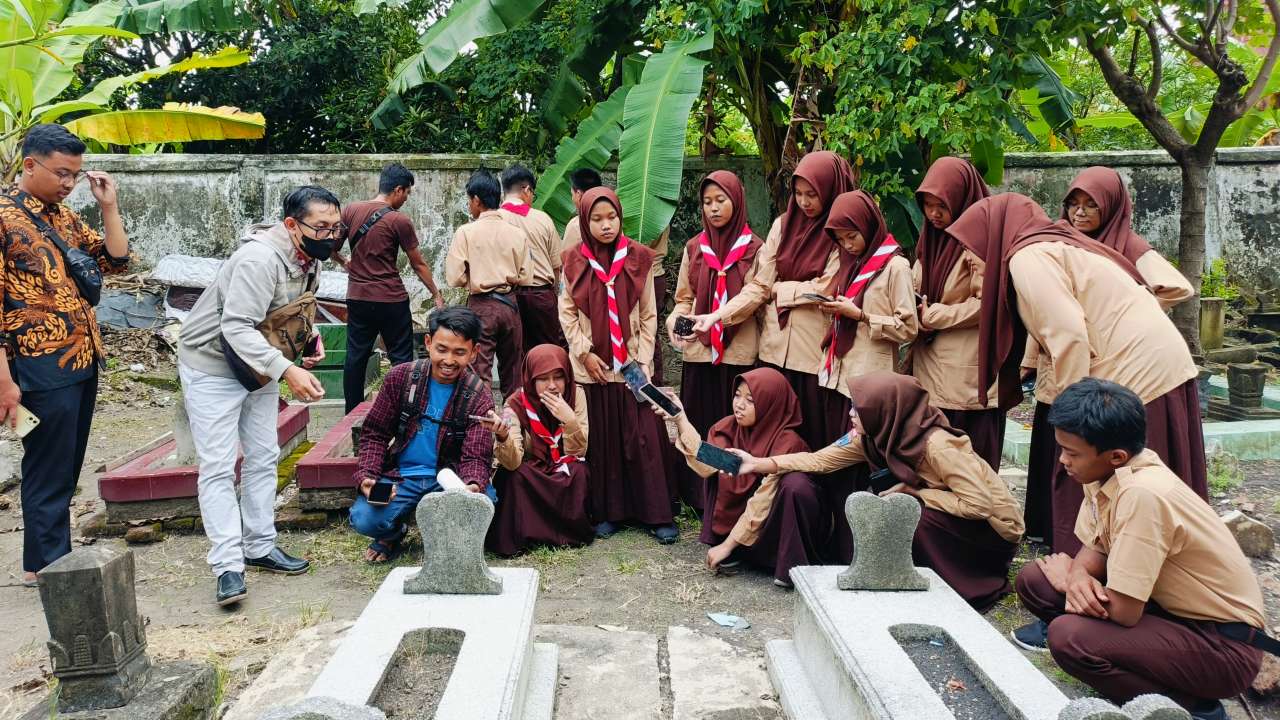
Recognizing the educational value of these historic sites, community organizations such as the Sadar Lestari heritage group have actively collaborated with local educational institutions. Recent collaborative programs have brought students, such as those from MAN 1 Ngawi, directly into the field to study local history firsthand. By moving beyond traditional, textbook-bound curricula, these interactive educational initiatives expose young generations to the tangible roots of their regional identity.
Through structured discussions regarding the foundation of the grand mosque, the sociopolitical struggles of colonial-era regents, and the historical evolution of governance structures, youth are encouraged to critically engage with their local heritage. Ultimately, these preservation and educational efforts ensure that the foundational narratives of Ngawi—forged by generations of religious scholars, local administrators, and community builders—continue to resonate within the collective consciousness of modern society.