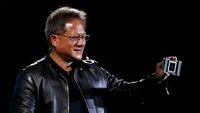
The Board of Directors at Nvidia Corporation has officially reinstated Jensen Huang to his roles as President, Chief Executive Officer (CEO), and member of the Board of Directors, effective Monday, November 23. This decisive move follows a period of intense internal deliberation and strategic consultation, marking a significant turn in the leadership saga of one of the world’s most valuable technology firms. The decision was reached through a unanimous vote by the board, following a series of rigorous discussions regarding the company’s future trajectory, geopolitical compliance, and leadership continuity.
Prior to the formal reinstatement, the board engaged in high-level consultations with senior officials from the United States government. These discussions were specifically aimed at ensuring that Huang’s return to the helm would not introduce or exacerbate any risks related to national security, particularly given Nvidia’s pivotal role in the global semiconductor supply chain and the ongoing complexities surrounding international export controls.
A Strategic Mandate for Leadership
Harvey C. Jones, Chairman of the Board of Directors at Nvidia, articulated the board’s collective sentiment regarding the decision. "The Board of Directors is confident that Jensen is the uniquely qualified individual to lead Nvidia through its next evolution. His reinstatement serves the best interests of our shareholders, employees, global partners, and our diverse customer base," Jones stated in a formal communication released via the company’s investor relations portal.
Jones further noted that the board expressed satisfaction with Huang’s transparency and his demonstrated capacity for leadership during the vetting process. The board also extended a formal note of appreciation to Colette Kress, Nvidia’s Chief Financial Officer (CFO), who served as the interim CEO during the leadership transition. Kress’s stewardship provided a critical period of stability for the company, ensuring that day-to-day operations remained uninterrupted while the board addressed the concerns necessitating the temporary shift in leadership.
Huang’s Vision for the Future
Upon resuming his responsibilities, Jensen Huang issued a statement acknowledging the gravity of the mandate entrusted to him. He emphasized his commitment to guiding the company, which has become the bedrock of the global artificial intelligence (AI) infrastructure, into its next phase of growth.
"I am deeply honored to return to Nvidia and to lead one of the world’s most influential technology enterprises at the dawn of a new industrial revolution," Huang said. "I accept this responsibility with humility and a renewed sense of purpose. The work ahead is significant, and I am eager to re-engage with our teams to continue pushing the boundaries of what is possible in computing."
Huang’s leadership has been synonymous with Nvidia’s explosive growth. Since its founding in 1993, the company has transitioned from a specialized graphics processing unit (GPU) manufacturer into a dominant force in high-performance computing, data centers, and AI development. His return is viewed by analysts as a stabilizing force for a company currently navigating the most complex geopolitical landscape in its history.
The Ongoing Independent Investigation
The reinstatement of Huang does not signal the conclusion of the oversight processes initiated by the board. Central to the recent developments is the report that Huang had been a target of foreign intelligence efforts—a situation that prompted the board to establish a special committee comprised of independent directors. This committee, supported by independent legal counsel, remains fully operational.
Nvidia’s leadership has made it clear that while Huang has returned to the executive office, the investigation will continue until all relevant inquiries are satisfied. Huang has pledged his full cooperation, emphasizing that transparency remains a core tenet of his leadership philosophy.
Strengthening Governance and National Security Compliance
As part of a broader initiative to fortify corporate governance and mitigate external risks, Nvidia has formally established a National Security and Export Control Committee. This committee is composed entirely of independent directors and is tasked with overseeing the company’s adherence to global trade regulations. The committee is further bolstered by external experts in geopolitics and international trade law, ensuring that Nvidia’s operational strategies align with the regulatory requirements of the U.S. government and its international partners.
In addition, the company has initiated a search for a Chief Compliance Officer (CCO). This newly created C-suite position will report directly to the Nominating and Corporate Governance Committee. The CCO will hold broad authority to monitor compliance across all facets of the organization, reflecting a proactive approach to the increasing regulatory scrutiny faced by major technology entities operating at the intersection of national security and high-end semiconductor manufacturing.
Background and Market Context
Nvidia’s importance to the global economy cannot be overstated. As the primary provider of the hardware that powers modern AI, including large language models like GPT-4 and Claude, the company has seen its market capitalization soar. However, this success has made Nvidia a focal point for U.S. government trade policies, particularly regarding the export of high-end chips to China and other regions of geopolitical sensitivity.
The events leading up to this leadership transition highlight the challenges of managing a global supply chain that is increasingly entangled with national security interests. Analysts point out that the U.S. government’s involvement in the vetting process for a private company’s CEO is a rare but indicative reflection of how critical semiconductor technology has become to national power.
Historically, Nvidia’s resilience has been tested by various market cycles, including the cryptocurrency mining boom and bust, and the recent surge in AI demand. Huang’s leadership has been a constant through these periods, and the board’s decision to bring him back suggests that they view his specific expertise as irreplaceable in the current competitive environment.
Implications for Stakeholders
The decision to reinstate Huang has immediate implications for several key stakeholders:
- Investors: The return of a founder-CEO who has overseen unprecedented value creation is generally viewed as a positive signal by the market. The assurance of continued stability is expected to help mitigate volatility in the company’s share price.
- Global Customers: Nvidia’s clients, ranging from hyperscale cloud providers to autonomous vehicle developers, rely on the company’s roadmap for their own long-term innovation. The leadership continuity ensures that these strategic partnerships remain on track.
- Regulatory Bodies: The formation of the new oversight committees demonstrates to regulators that Nvidia is taking the concerns regarding foreign influence and trade compliance seriously, potentially reducing the likelihood of punitive regulatory actions in the future.
- Internal Culture: For employees, the reinstatement of a familiar leader provides clarity and direction during a period that might have otherwise been characterized by uncertainty.
Looking Ahead
As Nvidia moves forward, the primary challenge for Huang will be balancing the company’s aggressive expansion into AI and data center markets with the increasingly restrictive global trade environment. The creation of the Chief Compliance Officer role and the National Security and Export Control Committee suggests that the company is evolving its corporate structure to be more resilient to geopolitical headwinds.
The investigation by the independent committee will continue to be a focal point for observers. While the company has indicated that the board is satisfied with the current state of affairs, the findings of this investigation will likely influence future governance protocols. For now, the narrative at Nvidia is one of continuity and reinforced oversight.
Nvidia stands at a unique crossroads. The company is effectively the "arms dealer" of the AI age, and its leadership is under more scrutiny than ever before. Jensen Huang’s return to the CEO chair is not just a return to the status quo; it is a recalibration of the company’s relationship with its environment. By integrating higher levels of security oversight and compliance into its executive structure, Nvidia is positioning itself to continue its role as a technological leader while navigating the complex realities of 21st-century global geopolitics.
The weeks and months ahead will be critical as the company integrates these new governance structures and continues to advance its technological pipeline. Investors and industry analysts alike will be watching to see how the combination of Huang’s vision and the board’s new compliance-heavy architecture will perform in an increasingly fragmented global market. For Nvidia, the mandate is clear: maintain its technological dominance while operating with the precision and caution required by the global political climate.