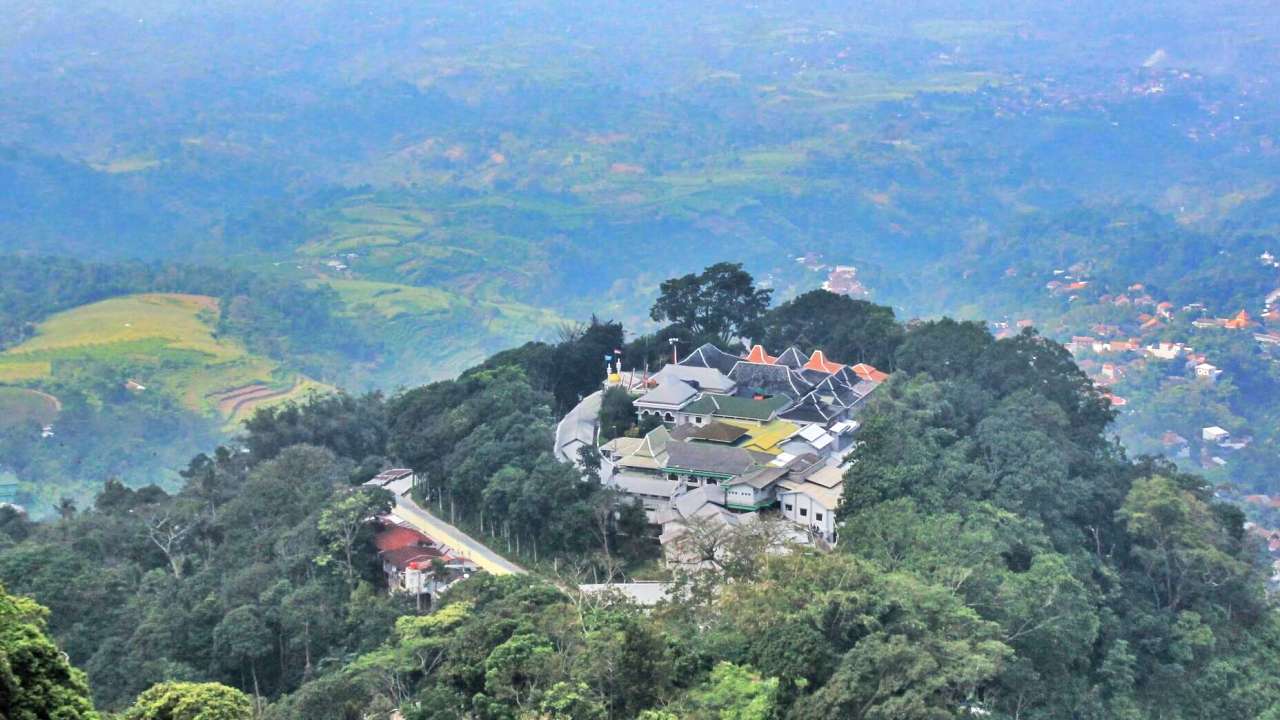
When the morning mist slowly lifts from the slopes of Mount Muria, the sacred complex of Sunan Muria, perched at an elevation of 854 meters above sea level (masl) in Central Java, gradually emerges from the fog. It was against this ethereal backdrop that a reporting team embarked on a journey to trace the historical memory of the revered 15th-century Islamic saint and examine how his enduring environmental ethos continues to shape modern local perspectives toward nature and conservation.
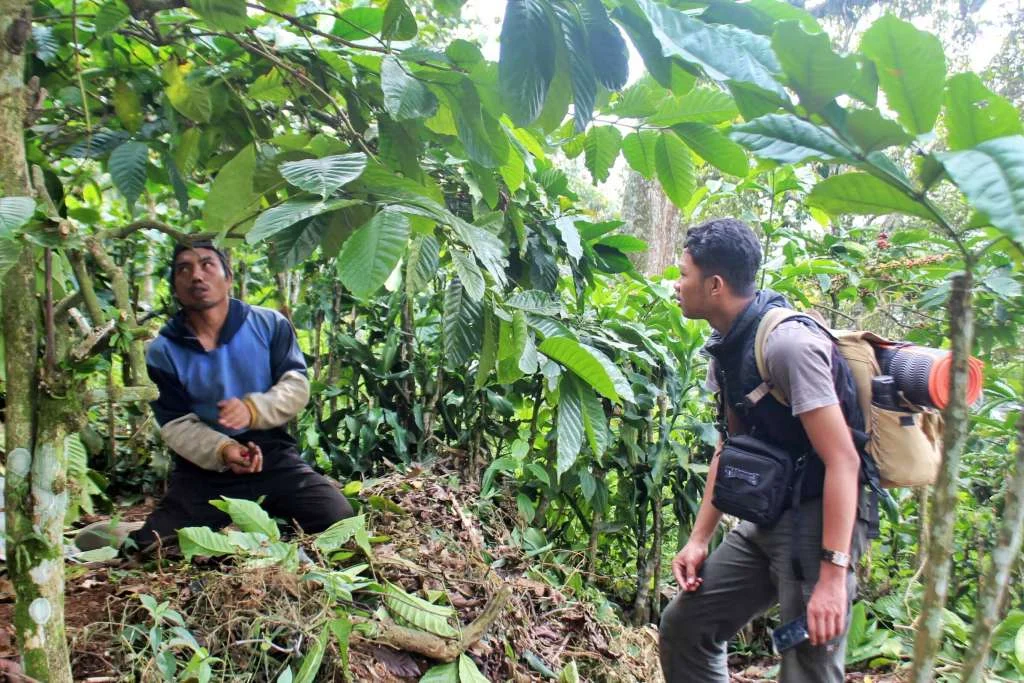
Guiding the group through the dense foliage was Triyanto, a prominent local conservationist and educator. Pausing near a narrow footpath cutting through the dense brush, Triyanto pointed to several discreet spots on the damp soil. "Yes, this is also a migratory route for the leopard," he remarked casually.
The predator in question is the Javan leopard (Panthera pardus melas), a critically endangered apex predator that historically inhabited various forest patches across Java. According to historical monitoring data by Kompas and wildlife assessments, an estimated population of around 300 Javan leopards remains scattered across the island, with at least 14 individuals documented within the Mount Muria ecosystem alone during a 2018 camera-trap survey. Despite the proximity of such a formidable carnivore, Triyanto offered reassurance to the group. "There is nothing to worry about. They are like cats—very shy. As long as they are not disturbed, they will not attack."
The Sacred Canopy: Forests as a Divine Trust
Triyanto was leading a nine-member delegation visiting the Muria slopes as part of a coffee education and ecological tour. Beyond guiding visitors, he serves as a core facilitator for Peka Muria, a grassroots community organization dedicated to the environmental preservation of Mount Muria. The group operates under a powerful guiding motto: "The forest is a divine trust, and protecting it is an act of worship."
The team’s campsite was situated in Alas Becici, a relatively secluded enclave rarely visited by outsiders save for local farmers tending to their hillside coffee plantations. Despite its isolation, the location offers a sweeping panoramic view of the mountain’s verdant topography, rivaling more famous vantage points like Songolikur, Natas Angin, and Argopiloso.
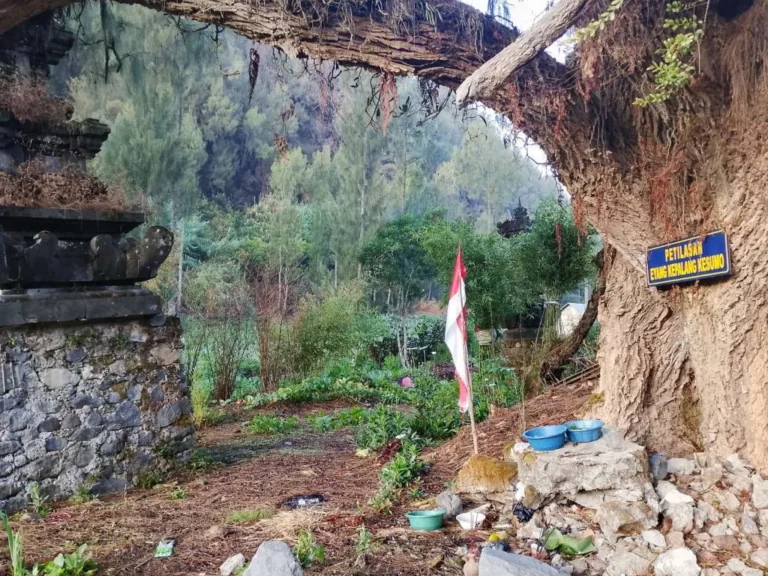
At the edge of a steep cliff near the campsite stands a mature pranak tree (Castanopsis acuminatissima), its natural branches framing the lush landscape below. Pranak trees are indigenous and abundant in this region. Just a short distance from the tents, an even larger pranak tree rises robustly, its thick trunk wrapped tightly in white ritual cloth known as kain mori.
This sacred textile signifies local reverence and environmental protection. Cultural taboos strictly forbid the felling of trees marked in this manner. For generations, these protected trees have functioned as vital ecological anchors, stabilizing the fragile soil and sustaining the intricate watershed of the Muria range.

A Turbulent History of Deforestation and Threat
Dating back hundreds of years, these ancient trees have silently witnessed the profound environmental transformations of Mount Muria. Historical records indicate that the region faced severe ecological crises between 1880 and 2011. During this century-and-a-half window, the mountain suffered from unchecked illegal logging, expansive agricultural land conversion, rampant wildlife poaching, and controversial proposals for nuclear power plant (PLTN) development. These combined pressures pushed the Mount Muria ecosystem to the brink of environmental degradation, threatening both regional biodiversity and the livelihoods of downstream communities.
Local farmers and community elders recall a time when the mountain’s green cover rapidly diminished, prompting fears of chronic landslides and water scarcity. The historical failure of state-led forestry management in certain eras left a vacuum that grassroots organizations and local leaders eventually felt compelled to fill.
Bridging Livelihoods and Conservation
As night fell over the mountain, casting a blanket of fog and obscuring the quiet village roads, the reporting team retreated from the campsite to continue discussions at Triyanto’s residence alongside other members of Peka Muria.
The journey of Peka Muria, established by a dedicated core of local volunteers, has been fraught with complex socioeconomic challenges. The noble goal of forest conservation frequently clashes with the immediate economic realities of local villagers who depend on expanding agricultural plots to support their families.

"In environmental social work, we naturally prohibit practices like illegal forest clearing," Triyanto explained. "For areas that have already been cleared, we say, ‘Fine, just farm what is already open, but do not push any higher into the primary forest.’ However, if we simply issue prohibitions without offering viable economic alternatives, it simply will not work."
To resolve this dilemma, Peka Muria developed a holistic approach. Over the years, the community initiative has successfully implemented several sustainable economic programs. These include educational workshops on optimizing coffee cultivation, promoting native fruits like parijoto as ecotourism and processed agricultural products, actively involving villagers in reforestation movements, and forging strategic partnerships with external stakeholders to foster financial independence among local farmers. These initiatives represent a crucial breakthrough in addressing the root causes of environmental degradation without disenfranchising the local populace.
The Legacy of Mohammad Shokib Garno Sunarno
To gain a deeper understanding of the conservation movement’s origins, Triyanto led the team to the official Peka Muria basecamp, located roughly 800 meters away, amidst a sudden downpour that filled the mountain air with the rhythmic drumming of rain on zinc roofs. There, they met Teguh Budi Wiyono, the head of Peka Muria, whose home sits adjacent to the command center.
Over hot cups of locally brewed Muria coffee, Teguh recounted the community’s origins. Peka Muria, officially founded in 2023, serves as the institutional continuation of pioneering environmental work initiated decades earlier by Mohammad Shokib Garno Sunarno. Shokib, a direct descendant of Sunan Muria and the traditional caretaker of the saint’s mausoleum, was awarded the prestigious Kalpataru environmental award in 2016 in recognition of his tireless efforts to rehabilitate the deforested slopes of Muria beginning in 1999.

Recalling Shokib’s profound motivations, Teguh quoted the late conservationist in Javanese: "Nek Mbah Sunan (Sunan Muria) iku iso mencintai alam, kenopo aku anak turune raiso. Aku kudu iso jogo opo tinggalane Mbah Sunan" (If ancestral figures like Sunan Muria could love and protect nature, why can’t we, his descendants? I must protect what he left behind).
Teguh reflected on a poignant evening shortly before Shokib’s passing, when a small group sat together on a high cliff overlooking a major landslide scar. "Pak Shokib, myself, Mas Triyanto, and my younger brother Yayan sat in a row. Pak Shokib told us: ‘My friends, Muria is so beautiful. When I am no longer here, please, continue my struggle. Do not let the work stop, my friends.’"
Following Shokib’s passing, that solemn pledge was inherited by Teguh, Triyanto, and the members of Peka Muria. The organization’s foundational motto—"The forest is a divine trust, and protecting it is an act of worship"—encapsulates a seamless blend of Islamic spirituality and indigenous ecological stewardship.
Implications and Future Outlook
The synergy between historical spiritual figures and modern grassroots activism offers a compelling model for community-based conservation in Indonesia. By framing environmental protection not merely as a secular regulatory obligation, but as a sacred heritage tied to the teachings of historical figures like Sunan Muria, local communities have cultivated a resilient defense against ecological exploitation.

As Mount Muria faces ongoing pressures from climate change and agricultural expansion, the sustained efforts of groups like Peka Muria demonstrate that long-term environmental sustainability is achievable only when ecological preservation aligns directly with the economic and cultural dignity of the communities who call the mountain home.