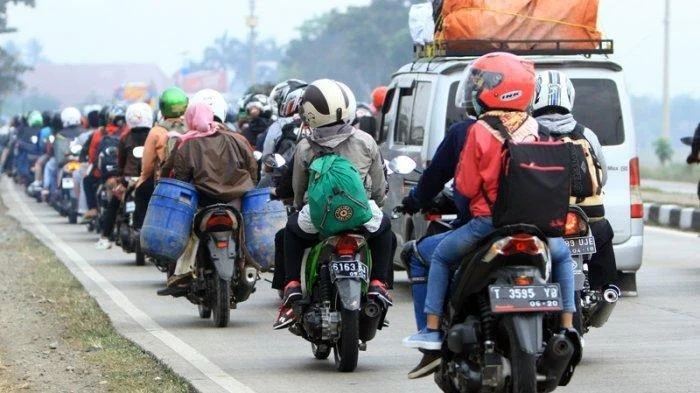
The Indonesian government, through the Ministry of Transportation, has officially signaled that the annual homecoming tradition, known as "mudik," will be permitted for the 1442 Hijri (2021) Eid al-Fitr festivities. This announcement marks a significant departure from the total ban implemented in 2020, which was enforced to curb the initial surge of the COVID-19 pandemic. The confirmation was delivered by Minister of Transportation Budi Karya Sumadi during a Working Meeting with Commission V of the House of Representatives (DPR RI) on Tuesday, March 16, 2021. While the government has paved the way for travel, officials have clarified that this decision should not be interpreted as an official mandate or encouragement for citizens to travel, but rather as a controlled allowance that must be managed with extreme caution.
Chronology of the Policy Shift
The policy regarding the 2021 mudik season has evolved significantly throughout the first quarter of the year. Following the strict prohibition of 2020, which resulted in a massive reduction in inter-provincial mobility, the government faced mounting public pressure to allow travel as the nation entered the vaccination phase.
In early 2021, the Ministry of Transportation began assessing the viability of travel, noting that the combination of the national vaccination program and improved screening technologies—such as the breath-based GeNose test—provided a framework to allow movement without triggering a massive spike in infections. By mid-March 2021, the Ministry finalized its stance, confirming that there would be no formal prohibition on travel. However, this permission is strictly contingent upon the implementation of rigid health protocols and a collaborative effort with the COVID-19 Task Force to ensure that rural areas, which are often more vulnerable due to limited healthcare infrastructure, are protected from imported cases.
Framework for Safe Travel
The Ministry of Transportation is currently collaborating with health authorities to design a robust mechanism for the upcoming homecoming season. According to Minister Budi Karya Sumadi, the government’s primary strategy involves a multi-layered approach to surveillance and safety.
Key requirements for travelers include:
- Rigid Adherence to Health Protocols: Travelers must strictly observe the 3M protocols (wearing masks, washing hands, and maintaining safe physical distance) from the point of departure to the final destination.
- Enhanced Contact Tracing: To anticipate surges in passenger volumes, the government will deploy intensive contact tracing mechanisms at transit hubs, including terminals, bus stations, train stations, and airports.
- Optimized Screening Duration: The validity period for screening tools, such as rapid antigen tests and PCR swabs, will be shortened to ensure that travelers are verified as COVID-free shortly before their departure.
- Capacity Limitations: Public transportation providers are required to limit passenger capacity to facilitate physical distancing, complemented by regular disinfection of all transit vehicles and facilities.
Minister Sumadi emphasized that the government is not acting alone. Through coordination with the COVID-19 Task Force, the Ministry is establishing protocols that cover everything from terminal sanitation to the management of potential outbreaks in transit. The government has also utilized its official channels, including social media platforms, to urge the public to exercise personal responsibility, noting that the success of this policy depends heavily on the collective compliance of the populace.
Epidemiological Concerns and Expert Skepticism
Despite the government’s optimistic outlook, the decision to allow inter-regional travel has been met with skepticism from the scientific community. Epidemiologists warn that the pandemic remains a volatile threat, and the premature loosening of restrictions could lead to a resurgence of cases, particularly with the potential for new variants to enter rural regions.
Riris Andono Ahmad, an epidemiologist from Universitas Gadjah Mada (UGM), expressed reservations regarding the policy. According to Dr. Ahmad, the assumption that high vaccination coverage is sufficient to control the spread of the virus is premature. Even with the ongoing national vaccination program, the actual number of vaccinated individuals, relative to the total population, remained insufficient at the time to achieve herd immunity.
Dr. Ahmad noted that the risk is not just the virus itself, but the behavioral patterns associated with the mudik season. He highlighted that the primary danger lies in the lack of oversight regarding private vehicle usage. While public transport can be monitored and regulated through standardized screening and seating arrangements, the massive influx of travelers using private cars and motorcycles poses a significant challenge for health authorities to track or regulate. He warned that if individuals fail to maintain discipline, the surge in transmission could mirror pre-vaccination patterns, effectively neutralizing the progress made by the state’s immunization efforts.
The Critical Role of Public Transport
One of the central arguments presented by health experts is the superiority of regulated public transportation over private transit during a pandemic. Public transportation hubs serve as controlled environments where the government can mandate the use of advanced screening technologies like GeNose, monitor passenger manifests, and enforce strict distancing.
In contrast, private travel remains largely "blind" to health authorities. There is no centralized mechanism to track the health status of a family traveling in a private car across provincial borders. Consequently, experts have urged the public to opt for public transportation if they must travel, as it provides a higher degree of safety and allows for easier government intervention should an individual test positive for COVID-19 during or after the trip.
Furthermore, health experts have cautioned that being fully vaccinated does not provide absolute immunity from contracting or transmitting the virus. Vaccinated individuals may still harbor the virus, and without continued strict adherence to health protocols, they could become asymptomatic carriers who unknowingly bring the virus to elderly relatives in rural villages. Therefore, the scientific recommendation has consistently been to avoid unnecessary travel and, if possible, to postpone large-scale mass movements until the national vaccination coverage reaches a more stable threshold.
Broader Implications and Socio-Economic Context
The 2021 mudik decision reflects the delicate balancing act between public health mandates and the socio-economic necessity of maintaining national mobility. For millions of Indonesians, mudik is not merely a holiday tradition but a significant cultural and economic event. The economic impact of the 2020 ban was substantial, as the lack of circulation in regional economies during the Eid period led to reduced local spending and slowed recovery in rural sectors.
However, the 2021 approach is fundamentally different from pre-pandemic years. The Ministry of Transportation’s current stance is characterized by "managed mobility." By integrating transportation policies with public health directives, the government is attempting to facilitate the cultural necessity of the holiday while preventing the healthcare system from being overwhelmed.
Looking back at history, the concept of a mudik ban is not unprecedented. Records indicate that as early as 1946, during the struggle for independence, travel was restricted for security reasons. The 2021 situation, however, is unique in its reliance on biological security rather than political or military security.
Conclusion
As the 1442 Hijri Eid al-Fitr approaches, the Indonesian government remains committed to its strategy of conditional mobility. While the permission to travel has been granted, it is accompanied by a heavy caveat of strict enforcement and personal responsibility. The success of this policy rests on three pillars: the vigilance of the COVID-19 Task Force in screening, the compliance of transportation providers in enforcing safety standards, and the willingness of the public to treat the pandemic with the seriousness it demands.
Whether this approach will effectively prevent a post-holiday spike remains a subject of intense debate. For now, the Ministry of Transportation continues to refine its mechanisms, urging citizens to stay informed through official government sources and to prioritize the health of their families by adhering to every regulation issued. The government’s message is clear: the road home is open, but it must be traveled with the utmost caution to protect the collective health of the nation.