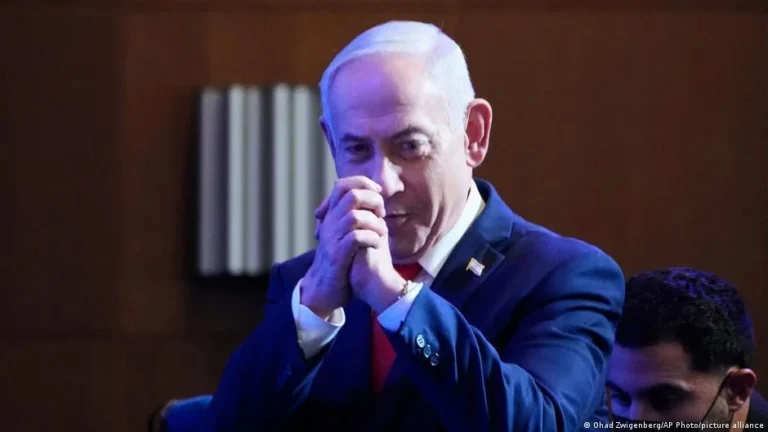
The intricate and deeply polarized landscape of Israeli politics has once again produced a fractured electoral outcome, leaving incumbent Prime Minister Benjamin Netanyahu politically resilient yet mathematically constrained. Following the parliamentary elections held on Tuesday, October 27, official vote counts released by Thursday, October 29, with over 99 percent of ballots processed, confirmed that Netanyahu’s right-wing bloc secured the largest share of seats in the Knesset. However, despite this strategic victory, the prime minister’s coalition fell short of the critical 61-seat threshold required to form a stable majority government.
This electoral cycle stands as a historical watershed for the nation. It marks the first time Israelis have gone to the polls since the devastating cross-border attacks led by the Palestinian militant group Hamas on October 7, 2023, an event that shattered national security paradigms and triggered the ongoing, destructive military campaign in the Gaza Strip. The intersection of wartime trauma, severe regional instability, and fierce domestic polarization formed the backdrop for an election that was widely viewed as a referendum on Netanyahu’s long-standing leadership and his handling of national security.
Electoral Breakdown and Parliamentary Mathematics
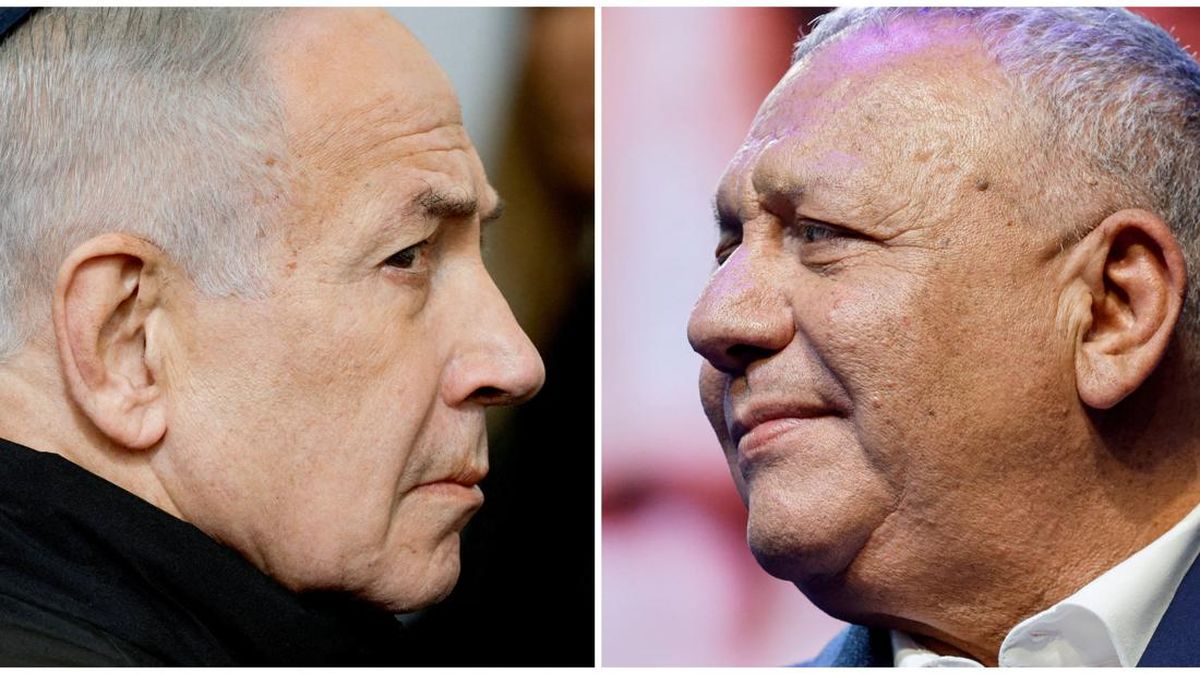
With nearly all votes tabulated, the distribution of power within the 120-seat Knesset illustrates a deeply deadlocked legislature. Prime Minister Netanyahu’s political bloc managed to capture 53 seats, cementing his status as the leader of the largest unified political faction. Meanwhile, his primary challenger, former military chief of staff Gadi Eisenkot, and his centrist party, Yashyar, led an opposition bloc that secured 48 seats.
Crucially, neither the incumbent administration nor the opposition coalition achieved the magic number of 61 seats necessary to govern independently. Adding a dynamic twist to the legislative arithmetic, Arab political parties—representing Palestinian citizens of Israel, who comprise approximately 21 percent of the country’s total population—surged to a historic high of 19 seats. This unprecedented voter turnout among the Arab minority positions these parties not merely as sideline participants, but as potential kingmakers capable of decisively tipping the scales of government formation.
The failure of any single faction to secure a majority thrusts Israel into a familiar cycle of political uncertainty. Netanyahu will continue to serve as prime minister in a transitional capacity until Israel’s president formally designates a political figure to attempt the arduous task of assembling a governing coalition.
Chronology and Context: A Return to the Polls Amid Crisis
To fully grasp the gravity of the October 27 election, it is essential to contextualize the timeline of events that preceded it. For nearly two decades, Benjamin Netanyahu has dominated Israeli politics, serving as prime minister for longer than any other individual in the nation’s history. His political survival has often been attributed to his acute tactical acumen and his framing of himself as the sole guarantor of Israeli security in a hostile neighborhood.
However, the foundation of that political identity was severely fractured on October 7, 2023. On that morning, Hamas militants launched an unprecedented multi-pronged assault on southern Israel, resulting in the deaths of approximately 1,200 people—mostly civilians—and the abduction of hundreds of hostages. The intelligence and military failures that allowed the attack to succeed provoked widespread public outrage, directed squarely at Netanyahu’s administration. Critics argued that years of pursuing containment strategies against Hamas, combined with a political focus on judicial overhauls that divided the military and intelligence ranks, left the country dangerously exposed.
In the months that followed, Israel engaged in a protracted and devastating military campaign in Gaza, aiming to dismantle Hamas’s governing and military capabilities. The war exacted a catastrophic human toll on Palestinians, displaced nearly the entire population of the enclave, and drew international condemnation, alongside legal challenges at international tribunals. Domestically, the war exacerbated severe societal fissures, including intense debates over the exemption of ultra-Orthodox Jews from mandatory military service, rising extremist settler violence in the occupied West Bank, and ongoing protests demanding the return of hostages held in Gaza.
Despite facing this barrage of intersecting crises—compounded by his ongoing, protracted trial on long-standing corruption charges—Netanyahu launched a relentless campaign to rally his traditional base. By leveraging security concerns and capitalizing on nationalist sentiments among right-wing voters, he successfully consolidated support from the Jewish Israeli majority, defying widespread predictions of his political demise.
Analysis of Incumbency and Survival
Political analysts tracking the aftermath of the vote emphasize that Netanyahu’s primary achievement was not necessarily a resounding electoral triumph, but rather his sheer political survival.
Danny Citrinowicz, a regional analyst and former Israeli military intelligence officer, encapsulated the outcome succinctly in statements to international media. "He won because he did not lose," Citrinowicz remarked, describing the result as a testament to Netanyahu’s tenacity. "He managed to survive."
Similarly, Aviv Bushinsky, a former advisor to Netanyahu, characterized the outcome as an astonishing political resurrection. Despite carrying the immense political baggage of the October 7 intelligence failures and facing relentless pressure from both the domestic opposition and international allies, Netanyahu managed to outmaneuver his rivals and preserve his core base of support. Bushinsky argued that failing to win an outright parliamentary majority may paradoxically reinforce Netanyahu’s bargaining leverage, as fragmented parliamentary configurations often force smaller parties to compromise with the seasoned incumbent.
Conversely, the opposition, spearheaded by Gadi Eisenkot, viewed the election results through a sharply different lens. Eisenkot, a 66-year-old former military chief whose personal life was touched directly by the war—having lost a son and two nephews during the military operations in Gaza—campaigned heavily on the premise that the Israeli public was desperate for systemic change. He framed the vote as a direct referendum on Netanyahu’s competency, asserting that the transitional government under the incumbent had irretrievably lost the confidence of the public. In communications to civil servants and security officials, Eisenkot urged institutional steadfastness against political polarization, maintaining that the electorate had demonstrated an appetite for a new trajectory.
The Kingmaker Dilemma and Coalition Pathways
With the parliamentary math defying easy solutions, political observers are scrutinizing the potential pathways toward establishing a functional government. Two primary scenarios currently dominate discussions within Israeli political circles: the formation of a broad national unity government or the descent into another round of debilitating repeat elections.
The prospect of a national unity government has gained traction among pragmatic analysts who argue that neither the left-right divide nor the security climate permits prolonged political paralysis. Aviv Bushinsky suggested that such a coalition could materialize under external diplomatic pressure—most notably from the United States, Israel’s most vital strategic ally. Should the administration of U.S. President Donald Trump exert influence to steer Netanyahu toward a more moderate coalition, it could compel the prime minister to sideline far-right cabinet members such as National Security Minister Itamar Ben-Gvir and Finance Minister Bezalel Smotrich. By shedding these polarizing figures, Netanyahu could potentially open the door to partnerships with centrist heavyweights like Eisenkot or former Prime Minister Naftali Bennett.
However, constructing a viable opposition-led alternative presents formidable hurdles. Any coalition seeking to unseat Netanyahu would likely require the explicit or tacit backing of Arab political parties. Yet, ideological rigidities within the Zionist right wing present a barrier; potential coalition partners such as Avigdor Lieberman and Naftali Bennett have historically refused formal political alignment with Arab factions. This ideological inflexibility severely restricts the opposition’s maneuverability, leaving Netanyahu uniquely positioned to exploit the divisions within the anti-Netanyahu camp.
Furthermore, Dennis Ross, a former U.S. Middle East peace negotiator, highlighted the historic nature of the moment for Arab citizens of Israel. "The Arabs have never been in a position where they have this much power," Ross observed. With voter turnout among the Arab minority reaching historic peaks, these communities hold structural leverage that could either facilitate legislative gridlock or force a fundamental reevaluation of how minority populations are integrated into Israeli governance models.
Implications and Outlook
The inconclusive results of the October 27 election underscore a nation caught at a historic crossroads. Israel remains engaged in multi-front security challenges, grappling with the profound trauma of the post-October 7 reality, and confronting deep domestic fractures regarding governance, judicial integrity, and civil equality.
As President of Israel prepares to consult with party leaders to determine who will receive the mandate to form a government, Benjamin Netanyahu once again finds himself at the center of the political storm. Whether he can successfully engineer a coalition, form a national unity government, or navigate the country toward yet another election remains to be seen. What is certain, however, is that Israel’s political architecture has entered a volatile new phase where every seat in the Knesset carries monumental weight, and the margin for political error has vanished entirely.