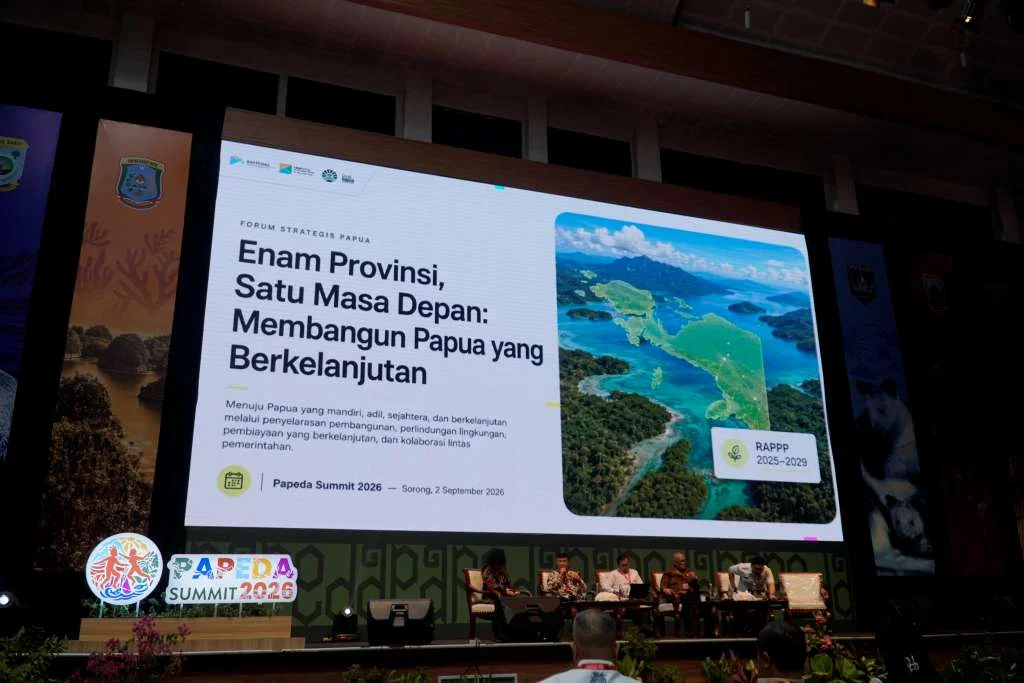
The urban rhythm of Sorong beat with an unusual intensity in early September 2026, serving as the epicenter for one of the most critical socio-ecological gatherings in Indonesia’s easternmost region. Across various convention halls in this bustling port city, no fewer than 1,030 delegates representing all six provinces of Western New Guinea convened for the Papua Action for Development Economy and Sustainable Nature (PAPEDA) Summit 2026. This landmark assembly brought together a diverse mosaic of identities: indigenous leaders adorned in traditional regenade and feathered headdresses, women artisans who journeyed from remote coastal mangroves and deep forest fringes, environmental activists, ministry officials, and international observers. Initiated through the collective grassroots mobilization of over 50 civil society organizations, the summit was designed to fundamentally recalibrate the trajectory of development across the Land of Cenderawasih.
Behind the formal proceedings, however, reporters covering the three-day conference observed a striking and unsettling contradiction. While plenary stages repeatedly lauded Western New Guinea as the planet’s final stronghold of biodiversity, floor sessions driven by indigenous voices exposed a grim reality. The region’s abundant natural wealth has systematically failed to liberate its indigenous populations from chronic poverty, systemic underdevelopment, and the relentless erosion of their ancestral homelands. Far from a mere ceremonial gathering, the PAPEDA Summit 2026 established an egalitarian platform where grassroots communities confronted the state directly, demanding accountability regarding indigenous land rights and ecological justice that have long been sidelined in policy documents.
The Labyrinth of Special Autonomy Funds and Public Service Crises
For years, the central government in Jakarta has emphasized the massive fiscal transfers directed toward the region to accelerate development. This narrative is undeniably backed by substantial figures: the Special Autonomy (Otsus) allocation for Western New Guinea reached Rp12.69 trillion annually by 2026. Yet, these trillions of rupiah frequently evaporate within a bureaucratic labyrinth upon reaching local governments.
During governance and fiscal management sessions, experts revealed the profound irony of funds accumulating unspent due to severe structural inefficiencies. Local budget absorption remains sluggish, crippled by a profound lack of synchronization among planning applications mandated by the central government, such as the SIPD, SIKD, and SIP3 systems. This systemic administrative disconnect has generated an accumulated Sisa Lebih Perhitungan Anggaran (SiLPA)—unspent budget surpluses—totaling Rp2.4 trillion. While regional bureaucrats remain entangled in nomenclature disputes and administrative delays, communities at the grassroots level continue to struggle for basic survival.

The human cost of this bureaucratic friction is reflected in acute public service deficits. Data presented during the summit indicated that approximately 360,000 children across Western New Guinea remain out of school, stripped of access to formal education. Concurrently, stunting rates remain stubbornly high, and healthcare infrastructure across remote, frontier, and underdeveloped regions—commonly classified as 3T regions—remains severely isolated.
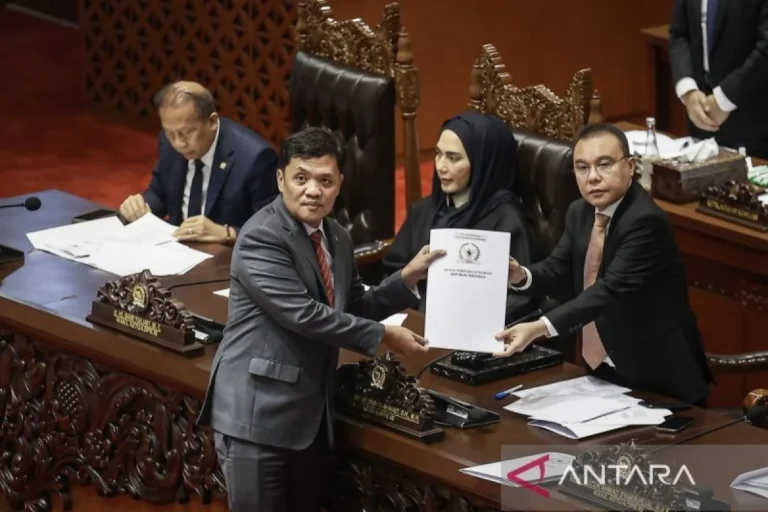
Franky Umpain, a member of the Southwest Papua Regional People’s Representative Council (DPR) elected through the Special Autonomy seat, voiced deep frustration over these systemic failures. He argued that Special Autonomy must be reframed as a tangible fulfillment of the state’s constitutional obligation to guarantee a decent standard of living, rather than merely a mechanism to distribute funds while abandoning indigenous populations to fend for themselves. Consequently, the summit produced a resolute demand to radically reform the evaluation of Special Autonomy: shifting the metric of success away from mere input-based financial absorption toward outcome-based impacts on education, healthcare, and community economies.
The Escalating Threat of National Strategic Projects
The developmental challenges facing the region extend far beyond fiscal mismanagement, penetrating deeply into spatial exploitation driven by central government directives. Under the banner of national food and energy security, National Strategic Projects (PSN) frequently penetrate indigenous landscapes without offering balanced negotiation frameworks or honoring prior consent.
A primary focal point of concern during the PAPEDA Summit 2026 was the development of the National Food, Energy, and Water Self-Sufficiency Zone (KSPEAN) project in Wanam, South Papua Province. According to presentations delivered at the forum, this megaproject involves the initial release of approximately 486,939 hectares of forest land initiated in 2025. This vast expanse is designated for mechanized rice estates, biodiesel B50 production, and biomass power plants. More alarmingly, the project is projected to expand up to 2 million hectares in the future, posing an existential threat to primary forest cover.
This spatial aggression presents a stark paradox for South Papua. Even as millions of hectares of its land are carved up for corporate exploitation, the province’s fiscal capacity has plummeted sharply, dropping from an Regional Budget (APBD) of Rp1.7 trillion in 2024 to just Rp920 billion in 2026 due to adjustments in Otsus allocations.

Indigenous communities expressed grave concern over the systematic disregard for communal rights. Such massive interventions routinely bypass the principle of Free, Prior, and Informed Consent (FPIC), reducing Indigenous Papuans (OAP) to passive objects rather than primary subjects of development. While state apparatuses roll out the red carpet to fast-track corporate permits and PSNs, local communities face bureaucratic hurdles just to secure legal recognition for their ancestral domains. The issuance of Customary Forest (Hutan Adat) decrees frequently stalls for years, obstructed by local governments reluctant to enact regional regulations recognizing indigenous legal communities and boundaries—a mandatory prerequisite for formal ministerial approval. This proliferation of overlapping permits continues to inflict profound psychological trauma on local residents, who find themselves alienated in their own homelands.
Economic Valuations and the High Price of Extractive Industries
For decades, the extraction of minerals and timber from Western New Guinea has sustained the broader national economy. However, independent economic analysis presented at the summit demonstrated that the ecological and social costs borne by the region vastly outweigh tax revenues and state royalties.
In a plenary session, the economic think tank CELIOS unveiled a staggering valuation of the economic losses inflicted by extractive activities, including mining and commercial logging. These losses are estimated at Rp454.69 trillion annually—an astronomical figure equivalent to 45 times the combined regional budgets of all provinces in Western New Guinea. This massive deficit stems from the depletion of crucial environmental services, including the release of carbon stocks, the degradation of natural flood and erosion controls, and the destruction of local foraging grounds that serve as the natural pantry for indigenous women.
Such severe economic losses stand in stark contrast to local economic structures. Although extractive industries contribute over 18 percent to the regional economy, they have demonstrably failed to generate trickle-down prosperity, leaving poverty rates in remote interiors, such as Highland Papua, hovering around 30 percent.
In response to these findings, the PAPEDA Summit strongly advocated for the adoption of a "Ridge-to-Reef" management paradigm. This holistic framework recognizes that upland and coastal ecosystems form a single ecological continuum; environmental degradation in mountainous forests caused by mining or logging concessions inevitably triggers downstream pollution, heavy sediment runoff, the destruction of sago swamps, and the ultimate collapse of marine coral reefs.

Testifying before the forum, Simson Su, a representative of the Moi Indigenous Council, detailed the devastating legacy of past timber concessions that stripped away valuable ironwood and merbaru forests, destroyed traditional sago groves, and dried up clean water sources in his village. Drawing lessons from this history, the greater Moi Tribe has taken proactive measures by independently mapping their ancestral territories from land to sea. Under the leadership of figures such as Reverend Paulus Kavlok Savisa, they have delineated the boundaries of 14 clans in the Melonguarta region through rigorous customary deliberation. For these communities, indigenous mapping serves as an indispensable defensive shield—a mandatory precondition that must be respected before any investment negotiations are permitted to touch ancestral lands.
Institutionalizing Protections Through Binding Legal Frameworks
The PAPEDA Summit 2026 demonstrated that the ecological consciousness and resilience of civil society in Western New Guinea can no longer be marginalized. The forum successfully generated a comprehensive slate of strategic recommendations aimed at dismantling the extractive economic model. Furthermore, indigenous representatives reaffirmed that they are not inherently anti-development; rather, they demand parity, insisting that any incoming investment or National Strategic Project must respect customary rights, adhere to FPIC principles, and recognize the legal authority of local communities to reject programs that threaten their landscape integrity.
Nevertheless, conference participants acknowledged that without enforceable legal certainty, even the most rigorous resolutions risk remaining empty rhetoric. Policy papers and declarations alone cannot halt corporate bulldozers in the field without robust statutory backing.
The indigenous peoples have spoken, ecological loss has been quantified, and strategic roadmaps have been formulated. The responsibility now rests entirely with policymakers at both national and regional levels. The critical question remains whether the state will respond to the grievances and loss of trust emanating from Sorong with concrete policy reforms that restore ecological and human dignity, or allow these warnings to fade as the region’s biodiversity approaches a critical tipping point.