Socio Today
The landscape of education in the remote village of Gunung Bayu, located in the Bosar Maligas district of Simalungun, North Sumatra, has undergone a profound transformation following the implementation of the Sekolah Energi Berdikari (SEB) program by Pertamina New & Renewable Energy (Pertamina NRE). By integrating solar power technology with essential water and sanitation infrastructure, the initiative has resolved a decade-and-a-half-long crisis regarding basic utilities at SDN 091686 Gunung Bayu. This intervention, formalized on September 24, 2024, marks a strategic pivot in how energy corporations address rural development by moving beyond simple electrification toward holistic social empowerment.
A Legacy of Scarcity: The Context of the Intervention
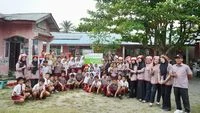
For nearly 15 years, the students and faculty of SDN 091686 Gunung Bayu functioned under extreme limitations. The absence of a stable electricity supply hampered modern pedagogical efforts, while the lack of a functional water source created severe hygiene and sanitation challenges. The school’s restrooms, often cited as a critical point of failure in rural educational facilities, had fallen into disrepair, rendering them unusable. This environment not only limited the quality of education for the 85 students enrolled but also presented a significant barrier to the daily operations of the 15-member teaching staff.
The arrival of the Pertamina NRE team to address these systemic issues was not a mere philanthropic gesture but a calculated infrastructure project designed to provide long-term, sustainable solutions. The project, which concluded with a symbolic handover ceremony attended by Pertamina NRE Senior Officer Arief Mulizar and School Principal Jelita Tampubolon, represents a shift toward "integrated infrastructure" where energy generation directly supports public health and educational accessibility.
Technical Specifications and Implementation
The core of the program is a 2.8 kWp (kilowatt-peak) off-grid solar photovoltaic (PV) system, coupled with a 5 kWh battery storage solution. Unlike traditional grid-connected systems, this off-grid configuration is specifically engineered to operate independently, ensuring that the school remains powered even during utility outages or in areas where grid infrastructure is unreliable.
The energy generated by the solar panels serves a dual purpose. Primarily, it powers the electrical requirements of the school building, allowing for the potential use of digital learning tools and improved lighting. More importantly, it powers the newly installed industrial-grade borehole pump. This pump extracts groundwater that was previously inaccessible, feeding a water distribution system that has allowed the school to revitalize its sanitation facilities. The renovation of the school’s toilets, which were previously abandoned due to the lack of water, has effectively restored the dignity and health standards of the learning environment.
Quantitative Impact and Environmental Metrics
From an analytical standpoint, the intervention provides measurable benefits that extend beyond the school gates. According to data provided by Pertamina NRE, the project is projected to generate an annual electricity cost efficiency of approximately IDR 5.182 million. In a budget-constrained environment like a rural public school, these savings represent a significant reallocation of resources that can now be diverted toward educational materials, extracurricular activities, or facility maintenance.
Furthermore, the environmental implications are noteworthy. By transitioning from potentially fossil-fuel-dependent or non-existent energy sources to solar power, the school is estimated to achieve a carbon emission reduction of 3,192 kg CO2e per year. This contributes to the broader national objective of Indonesia to meet its net-zero emission targets by 2060, demonstrating that even small-scale, decentralized energy projects can play a role in the global transition toward decarbonization.
Official Perspectives and Corporate Commitment
The success of the SEB program is attributed to the collaborative approach taken by Pertamina NRE’s corporate communications and stakeholder relations division. Susanto August Satria, Manager of Corporate Communication & Stakeholder Relation at Pertamina NRE, emphasized that the program is a manifestation of the company’s "Social License to Operate."
"Pertamina NRE is committed to continuously delivering the benefits of new and renewable energy that can be felt directly by the community," Satria noted. He highlighted that the company’s objective is not merely to install hardware but to foster a culture of maintenance and ownership. To this end, the project included a comprehensive education and training component. Faculty members and local community representatives were trained on the nuances of off-grid Solar PV operation, system monitoring, and basic maintenance protocols. This "capacity-building" phase is critical, as it ensures that the infrastructure remains functional well after the initial implementation phase concludes.
Jelita Tampubolon, the Principal of SDN 091686, expressed the relief felt by the school community. "Before this, we had no electricity, and for 15 years, we had no reliable water source. The transformation of our restrooms, which were previously in a state of decay, has been life-changing for our students. We are deeply grateful to Pertamina NRE for addressing these fundamental needs," she stated.
Community Reception and Future Outlook
The local leadership has been vocal in their support of the initiative. Village Head Ismail Hutasulut lauded the efforts of the company, framing the partnership as a model for future rural development. His call for the expansion of such programs to other schools in the Simalungun regency reflects the high demand for basic infrastructure support in the region.
The success at SDN 091686 serves as a pilot case for how the private sector can engage with rural educational institutions. By aligning corporate social responsibility (CSR) with the "Environmental, Social, and Governance" (ESG) framework, Pertamina NRE is demonstrating that the energy transition must be equitable. In remote areas of Indonesia, where the grid remains unreachable or inconsistent, solar power acts as an "enabler" for other critical services, such as clean water and sanitation.
Implications for Rural Development Policy
The integration of solar energy with water and sanitation services (WASH) is a strategy that policy experts have long advocated for, yet it remains underutilized in rural development. The case of Gunung Bayu provides empirical evidence of the efficacy of this approach. The implications are clear:
- Economic Sustainability: The operational cost savings allow for the self-sufficiency of the school.
- Social Well-being: Reliable sanitation is directly linked to student attendance and health outcomes.
- Technological Literacy: Introducing renewable energy at the village level familiarizes the local population with green technology, potentially influencing future energy consumption habits in the household sector.
As Indonesia continues to accelerate its energy transition, the role of state-owned enterprises like Pertamina becomes increasingly critical. While large-scale solar farms receive the most media attention, decentralized projects under the Sekolah Energi Berdikari banner represent the "human side" of the transition. The project at SDN 091686 Gunung Bayu serves as a definitive case study in how targeted, technology-driven interventions can permanently resolve long-standing socio-economic disparities.
Moving forward, the challenge for Pertamina NRE will be the scalability of the program. With hundreds of schools across the Indonesian archipelago facing similar infrastructure deficits, the model established in Simalungun offers a blueprint for replicability. By standardizing the technical requirements—2.8 kWp systems for similar school sizes—and streamlining the community training curriculum, the company has the potential to turn a singular act of philanthropy into a systematic national program that empowers the next generation of Indonesian students with the tools of the future.
In conclusion, the intervention at SDN 091686 is a milestone in the convergence of energy policy and social development. It proves that energy security is not only a matter of national power grids but also a matter of ensuring that every classroom, regardless of its remoteness, has the light and water necessary to foster learning. The legacy of this project will be defined not just by the 3,192 kg of CO2 reduced annually, but by the 85 students who now attend a school that is safe, illuminated, and equipped for the demands of the 21st century.