The geopolitical friction in the Middle East has reached a new and volatile climax following dramatic declarations from the Islamic Revolutionary Guard Corps (IRGC) of Iran, which claimed to have successfully re-captured two oil tankers allegedly seized by the United States. According to the statements released by Iranian military commanders, the operation involved catching American service members off guard while they were asleep on the vessels. Furthermore, Tehran asserted that its forces launched a direct assault on the United States Navy nuclear-powered aircraft carrier USS Abraham Lincoln during the opening phases of what it termed Operation Epic Fury. These bold assertions immediately drew a swift, absolute, and categorical denial from the United States Central Command (CENTCOM), setting off a fierce war of words and highlighting the precarious security architecture governing one of the world’s most critical maritime chokepoints.
The conflicting narratives underscore the deep-seated animosity and psychological warfare that frequently accompany physical confrontations in the Persian Gulf and the Strait of Hormuz. While Iranian state-aligned outlets broadcasted the narrative of a daring midnight raid and a successful strike against a premier symbol of American naval supremacy, Washington labeled the entire sequence of events as fabricated propaganda designed for domestic and regional consumption. As international observers attempt to parse the truth behind the competing claims, the incident serves as a stark reminder of the fragile peace in a region where a single miscalculation could trigger a wider military conflagration.
Background Context of the Strait of Hormuz Flashpoint
To fully comprehend the gravity of the latest verbal and tactical sparring between Washington and Tehran, one must examine the strategic significance of the Strait of Hormuz. Through this narrow passage flows approximately one-fifth of the world’s total petroleum consumption, making it the most vital energy transit chokepunkt on the planet. For decades, the waterway has served as a primary theatre of strategic competition between the United States Navy’s Fifth Fleet, tasked with maintaining freedom of navigation, and the naval forces of the IRGC, which view the Persian Gulf as their sovereign backyard.
In recent years, the maritime corridor has witnessed numerous flashpoints, including the seizure of commercial vessels, magnetic mine attacks on oil tankers, and tense close encounters between American warships and Iranian fast-attack craft. The United States and its regional allies have consistently accused Iran of engaging in economic coercion and piracy by intercepting vessels navigating international waters. Conversely, Tehran has routinely denounced the presence of Western military forces in the Gulf, arguing that foreign intervention destabilizes the region and that Iran possesses the legitimate right to police its maritime borders and enforce compliance with its domestic shipping regulations.
Chronology of the Alleged Incidents and Escalation
The sequence of events leading to the current diplomatic and military standoff began unfolding late last week, characterized by rapid-fire announcements from both sides of the globe.
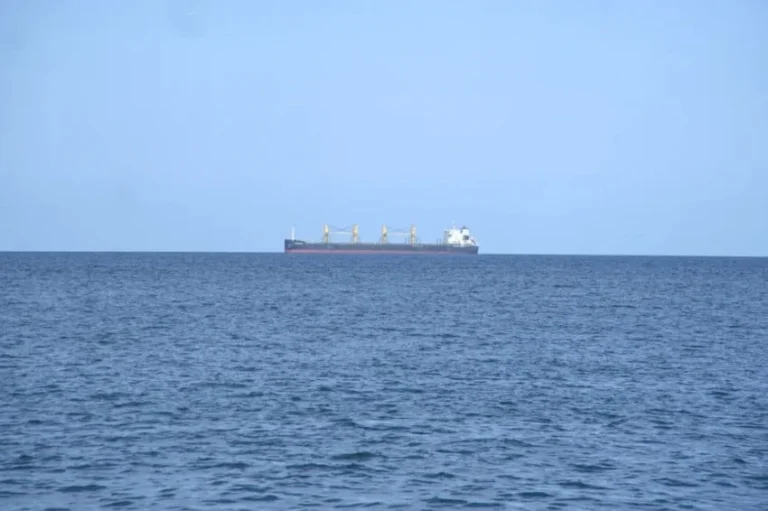
According to the initial claims made by the naval branch of the IRGC, Iranian commando units executed a clandestine operation to reclaim two oil tankers that had been previously intercepted and detained by United States military personnel. The Iranian command asserted that the operation was executed with surgical precision, taking advantage of lax security and sleeping American troops aboard the seized vessels to wrest back control without sustaining casualties.
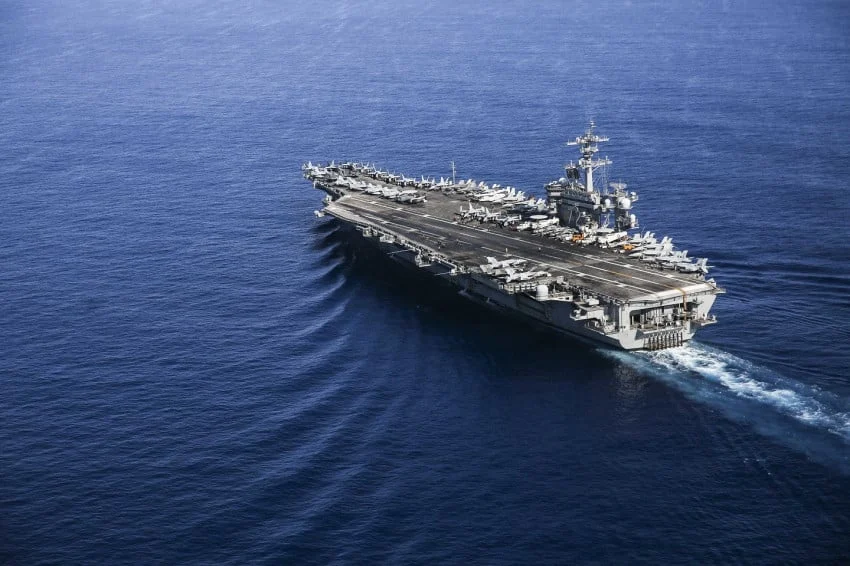
Simultaneously, the IRGC claimed that on the very first day of the newly minted military framework designated as Operation Epic Fury, its forces targeted the USS Abraham Lincoln carrier strike group. Tehran alleged that the assault inflicted sufficient strategic pressure to force American commanders to urgently request tactical evacuation and intervention support from regional partner nations stationed along the Gulf coastline.
However, this meticulously constructed narrative by Tehran began to unravel publicly within hours, as the United States military apparatus moved swiftly to counter the psychological impact of the claims.
Official United States Responses and Counter-Claims
The United States Central Command, operating as the unified command responsible for U.S. security operations in the Middle East and Central Asia, issued a comprehensive and scathing rebuttal to the Iranian assertions. Utilizing official communication channels, including statements disseminated through the social media platform X, CENTCOM dismantled each pillar of the IRGC’s claims with blunt military terminology.
Addressing the assertion regarding the re-capture of oil tankers, CENTCOM officials stated unequivocally that the United States military had never stolen or unlawfully seized the two vessels in question, nor had American forces engaged in the alleged practice of levying transit tariffs or extortion fees on commercial ships traversing the Strait of Hormuz—addressing a specific Iranian claim that the U.S. was charging upwards of $2.5 million per vessel for safe passage.
"Iran no longer possesses a functional blue-water Navy capable of executing such operations. The entire scenario depicted by the Iranian military commander is nothing more than another fabricated falsehood engineered for public posture," CENTCOM explicitly noted in its official communique.
Furthermore, regarding the alleged kinetic strike against the USS Abraham Lincoln, the American military command offered definitive proof of the carrier’s operational timeline and defensive posture. CENTCOM emphasized that the nuclear-powered aircraft carrier and its accompanying strike group are protected by multiple, highly sophisticated layers of defensive and offensive counter-measure systems, rendering them impervious to the rudimentary asymmetric tactics allegedly employed during the opening of Operation Epic Fury.
Strategic Realities of the USS Abraham Lincoln Deployment
To substantiate its denial regarding the alleged attack on the USS Abraham Lincoln, the United States military pointed to the verifiable operational schedule of the carrier strike group. Far from retreating under fire or requiring regional evacuation assistance, the USS Abraham Lincoln had successfully concluded an extensive and historically significant combat deployment cycle in the region.
Military analysts and naval authorities confirmed that the carrier departed the active theatre weeks prior to the alleged incident, navigating safely back toward its home port inside the continental United States. The deployment, which spanned several months, was characterized by high-tempo operations designed to project American deterrence power in the Middle East amid persistent regional instability involving various proxy networks.
The inclusion of these verifiable logistical details by CENTCOM served to thoroughly discredit the Iranian claims, transforming the episode into a textbook case of asymmetric information warfare. In modern geopolitical conflicts, the battle for perception often runs parallel to physical engagements, with state actors utilizing domestic media channels to project strength and resilience regardless of ground truths.
Broader Implications for Regional Security and Global Markets
While the latest standoff between the United States and Iran ultimately proved to be a conflict of narratives rather than an exchange of kinetic ordnance, the broader implications for international security and global economics remain profound. The incident highlights the hyper-sensitive environment of the Persian Gulf, where rumors, unverified claims, and propaganda can instantaneously influence global commodity markets.
Following the initial reports of maritime skirmishes and attacks on a premier U.S. naval asset, international crude oil futures experienced momentary volatility as traders priced in the risk of potential supply disruptions through the Strait of Hormuz. Although markets stabilized once CENTCOM issued its definitive clarifications, the episode serves as a recurring reminder of how easily economic stability can be rattled by geopolitical friction in the Middle East.
Moreover, the exchange underscores the ongoing challenge of deterrence management. As both Washington and Tehran continue to navigate a complex web of direct and proxy tensions, the threshold for miscalculation remains dangerously low. Military experts note that while neither side appears eager to initiate a full-scale conventional war, the accumulation of localized friction points, unverified operational claims, and heightened alert statuses increases the risk of an accidental escalation.
As intelligence agencies and defense analysts continue to monitor developments in the Persian Gulf, the latest episode involving the IRGC and CENTCOM reinforces the reality that the information domain is now as fiercely contested as the maritime domain itself. In an era defined by rapid digital communication and strategic posturing, verifying facts on the ground remains the ultimate safeguard against unwarranted panic and regional destabilization.