The realm of endurance athletics has continually challenged the boundaries of human physiology, yet few feats match the extraordinary determination demonstrated by Deirdre Keane. At 38 years old, this American nurse achieved what many medical professionals and sports scientists would deem improbable: completing all seven prestigious World Marathon Majors consecutively throughout the calendar year while navigating the rigorous demands of pregnancy. Culminating her mission at the New York City Marathon at 34 weeks gestation, Keane’s achievement has ignited global conversations regarding maternal fitness, the adaptability of the female body, and the evolving medical perspectives surrounding high-intensity exercise during pregnancy.
Main Facts and the Culmination of an Extraordinary Journey
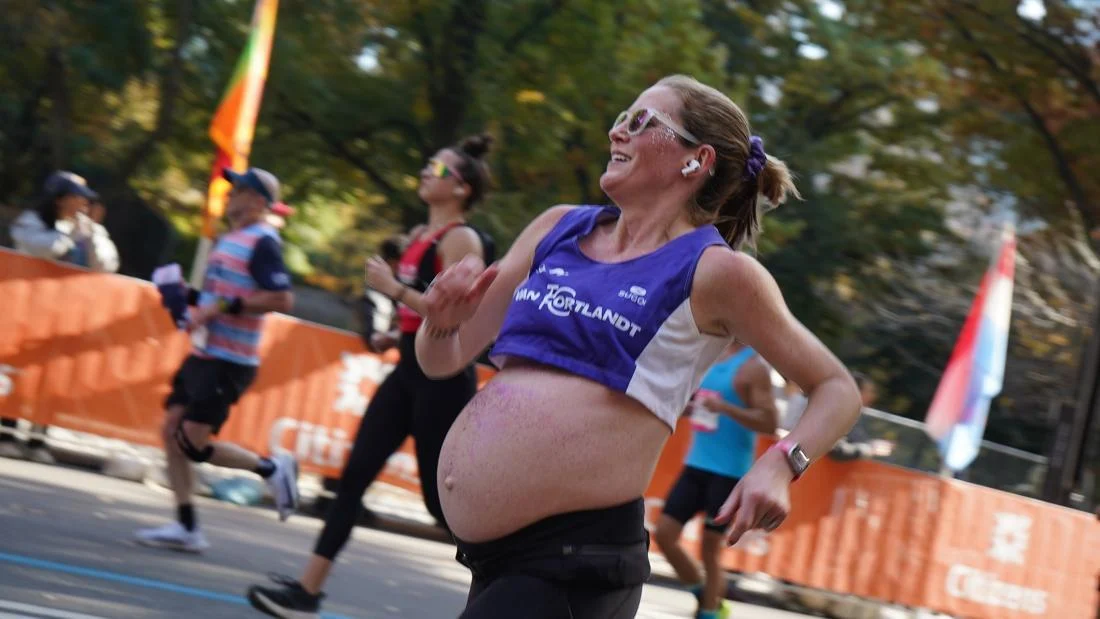
Deirdre Keane officially completed the New York City Marathon with an impressive time of four hours and six minutes while in her third trimester. This final event served as the capstone for her ambitious goal to conquer all seven races comprising the Abbott World Marathon Majors series within a single year. The prestigious circuit includes marathons held in Tokyo, Boston, London, Sydney, Berlin, Chicago, and New York City.
While third-trimester pregnancies are conventionally associated with physical rest, reduced mobility, and preparation for childbirth, Keane maintained a disciplined running regimen. Her participation in the New York race at 34 weeks—equivalent to approximately eight months of pregnancy—attracted widespread attention from spectators, medical personnel, and fellow athletes. Despite the physical burden of an advanced pregnancy, Keane sustained a competitive pace, finishing the grueling 26.2-mile course well within the average finishing times for non-pregnant recreational runners.
Chronology of the 2024 World Marathon Majors Mission
Keane’s journey began not as a prenatal endurance test, but as a personal bucket-list ambition intended to be fulfilled prior to starting a family. She had initially registered for a dozen long-distance events, including the major circuit races, scheduling them across the year. Her extensive athletic background—comprising over 60 completed marathons prior to her pregnancy—provided a formidable foundation of physical conditioning.
The chronological progression of her 2024 campaign highlights a transformative physical evolution:
- March: Keane successfully inaugurated her campaign at the Tokyo Marathon, competing under standard physiological conditions.
- April: During consecutive participations in the Boston Marathon and the London Marathon, Keane noted subtle shifts in her physical performance, observing uncharacteristic fatigue and decelerated pacing. Subsequent medical testing confirmed a positive pregnancy status.
- Mid-Year Series: Following rigorous consultations with her obstetrician, Keane adjusted her athletic schedule. She eliminated high-risk, ultra-endurance events such as triathlons and ultramarathons while committing to standard marathon distances under strict physiological monitoring. She successfully navigated the Sydney Marathon at 25 weeks gestation, the Berlin Marathon at 29 weeks, and the Chicago Marathon at 31 weeks, maintaining finish times under four hours.
- November: The mission concluded at the New York City Marathon at 34 weeks, where Keane crossed the finish line supported by a coordinated support system of family and friends.
Medical Oversight and Professional Guidance
A critical element of Keane’s narrative involves the active oversight of her medical team. Upon discovering her pregnancy after
the Boston and London events, Keane consulted her obstetrician to evaluate the viability and safety of continuing marathon training.
Medical consensus regarding prenatal exercise has evolved significantly over the past two decades. Historically, pregnant women were advised to strictly limit heart rates and avoid high-impact exertion. However, contemporary guidelines from organizations such as the American College of Obstetricians and Gynecologists (ACOG) indicate that regular, moderate-to-vigorous exercise is generally safe for women with uncomplicated, healthy pregnancies, provided they maintain established routines prior to conception.
Keane’s obstetrician granted approval based on her extensive athletic history. Because her body was already exceptionally conditioned to the physiological stress of long-distance running, her cardiovascular and musculoskeletal systems were uniquely adapted to manage the demands of the sport. Throughout the training cycle, Keane adhered to strict safety protocols: she abandoned numerical performance targets, stayed adequately hydrated, monitored internal exertion levels, and committed to walking whenever physiological signals warranted moderation.
Logistical and Emotional Support Systems
Executing a world-class athletic endeavor while pregnant required meticulous logistical planning and robust interpersonal support. Keane acknowledged that the emotional and physical hurdles intensified as her pregnancy progressed, particularly as her visual physical changes became more pronounced.
Throughout the latter races in Berlin, Chicago, and New York, Keane’s husband and close associates established a mobile support network along the racing routes. Stationed at strategic intervals, they supplied specialized hydration fluids, monitored her gait, and ensured she maintained safe body temperatures.
The logistical alignment of the New York City Marathon carried an ironic proximity to her impending motherhood. Keane noted that the race route passed precisely one block away from Weill Cornell Medical Center, the designated facility where she was scheduled to give birth. This proximity generated lighthearted humor among her support crew regarding the possibility of an abrupt detour from the marathon course to the delivery ward.
Broader Impact and Implications for Maternal Health
Keane’s accomplishments contribute to a growing body of anecdotal and clinical observations challenging traditional limitations placed on expectant mothers. Sports physiologists and maternal-fetal medicine specialists note that individual physiological variations dictate what is permissible during pregnancy. While Keane’s capabilities are far from typical for the general population, her success highlights the principle that highly conditioned female athletes can maintain high-level training regimens safely under specialized medical supervision.
Furthermore, the case underscores the importance of bodily awareness and adaptive pacing. Keane’s deliberate decision to prioritize internal physiological feedback over rigid finishing times prevented potential complications, demonstrating that competitive drive can coexist harmoniously with prenatal health priorities.
As public interest in women’s endurance athletics continues to expand, narratives such as Deirdre Keane’s redefine societal perceptions of pregnancy, illustrating that motherhood and elite athletic pursuits are not mutually exclusive, provided they are managed with rigorous medical partnership, careful planning, and profound physiological self-awareness.