The San Antonio Spurs have officially shed the label of a rebuilding project, transforming into a formidable championship contender as they approach the 2026/2027 NBA season. Following a historic run to the 2026 NBA Finals, the franchise stands at a pivotal juncture where the lessons learned from their narrow defeat to the New York Knicks must serve as the foundation for a renewed title campaign. With a blend of elite star power in Victor Wembanyama and a maturing core of supporting talent, the organization is no longer satisfied with mere improvement; the mandate for the upcoming season is clear: the Larry O’Brien Trophy.
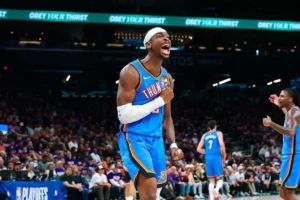
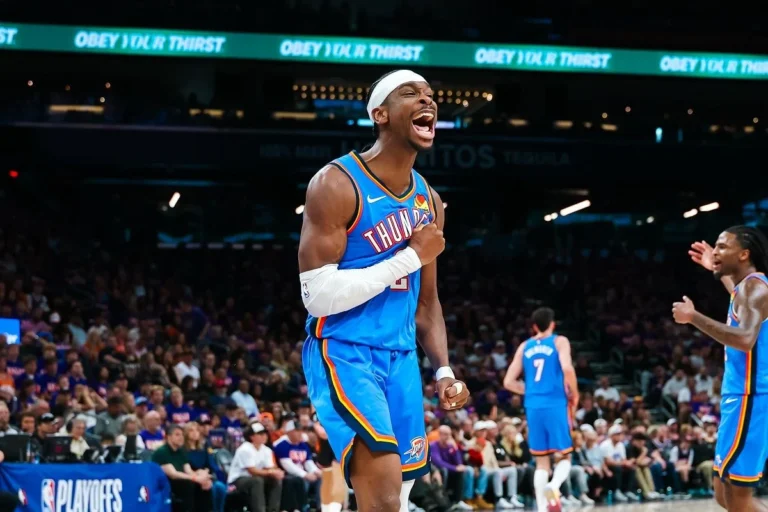
The 2026/2027 NBA regular season tips off on Tuesday, October 20, 2026, in the United States, with the Spurs scheduled for a high-stakes season opener. They will host the Oklahoma City Thunder at the Frost Bank Center in San Antonio on Wednesday, October 21, at 08:30 WIB. This matchup serves as more than just a ceremonial opening; it is a direct rematch of the 2026 Western Conference Finals, a seven-game thriller that cemented the rivalry between the two most promising teams in the West.
A Legacy of Rapid Acceleration
The trajectory of the San Antonio Spurs over the past 24 months is statistically unprecedented in the modern NBA era. In the 2024/2025 season, the team struggled through a developmental year, recording a modest 34-48 record and missing the postseason entirely. This period of transition was necessary to integrate key draft acquisitions and allow for the physical and tactical maturation of their core players.
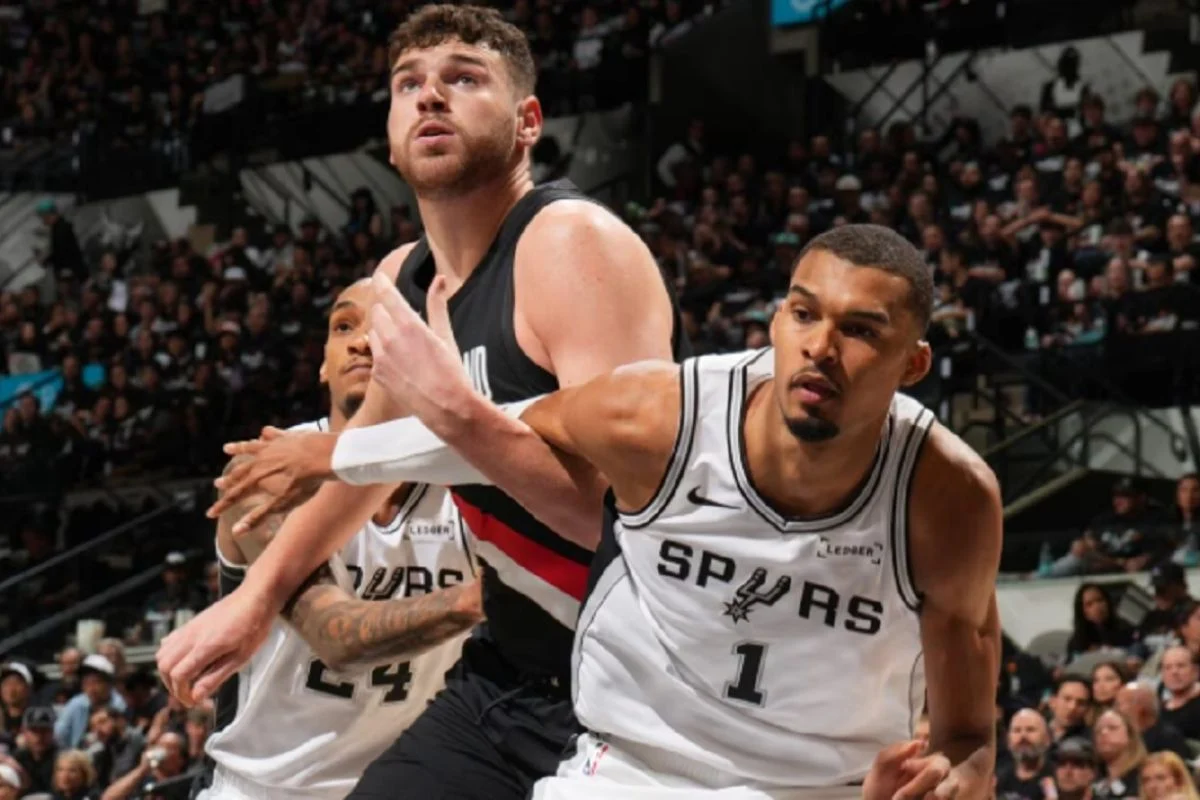
The turnaround arrived in the 2025/2026 season. Under the guidance of head coach Mitch Johnson, the Spurs surged to a 62-20 record, finishing just behind the Oklahoma City Thunder in the Western Conference standings. This 28-win improvement represented one of the largest single-season jumps in league history. Their postseason run was equally impressive, dismantling the Portland Trail Blazers in the first round, overcoming the Minnesota Timberwolves in the conference semifinals, and finally edging out the Oklahoma City Thunder in a grueling seven-game series.
While the team ultimately fell 1-4 to the New York Knicks in the NBA Finals, the experience proved invaluable. The Finals provided the young squad with a masterclass in high-leverage basketball, exposing the limitations of their defensive rotations and the necessity of late-game execution. According to league analysts, this specific failure is often the crucible through which championship teams are forged, providing the tactical scar tissue required to withstand the pressure of deep playoff runs.
The Wembanyama Era: A Paradigm Shift
At the heart of the Spurs’ resurgence is Victor Wembanyama, who has established himself as arguably the most unique talent in the history of the sport. Standing at 2.24 meters, Wembanyama’s influence extends far beyond traditional metrics. As the reigning Defensive Player of the Year, his ability to patrol the paint, disrupt passing lanes, and contest perimeter shots makes him a defensive system unto himself.
In the 2026/2027 season, the expectations for Wembanyama have shifted from "potential" to "dominance." Offensively, he has refined his perimeter shooting and his ability to initiate the offense from the high post. His synergy with the team’s backcourt is the primary variable that will determine the Spurs’ ceiling. Opposing coaches have noted that defending Wembanyama requires a "gravity-based" defensive scheme; when he occupies the middle, the floor opens for teammates, yet when he drifts to the three-point line, he forces opposing centers away from the rim, creating lanes for drivers like Stephon Castle.
Strategic Depth: Castle, Harper, and the Supporting Cast
The Spurs’ front office has prioritized building a balanced roster that prevents the team from becoming one-dimensional. Stephon Castle has emerged as a primary playmaker, demonstrating an elite ability to read defensive shifts and manipulate pick-and-roll coverage. His development as a floor general has allowed the Spurs to diversify their offensive playbook.
Dylan Harper, meanwhile, provides the necessary perimeter creativity. His presence on the floor allows the coaching staff to stagger the minutes of their primary ball-handlers, ensuring that the team’s offensive pace does not crater when Wembanyama is on the bench. The recent addition of veteran guard De’Aaron Fox brings a seasoned perspective to the roster. Fox’s experience in high-pressure playoff scenarios provides the team with a reliable secondary scoring option, particularly in closing minutes when defenses tighten their grip on Wembanyama.
Devin Vassell remains the team’s premier floor spacer. His consistency from beyond the arc forces defenses to respect the perimeter, effectively creating the "spacing vacuum" that allows Wembanyama to operate in single-coverage situations. The synthesis of this youthful core with experienced veterans like Fox creates a dynamic where the team can adapt to various defensive looks—from small-ball lineups to heavy, physical defensive sets.
Coaching Challenges: The Evolution of Mitch Johnson
Head coach Mitch Johnson faces a different set of challenges in his sophomore year as a head coach. Moving from an underdog mentality to a title-favorite requires a psychological shift. Johnson must manage the delicate balance of maintaining the team’s high-octane offensive output while tightening the defensive screws to meet championship standards.
One of the primary focus areas for the coaching staff during the preseason has been the "non-Wembanyama minutes." The team’s efficiency rating historically drops when the French star sits. Johnson’s task is to integrate a system that remains productive through movement and team-based screening rather than individual brilliance. Furthermore, the coaching staff is emphasizing "situational awareness"—the ability to recognize when to slow the tempo and when to push for transition points. This focus is a direct response to the defensive adjustments they encountered against the New York Knicks in the Finals.
The Western Conference Gauntlet
The path back to the NBA Finals is fraught with challenges. The Western Conference remains the most competitive landscape in the league, with multiple teams capable of a deep postseason run. The Oklahoma City Thunder, led by Shai Gilgeous-Alexander, remain the primary hurdle. Their depth and chemistry present a mirror image of the Spurs’ own development path.
Beyond the Thunder, the Denver Nuggets continue to be a perennial threat with Nikola Jokic anchoring their system. The Minnesota Timberwolves, with their blend of elite size and perimeter athleticism, are another significant obstacle. Additionally, the veteran-heavy rosters of the Los Angeles Lakers and the Golden State Warriors are expected to make late-season surges. For the Spurs, securing a top-four seed is not just about home-court advantage; it is about avoiding the unpredictability of the Play-In Tournament and ensuring that the squad is fully rested for the grueling nature of the postseason.
Financial and Tactical Implications
The financial structure of the Spurs remains disciplined, allowing them the flexibility to add pieces at the trade deadline should a specific need arise. However, the internal focus remains on the current roster’s organic growth. The organization’s commitment to internal development has fostered a unique team culture that prizes defensive communication and selfless ball movement.
Statistically, the Spurs’ success in the 2026/2027 season will likely hinge on three key performance indicators:
- Three-Point Percentage: Increasing the team’s efficiency from the perimeter to better punish defenses that collapse on Wembanyama.
- Turnover Ratio: Reducing unforced errors in the final five minutes of games, a recurring issue during the 2026 playoff run.
- Defensive Rebounding: Maintaining a high defensive rebound rate to limit second-chance points for opponents, a critical weakness identified in their loss to New York.
A Season of Redemption and Purpose
As the Spurs prepare for their opening night clash against the Thunder, the mood in San Antonio is one of tempered anticipation. The team is aware that their regular-season success last year does not grant them a pass for the current season. The league has scouted them; opponents now have a full season of film on how to handle the Spurs’ unique offensive sets.
The upcoming campaign will be the true test of the Spurs’ championship DNA. Can they handle the target on their backs? Will the growth of Castle and Harper provide the necessary consistency to support Wembanyama’s immense gravity? These questions will begin to be answered on October 21. For the San Antonio Spurs, the 2026/2027 season is not merely a chance to play basketball; it is a mission to validate their status as the new powerhouse of the NBA and to finish the work they started last June.
The stakes are higher than ever, and the path to the championship is clear. Whether the Spurs can replicate their regular-season brilliance and translate it into a championship ring will depend on their ability to stay healthy, maintain their defensive intensity, and adapt to the inevitable challenges of an 82-game marathon. As the league enters this new chapter, the Spurs are firmly positioned at the center of the conversation, ready to prove that their 2026 run was not an anomaly, but the beginning of a new dynasty.