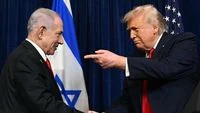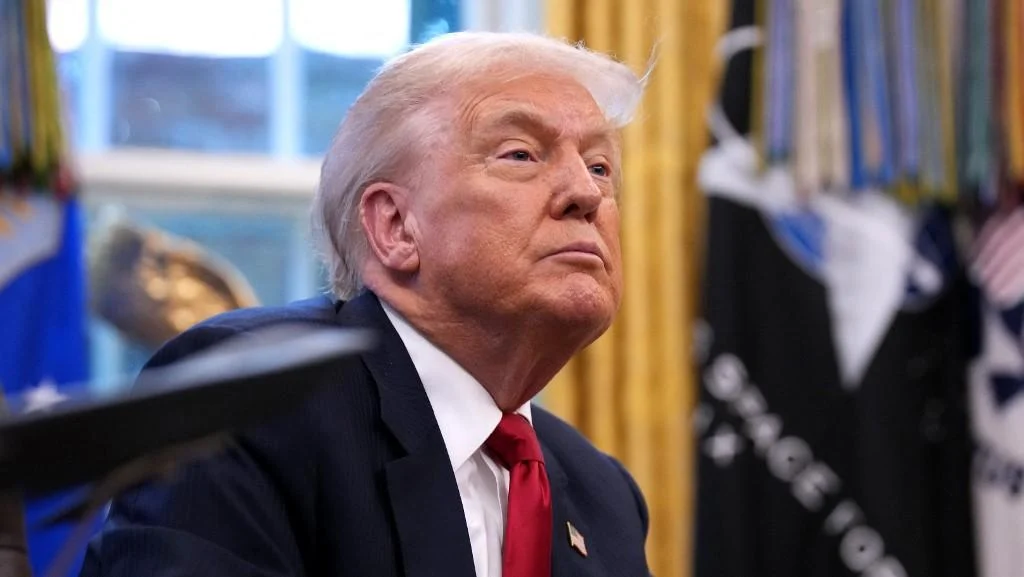
WASHINGTON DC — In the dynamic and high-stakes arena of international geopolitics, United States President Donald Trump has once again asserted his personal influence over foreign electoral outcomes. Speaking aboard Air Force One while returning from a political campaign trip in Texas, President Trump openly claimed that his vocal and strategic endorsement of Israeli Prime Minister Benjamin Netanyahu was the decisive factor behind the conservative leader’s unexpectedly strong performance in Israel’s legislative elections. The elections, held on Tuesday, have produced a tense and closely watched political deadlock, with vote-counting operations still underway by the Central Elections Committee of Israel.
According to preliminary tallies released early Wednesday morning, the right-wing coalition led by Prime Minister Netanyahu has surged ahead of the central-left and opposition blocs, defying earlier exit polls and pre-election surveys that had predicted a narrow defeat for the long-serving incumbent. While the final outcome remains heavily contested and subject to change as remaining ballots are processed, Trump’s assertions have spotlighted the deep intertwining of American domestic political optics with the turbulent electoral landscape of the Middle East.
Shifting Tides: Preliminary Results and Electoral Dynamics
The Central Elections Committee of Israel released updated provisional figures reflecting a counting progress of roughly 41.9 percent of the total national vote. The data indicates that Prime Minister Netanyahu’s ruling Likud party has secured the single largest block with 28 seats in the 120-seat Knesset, Israel’s unicameral parliament. Trailing behind Likud is the Yashar party, spearheaded by opposition figure Gadi Eisenkot, which has provisionally captured 21 seats.
When aggregating the broader political alignments, Netanyahu’s right-wing coalition commands approximately 57 seats in total. Meanwhile, the disparate opposition alliance stands at 47 seats, with the remaining 16 seats distributed among various Arab political factions. Despite the encouraging trajectory for the incumbent premier, neither major political bloc has yet cleared the crucial 61-seat threshold required to command a definitive parliamentary majority. This shortfall sets the stage for potentially prolonged and contentious coalition-building negotiations once the final tally is certified.
The current numbers represent a dramatic departure from pre-election exit polls, which had suggested that Netanyahu’s coalition was on track to lose its grip on power. Instead, the right-wing bloc has mounted a resilient comeback, outperforming expectations and transforming what initially looked like a definitive political setback into a fiercely competitive race where an outright victory or a deadlocked stalemate remain plausible outcomes.
Trump Takes Credit: From Air Force One to Social Media
President Trump seized upon these shifting electoral margins to amplify his narrative of decisive foreign policy intervention. Speaking to reporters traveling with him aboard the presidential aircraft, Trump maintained that his explicit backing fundamentally altered the trajectory of the Israeli election.
"I hear the results are very good. The race is quite tight, very good," Trump remarked to journalists. "According to my view, when that support was given, it helped him tremendously." He added that while the final outcome was yet to be determined, Netanyahu had clearly outperformed pessimistic forecasts. "He might win or achieve a tie. But I hear he is performing quite well."
The sentiment was similarly echoed on digital platforms. In a post shared via Truth Social, Trump framed his endorsement as a miraculous political resuscitation for the Israeli leader. The statement, written in a stylistic third-person perspective and quoting an individual identified as Irving C. Schwartz, asserted that the announcement of American support instantly reshaped the domestic narrative in Israel.
"When President Trump endorsed Bibi Netanyahu, the direction of the situation changed completely, and now, instead of suffering a crushing defeat, the great Prime Minister is actually bouncing back to achieve a tie, or even a VICTORY for Netanyahu," the post read. The message concluded with a broader geopolitical assertion, emphasizing that the intervention was driven by a desire for stability and prosperity across the Middle East.
Background and Context: A Complex Political Landscape
The legislative elections represent another chapter in Israel’s prolonged era of political volatility, characterized by repeated electoral cycles and deeply polarized domestic factions. Benjamin Netanyahu, who has served as Israel’s longest-serving prime minister, has continually navigated legal challenges, intense public scrutiny, and profound regional security crises following ongoing conflicts in Gaza and along Israel’s northern borders.
Throughout his political career, Netanyahu has frequently leveraged his close personal and diplomatic relationship with United States leaders, particularly Donald Trump, to bolster his credentials as a statesman uniquely capable of managing Israel’s security alliances. The Trump administration previously delivered major policy victories for Netanyahu’s government, including the historic relocation of the U.S. Embassy to Jerusalem and the brokering of the Abraham Accords, which normalized diplomatic relations between Israel and several Arab nations.
In the lead-up to the latest Knesset elections, the political opposition—led by figures such as Gadi Eisenkot—sought to capitalize on domestic fatigue, economic pressures, and questions regarding post-conflict governance. However, the resilience of Likud and its allied right-wing factions demonstrates the enduring appeal of Netanyahu’s security-centric platform among a significant portion of the Israeli electorate.
Implications of a Hung Parliament
As election officials continue the meticulous process of verifying and counting the remaining ballots, political analysts are turning their attention to the structural implications of a potential hung parliament. With neither the pro-Netanyahu bloc nor the opposition coalition possessing the requisite 61 seats to govern independently, Israel faces the prospect of protracted coalition negotiations.
Such negotiations typically involve intense horse-trading with smaller, fringe political parties, particularly ultra-Orthodox factions and nationalist groups whose support is vital for reaching a parliamentary majority. This dynamic often grants minor parties disproportionate leverage in shaping government policy, ministerial appointments, and legislative priorities.
Furthermore, the presence of 16 seats held by Arab parties adds another layer of complexity to coalition arithmetic, as traditional Zionist right-wing and center-left blocs frequently rule out formal partnerships with these factions, though informal coordination has occasionally been tested in past political crises.
Broader Geopolitical and Diplomatic Repercussions
The outcome of the Israeli election carries profound implications for international diplomacy in the Middle East, particularly regarding ongoing regional conflicts, humanitarian efforts, and U.S.-Israel relations. A triumphant return or continuation of a Netanyahu-led government would ensure the persistence of a hardline security posture, aligning closely with conservative elements in Washington. Conversely, a breakthrough by the opposition could signal a shift in diplomatic tone, though fundamental tenets of Israeli national security doctrine are expected to remain consistent regardless of which coalition ultimately assumes power.
President Trump’s public intervention underscores the transnational nature of modern political messaging, where domestic American political actors actively seek to project influence over foreign democratic processes. While supporters view such endorsements as evidence of strong leadership and enduring international alliances, critics often warn that overt foreign interference risks polarizing domestic electorates further and complicating delicate diplomatic balances.
As Israel awaits the final certification of its election results by the Central Elections Committee, the political atmosphere remains charged with anticipation. Whether Benjamin Netanyahu secures an outright victory or is forced into arduous coalition talks, the race has proven to be one of the most unpredictable contests in recent Israeli history—with Donald Trump firmly ensuring his own voice remains part of the global narrative surrounding the outcome.