The Directorate of Traffic of the Jakarta Metro Police officially recorded a staggering 103,779 traffic violations captured by the Electronic Traffic Law Enforcement (ETLE) system during the opening day of Operation Patuh Jaya 2026 on Monday, October 26. This massive volume of automated captures highlights both the widespread disregard for traffic regulations among motorists in the capital and the increasingly sophisticated reach of modern surveillance infrastructure across Jakarta’s major thoroughfares. Out of the tens of thousands of digital captures logged by the system, authorities confirmed and processed 2,888 distinct violation cases on the very first day, laying bare persistent issues regarding urban discipline, adherence to road markings, and compliance with the city’s vehicular restrictions.
According to data released by law enforcement officials, the most frequently violated rule was the city’s iconic odd-even license plate restriction system (ganjil-genap). This specific infraction accounted for 808 validated cases, representing approximately 28 percent of the total confirmed violations for the day. The sheer volume of odd-even infractions underscores the ongoing challenge commuters face regarding spatial and temporal restrictions designed to mitigate Jakarta’s notorious traffic congestion. Following closely behind were infractions related to road signs and lane markings, which registered 557 cases, and motorists running red lights, which accounted for 408 documented offenses.
Context and Background of Operation Patuh Jaya 2026
Operation Patuh Jaya is a cornerstone of traffic enforcement strategy in Indonesia’s capital region, conducted periodically to curb rising traffic fatality rates, instill road discipline, and ensure smoother public mobility. The 2026 iteration of the operation is scheduled to run for a rigorous 14-day period, spanning from October 26 through November 8. To execute this comprehensive enforcement drive, the Jakarta Metro Police deployed a joint task force consisting of 2,938 personnel drawn from various security and transportation agencies, including the police, the local transportation agency (Dishub), and the military.
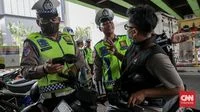
The overarching theme for this year’s campaign, as announced by Jakarta Metro Police Chief Police General Dadang Hartanto, is "Police Together with the Community to Realize Orderly, Safe, and Traffic-Compliant Mobility." In alignment with modern policing paradigms, Chief Dadang emphasized that the tactical approach for Operation Patuh Jaya 2026 leans heavily toward pre-emptive and preventive educational measures rather than purely punitive roadside actions. Nevertheless, the integration of the ETLE system ensures that hard enforcement against repeat or blatant violators proceeds swiftly and transparently.
Comprehensive Breakdown of Day-One Violations
A granular examination of the 2,888 validated cases from the first day reveals distinct patterns in commuter behavior across Jakarta. While odd-even violations dominated the statistics, non-compliance with fundamental safety equipment remained alarmingly high. Motorcycle riders failing to wear standard helmets accounted for 403 validated cases. Furthermore, unauthorized incursions into the dedicated TransJakarta bus lanes—a chronic issue that routinely disrupts the city’s primary bus rapid transit system—resulted in 350 recorded violations.
Additional categories of infraction included 281 drivers of four-wheeled vehicles or larger failing to wear seatbelts, 65 instances of disobedience toward specific prohibition signs, 9 cases of motorists caught using mobile phones while driving, and 7 instances of motorcycle passengers riding without a certified helmet. The widespread reliance on the ETLE network allowed law enforcement to process these violations without requiring physical interception by traffic officers on the street, minimizing traffic snarls that traditional checkpoints often cause.
Administrative Follow-Up and Revenue Collection
The transition from automated image capture to actual legal consequence is a critical metric for the success of electronic traffic enforcement. On the first day of Operation Patuh Jaya 2026, the administration processed and dispatched 2,888 formal confirmation letters to registered vehicle owners suspected of committing infractions.
The response rate from the public demonstrated significant compliance with the administrative process. Out of the dispatched letters, 1,873 cases have been formally acknowledged and confirmed by the registered owners. Furthermore, the administrative machinery successfully processed 1,976 total billing cases, with 1,777 fines fully paid off within the immediate operational window. This rapid turnaround highlights the effectiveness of the digital notification system in prompting motorists to settle their penalties rather than letting fines accumulate.
Prioritized Targets of the Enforcement Campaign
While the ETLE system captures a broad spectrum of illegal behavior, the joint task force operating on the ground and through remote monitoring focuses on specific priority targets. These targeted infractions are chosen due to their direct correlation with severe traffic accidents and fatalities on the metropolitan area’s roadways.
The primary enforcement priorities for Operation Patuh Jaya 2026 include:
- Motorcyclists operating vehicles without a National Standard Indonesia (SNI) certified helmet.
- Drivers and front-seat passengers failing to fasten seatbelts.
- Motorists operating mobile phones or electronic communication devices while driving.
- Violations of traffic signs, warning boards, and road surface markings.
- Motorists running red lights at controlled intersections.
- Vehicles exceeding prescribed speed limits.
- Drivers operating vehicles against the flow of traffic (contraflow or wrong-way driving).
Official Statements and Strategic Philosophy
Head of Sub-Directorate for Law Enforcement at the Jakarta Metro Police Traffic Directorate, AKBP Adiel Aristo, highlighted the prevalence of administrative evasion regarding the city’s traffic management schemes. Speaking to the press, AKBP Adiel noted that the odd-even regulation remains the most frequently captured infraction because many motorists attempt to navigate restricted zones during peak hours, gambling on the probability that automated cameras will fail to capture their license plates, a gamble that increasingly fails as high-definition cameras cover more arterial roads.
Complementing this operational insight, Police General Dadang Hartanto elaborated on the broader societal goals of the fortnight-long campaign. He stressed that the primary objective of Operation Patuh Jaya is not merely to issue fines or generate state revenue, but to fundamentally shift public culture toward greater responsibility behind the wheel. By prioritizing pre-emptive education while maintaining strict electronic oversight, the police aim to foster an environment where traffic safety is viewed as a collective civic duty rather than an externally imposed restriction.
Broader Implications for Urban Mobility and Safety
The staggering volume of violations recorded on day one—over 103,000 raw captures filtered down to nearly 3,000 processed cases—serves as a crucial barometer of Jakarta’s ongoing struggle with traffic discipline. As Indonesia’s economic and political center transitions through various phases of infrastructure modernization, the behavioral habits of road users remain a major bottleneck in achieving optimal urban mobility.
The heavy reliance on ETLE demonstrates the future of traffic policing in dense metropolitan areas. Automated systems remove the potential for discretionary enforcement or friction during roadside stops, ensuring uniform application of the law. However, the high volume of infractions also signals that structural changes, such as public transportation expansion and clearer urban zoning, must go hand in hand with enforcement. As Operation Patuh Jaya 2026 continues through November 8, transportation analysts and law enforcement agencies will closely monitor whether the sustained presence of digital and physical enforcement leads to a measurable decline in daily infractions, ultimately contributing to safer, more predictable roads for all citizens of Greater Jakarta.