The ongoing enforcement of vehicle registration regulations in Indonesia’s West Java region yielded a notable infraction when local traffic authorities successfully intercepted a black Toyota Kijang Innova traveling along the heavily congested Puncak tourist corridor. The vehicle, which bore the registration number B 1153 EQN, immediately drew the attention of law enforcement officers due to the conspicuous mismatch between its physical appearance and official database records. Upon closer inspection by the Bogor Traffic Police, it was revealed that the passenger vehicle—assigned to a state-run polytechnic institution—had been fitted with unauthorized white license plates in a deliberate attempt to conceal its true status as a government-owned asset, which is legally mandated to display red registration plates.
The incident, which quickly circulated across digital media platforms and sparked widespread public discourse regarding the misuse of state property, underscores persistent challenges in regulating official government vehicles in Indonesia. As administrative oversight tightens across various governmental and educational sectors, this interception highlights broader systemic issues concerning compliance, accountability, and the private exploitation of public assets by unauthorized individuals.
Chronology of the Interception Along the Puncak Corridor
The sequence of events leading to the apprehension of the vehicle began during a routine traffic monitoring and security sweep conducted by personnel from the Bogor Traffic Police Satlantas unit along the Puncak route—a notoriously busy thoroughfare connecting Greater Jakarta to the highland resort areas of West Java. Officers stationed at a checkpoint observed the black Toyota Kijang Innova moving within the stream of weekend and holiday traffic.
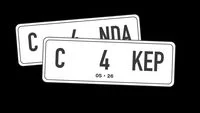
The initial suspicion arose when officers noticed that the vehicle displayed white license plates with black alphanumeric characters, a newly standardized format currently being phased in for private civilian vehicles across Indonesia under recent police regulations. However, the vehicle’s model, tinted windows, and specific aesthetic markers prompted officers to signal the driver to pull over for a routine administrative check.
The entire interaction was captured on video by a civilian bystander and subsequently uploaded to the popular Instagram account @dulyanidul, rapidly gaining traction online. In the footage, a traffic officer is seen signaling the driver from a police motorcycle, instructing him to guide the vehicle to the shoulder of the road.
"Sir, please pull over to the side," the officer instructed the driver.
Upon stopping, the officer approached the vehicle and requested the presentation of the vehicle’s registration papers, specifically the Surat Tanda Nomor Kendaraan (STNK). When questioned about the ownership and documentation of the automobile, the driver admitted that the car did not belong to him personally. Instead, he claimed that the vehicle belonged to a family member—specifically his brother—who had allegedly borrowed or checked out the automobile from a state polytechnic institution.
"It belongs to my brother, borrowed from the polytechnic," the driver stated to the examining officer.
Sensing a discrepancy, the officer pointed out that the physical vehicle and its registration details corresponded to a government asset that legally required red registration plates rather than the civilian-style white plates currently mounted on the front and rear bumpers.
"I see that it should have red plates," the officer noted.
Confronted by law enforcement, the driver conceded that the vehicle was indeed an official government-assigned asset. However, he attempted to justify the alteration of the license plates by citing an unverified urban myth or misconception regarding travel restrictions for government vehicles outside the capital city. The driver claimed he had been advised that state-owned vehicles were prohibited from displaying red plates when crossing jurisdictional boundaries out of Jakarta.
"Yes, it has red plates, because they said that if you go outside Jakarta, you shouldn’t use red plates. I’m sorry, Sir," the driver confessed.
Rejecting the justification, the officer informed the driver that ignorance of the law or adherence to informal hearsay did not exempt motorists from regulatory compliance. The officer formally announced that the vehicle would be issued a traffic citation for operating with a Motor Vehicle Number Sign (TNKB) that violated legal specifications.
"I am ticketing you because the TNKB does not match," the officer concluded, proceeding with the issuance of the citation and the temporary impoundment of the vehicle pending further administrative investigation.
Regulatory Framework Governing State Vehicle Usage
The incident in Bogor touches upon multiple layers of Indonesian administrative law, transportation regulations, and civil service ethics. The unauthorized alteration of license plates constitutes a direct violation of national traffic laws, while the private use of a state-owned vehicle breaches stringent bureaucratic guidelines established to curb the abuse of public facilities.
According to Indonesian National Police Regulation (Peraturan Kepolisian) Number 7 of 2021, which officially entered into force on May 5, 2021, the standardized color coding of vehicle registration plates in Indonesia is strictly regulated based on ownership and operational classification. Under this framework, license plates featuring a red background with white lettering are exclusively designated for motor vehicles owned by government agencies, state ministries, regional governments, and official state functionaries, including State Civil Apparatus (ASN) and civil servants. Conversely, white plates with black writing are reserved for privately owned motor vehicles belonging to citizens and private corporate entities.
The deliberate swapping of official red plates for civilian white plates—frequently colloquially referred to as "spotted plating" or "disguising plates"—is a tactic occasionally employed by unauthorized users to evade public scrutiny, toll road monitoring systems, or traffic restrictions such as the odd-even license plate policy implemented in major urban centers like Jakarta. However, doing so constitutes a falsification of vehicle identity markers and violates the core tenets of the Road Traffic and Transportation Law (UU LLAJ).
Beyond traffic infractions, the unauthorized deployment of the Toyota Kijang Innova for personal or family leisure travel represents a clear breach of administrative discipline regarding state assets. The foundational legal basis governing the use of official government vehicles is outlined in Regulation of the Minister for State Apparatus Empowerment and Bureaucratic Reform (PermenPAN-RB) Number 87 of 2005. This ministerial decree serves as the primary guideline for efficiency and discipline among civil servants, specifically targeting the management of operational vehicles provided by the state.
The appendices and operational clauses of PermenPAN-RB No. 87/2005 explicitly mandate the following restrictions:
- Operational Government Vehicles (Kendaraan Dinas Operasional) are strictly limited to official duties that directly support the core tasks, functions, and institutional responsibilities of the respective government agency.
- The utilization of operational government vehicles is temporally restricted to official working days and office hours.
- The operational use of such vehicles is geographically confined to the municipal boundaries of the agency’s location. Any deployment of the vehicle outside the city limits requires explicit written permission from the leadership of the government institution or an authorized official possessing the appropriate competency.
Furthermore, office hours and official working days are legally defined in accordance with Presidential Decree (Keppres) Number 68 of 1995, which designates standard government working hours from Monday through Thursday, typically running from 07:30 to 16:00, during which civil servants are concurrently required to wear prescribed institutional uniforms. Although contemporary institutional frameworks allow for minor localized adjustments to working hours depending on the specific agency, the fundamental principle that state assets must not be utilized for weekend getaways, holiday travels, or unauthorized family errands remains absolute.
Implications and Disciplinary Consequences for Civil Servants
The interception of the polytechnic-affiliated vehicle on the Puncak road highlights the persistent vulnerabilities within asset management systems across Indonesia’s educational and administrative institutions. State-owned universities and polytechnics, operating under the purview of the Ministry of Education, Culture, Research, and Technology, are frequently allocated operational fleets to support academic administration, institutional mobility, and official fieldwork. However, instances of institutional vehicles being loaned out to relatives, friends, or lower-level staff for personal excursions continue to surface regularly, undermining public trust in state institutions.
When state assets are misused in this manner, the legal repercussions extend far beyond a standard traffic ticket issued by the police. Under Government Regulation (Peraturan Pemerintah) Number 94 of 2021 concerning the Discipline of Civil Servants (PNS), the unauthorized use, exploitation, or embezzlement of government facilities for private gain constitutes a disciplinary infraction. Depending on the severity of the violation, the frequency of the offense, and the hierarchical status of the civil servant responsible for the vehicle’s custody, penalties can range from mild administrative reprimands and written warnings to temporary suspension of rank, demotion, or dishonorable discharge from the civil service.
Transportation safety analysts and governance watchdogs have repeatedly emphasized that the misuse of government vehicles is not merely a minor administrative oversight, but a symptom of lax internal oversight and accountability within public institutions. When individuals feel emboldened to physically alter license plates to evade detection while utilizing taxpayer-funded resources for personal leisure, it reflects a culture of impunity that requires aggressive institutional reform.
The Bogor Traffic Police have reiterated their commitment to maintaining strict surveillance over all vehicles operating within their jurisdiction, regardless of whether they display civilian or institutional markings. Authorities have urged public institutions to tighten internal controls over vehicle logbooks, key management, and custody protocols to ensure that state-funded automobiles are never again diverted for unauthorized personal use. As the digital age continues to empower citizen journalism through real-time video documentation on platforms like Instagram and TikTok, motorists attempting to circumvent vehicle regulations face an increasingly vigilant public ready to expose administrative misconduct.