A team of international researchers, led by the Max Planck Institute for Extraterrestrial Physics (MPE), has unveiled a groundbreaking astronomical discovery: a single, ancient galaxy, designated J0148-4214, containing three active supermassive black holes. This observation provides a rare and intimate look into the chaotic environment of the early universe, specifically capturing a snapshot of cosmic evolution as it occurred roughly 1.2 billion years after the Big Bang.
The findings, published recently, challenge existing models regarding the rapid growth of black holes in the infant universe. By utilizing the unprecedented precision of the James Webb Space Telescope (JWST), scientists have managed to peer across 12.5 billion years of light-travel time to witness these gravitational titans interacting in a densely packed galactic center. This discovery serves as a significant milestone in astrophysics, offering empirical evidence of the processes that allowed massive structures to emerge so quickly following the dawn of the cosmos.
The Anatomy of a Galactic Trio
The galaxy J0148-4214 is situated at a redshift of z=5.02, a measurement that indicates the immense distance the light has traveled as the universe expanded. At this distance, the light captured by the JWST represents the state of the galaxy as it existed when the universe was only a fraction of its current age.
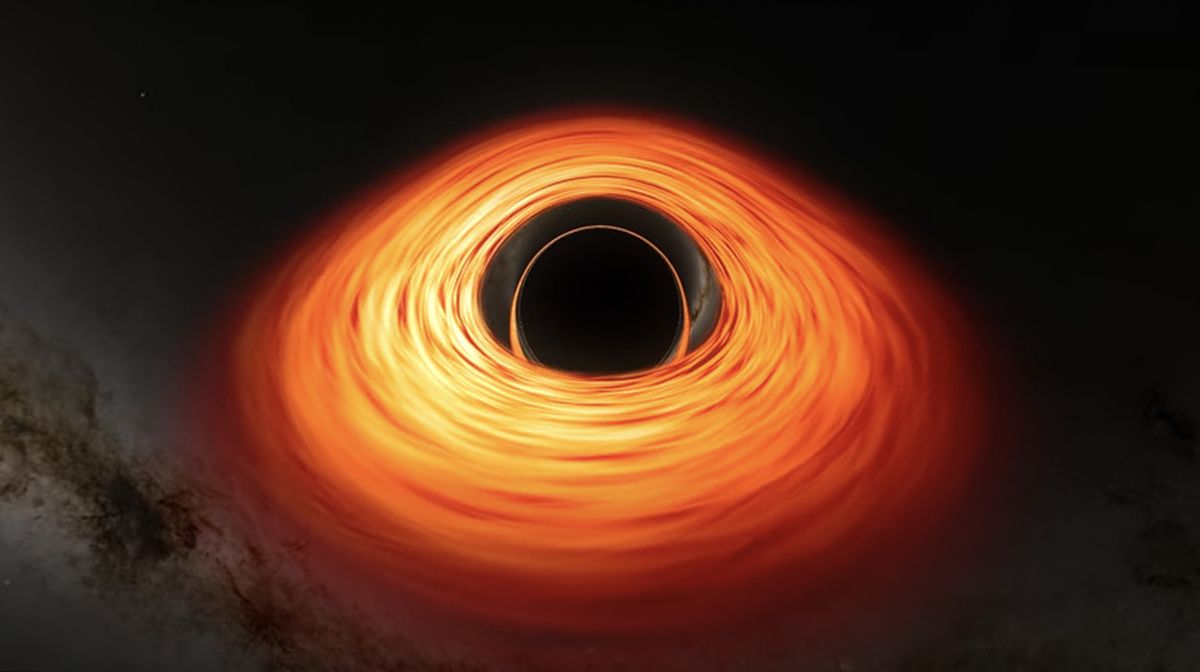
Within this compact system, the three black holes are not merely passive residents; they are active, "feeding" on surrounding gas and dust. This accretion process, where material spirals into the event horizon via a disk of superheated matter, releases immense amounts of energy, allowing astronomers to detect them despite their distance.
The spatial configuration of these black holes is particularly revealing. Two of the objects are positioned in the central region of the galaxy, separated by a projected distance of only 620 light-years. This proximity suggests a pending merger, a phenomenon that has long been hypothesized to be the primary engine for the accelerated growth of supermassive black holes. The third black hole, however, is located approximately 5,500 light-years away from the center, existing as a peripheral giant that could have been displaced by past gravitational interactions.
Decoding the Invisible: Spectro-astrometry
Detecting three distinct, active black holes within a single, distant, and crowded galactic core requires more than just high-resolution imaging. Telescopes typically struggle to distinguish between multiple light sources in such compact areas. To overcome this, the research team employed a sophisticated technique known as integral field spectroscopy.
By using the Near Infrared Spectrograph (NIRSpec) aboard the JWST, the scientists analyzed the emission patterns of hydrogen gas. Near a black hole, extreme gravitational forces cause surrounding gas to move at relativistic speeds. This motion leaves a distinct "fingerprint" in the light spectrum, known as a Doppler shift.
"The data from the JWST allowed us not only to identify the three black holes but also to estimate their individual masses, their accretion rates, and the total stellar mass of the galaxy," explained Giovanni Mazzolari, a co-author of the study. Through spectro-astrometry—a method of tracking subtle variations in the position of spectral emissions—the team successfully mapped the locations of the three objects, effectively "unmasking" them even though they appeared as a single point of light to conventional observational tools.
A Chronology of Cosmic Growth
The existence of these three black holes provides a potential solution to the "early growth" paradox. For decades, astronomers have been puzzled by the presence of massive black holes in the early universe, as standard models of accretion suggested it should take much longer for them to reach such colossal sizes.
- The Early Epoch (1.2 Billion Years Post-Big Bang): The formation of massive proto-galaxies, where frequent collisions and mergers were the norm.
- The Merger Phase: As galaxies collided, their central black holes moved toward a common center of gravity.
- The Current Observation: The JWST captures the J0148-4214 system at a point where two black holes are on a collision course, and a third has likely been ejected or displaced by the gravitational recoil of a previous merger.
This "hierarchical" model of growth suggests that the universe was far more efficient at merging black holes than previously believed. The discovery indicates that these mergers act as a fast-track mechanism for black hole growth, allowing them to accumulate mass rapidly in the early stages of cosmic history.
Comparative Mass and Feeding Dynamics
The research revealed surprising disparities in the masses of the three black holes. The primary, largest black hole possesses an estimated mass of 80 million times that of our Sun. The second, located in the central pair, measures 600,000 solar masses, while the third, located in the outskirts, weighs in at approximately 2 million solar masses.
Counterintuitively, it is not the largest black hole that is currently the most "voracious." The 600,000-solar-mass black hole is consuming matter at a rate that exceeds the theoretical Eddington limit—a limit that describes the maximum luminosity a body can achieve when the outward force of radiation pressure balances the inward gravitational pull. This rapid, potentially super-Eddington accretion suggests that the conditions in the early universe allowed for growth spurts far beyond what is observed in more mature galaxies today.
Broader Implications for Astrophysics
The implications of this discovery extend beyond the study of J0148-4214. It suggests that many other distant, "single" active galactic nuclei (AGN) might actually be complex, multi-component systems hiding in plain sight.
"This is the first evidence of three active black holes in one galaxy in the distant universe," noted Hannah Ubler, the lead researcher from the MPE. "It shows that the process in the early universe was highly efficient at bringing black holes together."
Furthermore, this finding highlights the importance of the next generation of gravitational wave observatories. If these black holes are indeed destined to collide and merge, they would create ripples in spacetime that future space-based interferometers, like LISA (Laser Interferometer Space Antenna), will be able to detect. Understanding these systems today provides the necessary context for interpreting the gravitational signals we expect to detect from the early universe in the coming decades.
A Legacy of Gravitational "Kicks"
The location of the third black hole, situated far from the center, offers a compelling narrative about the "gravitational kicks" that occur during mergers. When two black holes merge, they can release energy in the form of gravitational waves unevenly. This asymmetry creates a recoil effect, effectively "kicking" the newly formed, merged black hole out of its original position.
If this model holds, the third black hole in J0148-4214 could be the byproduct of a previous, ancient merger, currently in the process of either oscillating back toward the galactic center or remaining in a stable, eccentric orbit. This dynamic behavior further proves that the early universe was a violent, bustling laboratory where the foundations of modern galactic structure were being laid.
Conclusion
The discovery of three supermassive black holes in J0148-4214 is a testament to the transformative power of modern space instrumentation. By moving past the limitations of traditional telescopes, scientists are now able to resolve the complex, multi-layered histories of galaxies that have remained hidden for billions of years.
As the scientific community continues to analyze data from the JWST, the identification of similar multi-black-hole systems will be crucial. Each discovery brings us closer to reconstructing the timeline of the early universe and understanding how the massive, gravitational giants that inhabit the centers of modern galaxies, including our own Milky Way, came to be. This study not only solves a piece of the cosmic puzzle but also opens a new chapter in our understanding of how the universe grew to be the complex, structured place we observe today.