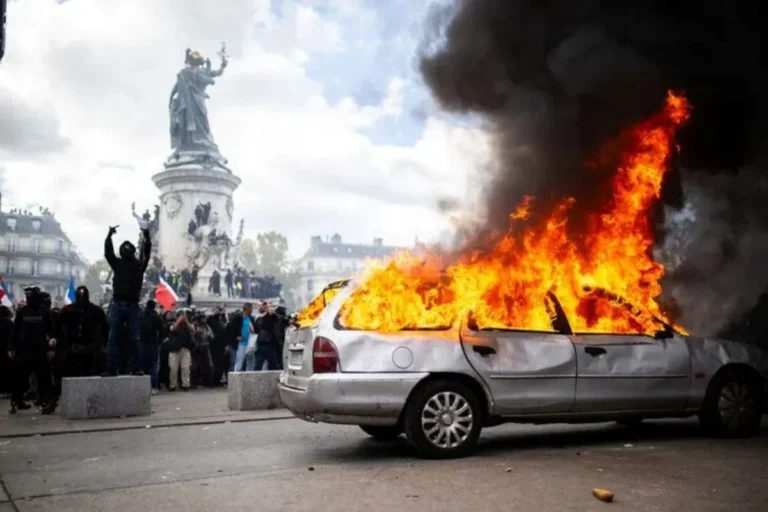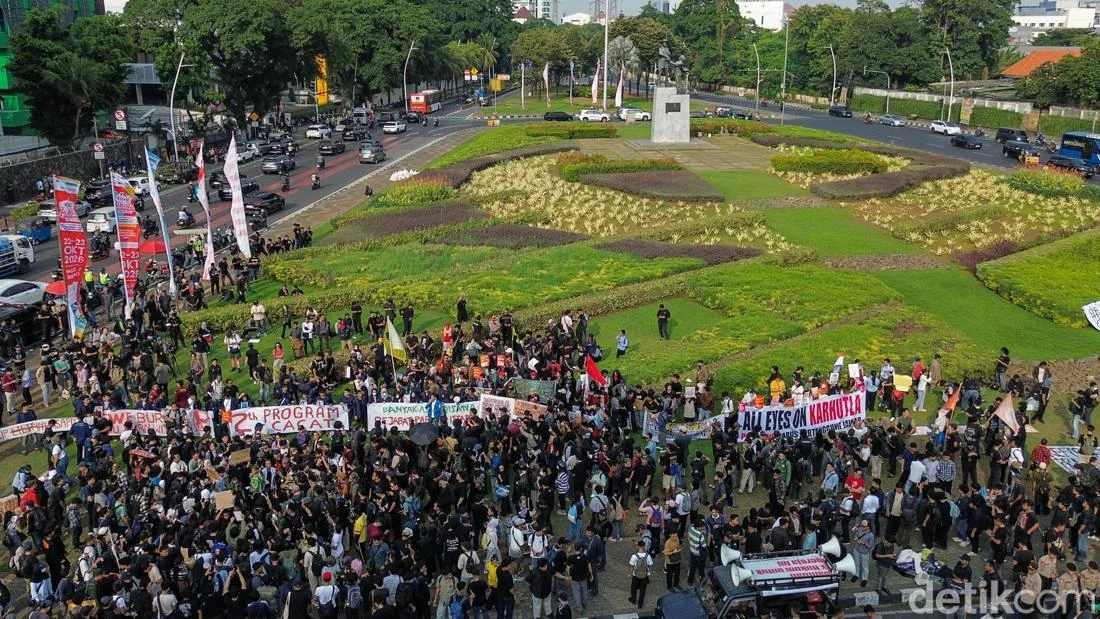
Jakarta is bracing for significant traffic congestion today as several demonstrations and public expressions of opinion are scheduled to take place across critical locations in the capital city. The focal points of these gatherings include the iconic Monas (National Monument) area, Tugu Tani in Central Jakarta, and the parliamentary complex of the People’s Consultative Assembly and the House of Representatives (DPR/MPR) in South Jakarta. In response to these planned demonstrations, the Jakarta Transportation Agency (Dinas Perhubungan DKI Jakarta) has deployed a substantial contingent of personnel to manage traffic flows, secure alternative routes, and mitigate potential gridlock that typically accompanies large-scale public assemblies in metropolitan Jakarta.
The demonstrations are expected to draw crowds of participants voicing various socioeconomic and political concerns, a common occurrence in Indonesia’s democratic landscape. Public gatherings of this nature frequently cause localized paralysis on major thoroughfares, prompting municipal authorities to intervene proactively. Commuters, motorists, and public transport users navigating the urban core on this day are strongly advised to exercise heightened caution, anticipate delays, and adjust their travel itineraries well in advance to avoid being trapped in severe traffic bottlenecks.
Comprehensive Deployment and Official Directives
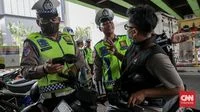
To maintain order and ensure that public mobility is not entirely disrupted, the Jakarta Transportation Agency has mobilized a total of 510 officers distributed strategically across the city. According to the Head of the Jakarta Transportation Agency, Budi Awaluddin, a specialized subset of 150 officers has been directly assigned to manage traffic around the immediate perimeters of the protest sites. These personnel will coordinate closely with the Jakarta Metro Police (Polda Metro Jaya) to implement dynamic traffic management schemes, including rolling road closures and localized diversions as conditions dictate on the ground.
"We have deployed our personnel to support traffic management and help maintain smoothness around the targeted locations," Budi Awaluddin stated in an official release published via the Jakarta Provincial Government’s portal. He further emphasized that road users should deliberately steer clear of the designated demonstration zones unless absolutely necessary.
The agency has also issued specific warnings to long-distance train passengers scheduled to board or disembark at Gambir Station, which sits adjacent to the Monas and Tugu Tani conflict zones. Travelers heading toward Gambir or Soekarno-Hatta International Airport via inner-city toll roads are urged to factor in substantial buffer times to prevent missing their connections due to unexpected blockades.
Detailed Alternative Routes for Motorists
Given the strategic importance of the affected corridors—which connect residential satellites to the central business district—the Transportation Agency has formulated an extensive matrix of alternative routes. Motorists are encouraged to utilize these detours to bypass the Monas, Tugu Tani, and DPR/MPR sectors.
Alternative Routes Around Monas and Tugu Tani
For traffic originating from the Northern sectors, drivers attempting to travel from Harmoni toward the Eastern districts (such as Senen) are directed via Jalan Hayam Wuruk, followed by Jalan Ir. H. Juanda, Jalan Pos, Jalan Dr. Sutomo, Jalan Gunung Sahari, and finally joining Jalan Pasar Senen. Those heading specifically toward Gambir Station from Harmoni must navigate through Jalan Ir. H. Juanda, Jalan Pos, Jalan Gedung Kesenian, Jalan Lapangan Banteng Utara, Jalan Lapangan Banteng Barat, Jalan Taman Pejambon, Jalan Pejambon, and Jalan Medan Merdeka Timur, where they will execute a U-turn at the intersection connecting Jalan Medan Merdeka Timur and Jalan Batu III before proceeding to their destination. Motorists traveling from Harmoni toward Kemayoran or Pulogadung are advised to take Jalan Ir. H. Juanda, Jalan Pos, Jalan Dr. Sutomo, Jalan Gunung Sahari, and Jalan Angkasa.
For traffic originating from the Eastern sectors, commuters traveling from Kwitang toward the Northern district of Pasar Baru can bypass the core by utilizing Jalan Kramat Kwitang, Jalan Senen Raya, Jalan Dr. Wahidin Raya, Jalan Gunung Sahari, and Jalan H. Samanhudi. Drivers moving from Senen toward the North (Harmoni) may route through Jalan Gunung Sahari, Jalan Budi Utomo, Jalan Lapangan Banteng Utara, Jalan Katedral, and Jalan Veteran. Meanwhile, those traveling from Senen toward the Western district of Tanah Abang are advised to use Jalan Gunung Sahari, Jalan Budi Utomo, Jalan Lapangan Banteng Utara, Jalan Katedral, Jalan Veteran, Jalan Suryopranoto, Jalan Balikpapan, and Jalan Cideng Timur.
For traffic originating from the Western sectors, motorists departing from Tanah Abang toward the North (Harmoni) can travel via Jalan Jatibaru Raya, Jalan Abdul Muis, and Jalan Majapahit. Those heading from Tanah Abang toward the East (Kemayoran or Pulogadung) may utilize Jalan Jatibaru Raya, Jalan Abdul Muis, Jalan Majapahit, Jalan Ir. H. Juanda, Jalan Pos, Jalan Dr. Sutomo, Jalan Gunung Sahari, and Jalan Angkasa. For drivers coming from Tomang and heading East toward Senen, the recommended path involves Jalan Tomang Raya, Jalan Kyai Caringin, Jalan Balikpapan, Jalan Suryopranoto, Jalan Ir. H. Juanda, Jalan Pos, Jalan Dr. Sutomo, Jalan Gunung Sahari, and Jalan Pasar Senen.
For traffic originating from the Southern sectors, motorists traveling from Blok M toward the North (Harmoni) are advised to navigate through Jalan Jenderal Sudirman, Jalan K.H. Mas Mansyur, Jalan Cideng Barat, Jalan Balikpapan, and Jalan Suryopranoto.
Alternative Routes Around the DPR/MPR Legislative Complex
The parliamentary complex in Senayan represents another critical bottleneck, particularly for traffic moving along the major east-west and north-south arterial roads.
For traffic originating from the Eastern sector (Cawang) moving toward the West (Slipi or Tomang), drivers can bypass the front of the parliament building by utilizing Jalan Gatot Subroto, turning onto Jalan Gerbang Pemuda, passing through Jalan Patal Senayan, Jalan Patal Senayan 1, Jalan Permata Hijau, Jalan Tentara Pelajar, and reconnecting with Jalan S. Parman.
For traffic originating from the Southern sector, motorists departing from Blok M toward the West (Slipi or Tomang) have two primary options. The first involves traveling via Jalan Kyai Maja, Jalan Kebayoran Baru, Jalan Sultan Iskandar Muda, executing a U-turn in front of Gandaria City, continuing along Jalan Sultan Iskandar Muda, Jalan Teuku Nyak Arief, Jalan Tentara Pelajar, and joining Jalan S. Parman. Alternatively, drivers heading from Blok M toward the North (Harmoni) can traverse Jalan Sisingamangaraja, Jalan Jenderal Sudirman, Jalan K.H. Mas Mansyur, Jalan Cideng Barat, Jalan Balikpapan, and Jalan Suryopranoto. A secondary southern detour involves taking Jalan Trunojoyo, Jalan Gunawarman, Jalan Senopati, Jalan Suryo, Jalan Wolter Monginsidi, Jalan Kapten Tendean, Jalan Terusan H.R. Rasuna Said, Jalan H.R. Rasuna Said, Jalan Prof. Dr. Satrio, Jalan K.H. Mas Mansyur, Jalan Cideng Barat, Jalan Balikpapan, and Jalan Suryopranoto.
For traffic originating from the Northern sector, motorists traveling from Harmoni toward the South (Blok M) are directed through Jalan Hayam Wuruk, Jalan Ir. H. Juanda, executing a U-turn at the Jalan Veteran III intersection, followed by Jalan Veteran, Jalan Suryopranoto, Jalan Balikpapan, Jalan Kyai Caringin, Jalan Tomang Raya, Jalan S. Parman, Jalan Gatot Subroto, Jalan Pejompongan Raya, Jalan Tentara Pelajar, Jalan Cut Nyak Arief, Jalan Kebayoran Baru, Jalan Pakubuwono VI, Jalan Suryo, and Jalan Kyai Maja.
Status of Public Transportation Services
Despite the widespread street-level disruptions expected throughout the day, municipal and mass transit authorities have confirmed that core public transportation systems will continue to operate under normal schedules. Network operators for Transjakarta, the Mass Rapid Transit (MRT) system, and the Light Rail Transit (LRT) have ensured that commuters retain reliable alternatives to private vehicles.
However, Transjakarta management has implemented an operational caveat. Bus rapid transit corridors that intersect or run parallel to the demonstration sites—particularly Corridors 1 (Blok M–Kota) passing through Monas and Corridor 9 passing near the DPR/MPR building—will implement flexible, situational route adjustments. These modifications will be triggered dynamically should police authorities enforce complete road closures along specific segments. Passengers are advised to monitor real-time announcements via Transjakarta’s official social media channels to stay informed about temporary bus stop suspensions or truncated routes.
Socioeconomic Implications and Commuter Advisories
The convergence of multiple protest actions in Jakarta underscores the city’s ongoing role as the epicenter of sociopolitical discourse in Indonesia. While peaceful assembly is a constitutionally protected right, the logistical friction it creates invariably inflicts temporary economic costs on businesses operating within the central business district. Productivity losses stemming from delayed commutes, combined with heightened fuel consumption for vehicles trapped in idle traffic, remain recurring challenges during major demonstration cycles.
Urban planning experts frequently note that while Jakarta’s expanding rail network (MRT and LRT) has provided robust buffers for commuters, the city’s heavy reliance on private automobiles and motorcycles leaves its arterial road network highly vulnerable to localized blockades. The efficiency of today’s traffic mitigation efforts will largely depend on the seamless coordination between the Jakarta Transportation Agency, the traffic directorate of Polda Metro Jaya, and the disciplined compliance of motorists adhering to designated diversion routes.
As the day progresses, municipal authorities continue to urge all road users to exercise patience, respect traffic signals, and follow the direct instructions issued by officers stationed along the perimeters. By planning journeys meticulously and opting for rail-based public transport where feasible, residents can significantly reduce their exposure to the anticipated gridlock and help maintain baseline urban mobility across the capital.