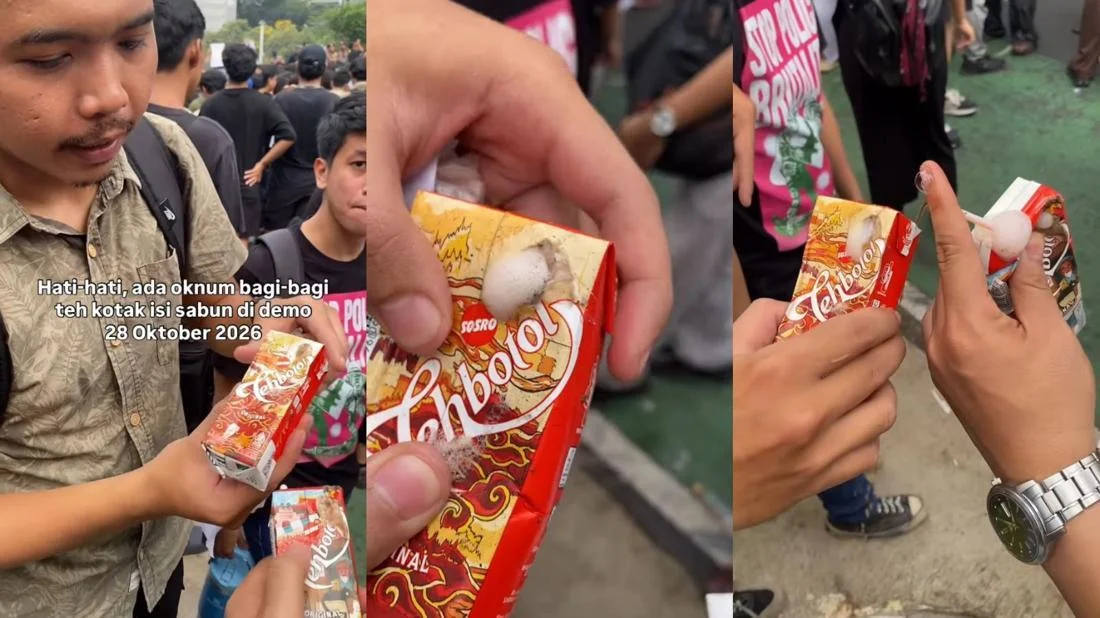
Jakarta – The digital landscape in Indonesia was recently set abuzz by a viral video depicting a popular packaged beverage, Teh Botol Sosro in a carton format, exhibiting abnormal characteristics—specifically, producing excessive foam and emitting a distinct soap-like odor. While the definitive cause of this specific incident remains subject to formal laboratory and corporate investigation, the video has forcefully thrust the issue of food and beverage safety into the national spotlight. For millions of consumers who rely on mass-produced, packaged refreshments daily, the viral clip serves as an urgent reminder of the latent risks associated with compromised consumer goods and the critical need for heightened vigilance at the retail and consumption stages.
The incident underscores a broader consumer health narrative: processed and packaged foods, despite rigorous quality control standards maintained by industrial giants, are not entirely immune to post-production vulnerabilities. These can range from microscopic breaches in packaging integrity during distribution to improper storage conditions in retail outlets. In light of such occurrences, public health advocates and regulatory bodies stress that any food or beverage displaying abnormal sensory traits should be handled with extreme caution. To mitigate health hazards, consumers must understand how to systematically inspect consumable goods, recognize signs of spoilage or chemical contamination, and execute the proper protocols when a compromised product is identified.
Understanding the Chronology and Context of the Viral Phenomenon
The trajectory of the Teh Botol Sosro incident follows a now-familiar modern pattern: a consumer records an unboxing or opening experience of a commercially purchased product, notices a stark anomaly, and uploads the footage to social media platforms such as TikTok or Instagram. Within hours, the algorithm amplifies the content, driving thousands of views, shares, and anxious comments from the public. In this instance, the consumer highlighted that the beverage not only foamed uncontrollably upon opening—a behavior completely uncharacteristic of sweetened tea—but also carried a sharp chemical scent reminiscent of dish soap.
Following the rapid dissemination of the video, public curiosity and concern escalated regarding how a household beverage brand renowned for decades of consistent quality control could exhibit such defects. Industry analysts and supply chain experts note that anomalies in liquid carton packaging typically point toward one of several vulnerabilities: compromised sterile seals allowing ambient air and environmental bacteria to enter, chemical residue from inadequate factory sanitation lines prior to filling (though exceedingly rare in automated environments), or thermal degradation caused by prolonged exposure to direct sunlight and high temperatures during transit and storage.
While PT Sinar Sosro, the parent company, and local health authorities work to trace the specific batch and investigate the validity and root cause of the viral claim, food safety agencies emphasize that panic should be replaced by systematic consumer awareness. Every reported anomaly serves as a vital data point for quality assurance departments, but it also necessitates immediate, practical defensive measures by everyday shoppers.
Crucial Inspection Protocols: Identifying Compromised Packaging
The first line of defense against contaminated or spoiled food and beverage products is a thorough physical inspection of the packaging before opening and consuming. Food safety guidelines dictate that consumers must look beyond the brand name and price tag, paying meticulous attention to the structural integrity of the container.
For carton-packaged beverages, tetrapaks, cans, and plastic bottles, any sign of leakage, moisture around the seams, tearing, denting, or deep punctures must be treated as a major red flag. Furthermore, containers that appear bloated or unnaturally swollen require immediate disposal. In the food industry, gaseous swelling is frequently a byproduct of microbial fermentation or chemical reactions taking place within the product, indicating that the internal environment has been severely compromised.
Crucially, experts advise that even if a product’s printed expiration date remains valid far into the future, a structurally damaged package invalidates that timeline. Once the protective barrier of a container is breached, ambient oxygen, humidity, mold spores, and opportunistic bacteria can infiltrate the contents within seconds. Consumers are therefore urged to cultivate the habit of inspecting outer packaging immediately at the point of purchase and once more right before opening.
Sensory Analysis: Recognizing Red Flags in Aroma, Color, and Texture
When a package successfully passes visual inspection, the consumer’s sensory organs—specifically smell and sight—take over as the next protective barrier. In the wake of the foaming tea incident, public health officials have reiterated the importance of noting deviations in aroma, color, and consistency.
Normally, a standard packaged black tea beverage should present a clear, dark amber appearance, a clean, sweet botanical aroma characteristic of brewed tea and jasmine, and a smooth, liquid texture. Any deviation—such as a cloudy suspension, floating particulate matter, an unusual acidic stench, or, in extreme cases, chemical or soapy odors—should immediately halt the consumption process.
However, food safety toxicologists issue an important caveat: sensory perfection does not equate to absolute safety. Certain pathogenic bacteria, potent mycotoxins, and chemical contaminants can seamlessly integrate into a food or liquid matrix without altering its visual appearance, native color, or baseline aroma. A beverage can look and smell entirely normal while harboring harmful agents. Therefore, while strange smells and textures are definitive indicators of spoilage, the absence of these signs does not entirely guarantee that a product is free from risk. If a consumer harbors even a slight suspicion based on an unusual taste or context, stopping consumption instantly remains the only prudent course of action.
The Golden Rule of Food Safety: Never Retaste Suspicious Products
One of the most common behavioral mistakes documented by food safety educators is the impulse to "retaste" a suspect food or beverage to verify whether the initial strange flavor or odor was real. When faced with a drink that tastes slightly off or foams unexpectedly, individuals often take a second or third sip out of sheer curiosity or disbelief.
Health authorities strongly condemn this practice. Ingesting even a micro-dose of a chemically contaminated or heavily spoiled substance can trigger acute gastrointestinal distress, systemic allergic reactions, or systemic toxicity. Some industrial cleaning agents, heavy metals, or concentrated microbial toxins can cause rapid physiological damage upon contact with the mucosal lining of the esophagus and stomach.
If a product is suspected of being tainted, it must be set aside immediately without further oral contact. Should an individual already consume a significant portion of a compromised product, monitoring physiological responses becomes paramount. Symptoms such as sudden nausea, violent vomiting, abdominal cramping, persistent diarrhea, dizziness, or fever warrant immediate medical attention. In severe cases of chemical poisoning or foodborne botulism, delayed medical intervention can lead to life-threatening complications.
Preserving Evidence: The Proper Handling of Suspected Defective Goods
In the digital era, when a consumer encounters a defective or contaminated product, the immediate emotional response is often to throw the item directly into the trash bin or pour it down the drain in disgust. However, consumer protection agencies and manufacturers emphasize that preserving the physical evidence is critical for any subsequent investigation, compensation claim, or public safety recall.
Consumers who encounter anomalous products are advised to retain the original packaging, including the exact container, caps, straws, and any remaining contents. Furthermore, critical tracking information must be carefully documented. This includes noting the exact retail establishment where the item was purchased, the date and time of purchase, the batch or lot number printed on the container, and the precise expiration date.
To aid regulatory bodies and corporate quality control teams, consumers should photograph or record video evidence of the product’s anomaly—such as abnormal foaming, weird textures, or damaged seals—before sealing the container in a secure plastic bag. Moving the contents to another vessel or discarding the batch details severely impedes the investigative process, making it nearly impossible for authorities to determine whether the issue stems from factory-level production errors, supply chain mishandling, or localized retail tampering.
The BPOM Framework: Implementing "CEK KLIK" in Daily Consumer Habits
To systematically prevent incidents involving damaged or expired goods, Indonesia’s Drug and Food Control Agency (BPOM) has continuously championed a consumer education campaign known by the acronym "CEK KLIK"—an essential checklist for every shopper before purchasing or consuming packaged goods.
The "CEK KLIK" framework mandates four primary verification steps:
- Cek Kemasan (Check the Packaging): Ensuring that boxes, cans, bottles, and plastic wrappers are entirely free from dents, leaks, tears, rust, or swelling.
- Cek Label (Check the Label): Thoroughly reading the ingredient composition, allergen warnings, manufacturer identity, and official handling instructions.
- Cek Izin Edar (Check the Distribution Permit): Verifying that the product possesses a valid registration number issued by BPOM, which can be independently checked using the official digital BPOM application or website.
- Cek Kedaluwarsa (Check the Expiration Date): Confirming that the product is well within its safe consumption window and that the stamped date has not been altered or smeared.
Despite these precautions, BPOM reminds the public that a valid expiration date is not an absolute shield against spoilage. A product that is well within its shelf-life can still spoil rapidly if exposed to adverse environmental factors, such as being stored directly under scorching sunlight in an open-air kiosk, subjected to freezing temperatures, or stacked underneath heavy objects that compromise box seals. Conversely, a product nearing its expiration date is not automatically toxic, provided its packaging integrity has remained pristine and it has been stored precisely according to the manufacturer’s guidelines.
The Reporting Mechanism: Empowering Consumers Through Official Channels
When consumers uncover verifiable evidence of food or beverage contamination, exercising civic responsibility through formal reporting is vital to safeguarding the wider community. Rather than relying solely on viral social media postings—which can sometimes amplify unverified claims or panic—citizens are encouraged to channel their findings through official regulatory pathways.
Both the manufacturing company’s official consumer care hotline and BPOM provide dedicated reporting infrastructure for product complaints. In Indonesia, the public can reach out to BPOM via the "HALO BPOM" contact center or utilize the official digital complaint portals embedded on the agency’s website.
When filing an official report, consumers must provide comprehensive documentation: clear photographs or videos of the anomaly, the product’s batch number, the place and date of purchase, and the exact physical condition of the item. This data allows BPOM inspectors to execute targeted market inspections, trace back supply chain logistics to the specific manufacturing plant, and, if necessary, order nationwide recalls of specific production batches to protect public health.
Broader Implications for the Food and Beverage Industry
The widespread discussion sparked by the viral Teh Botol Sosro video casts a wide net over the entire fast-moving consumer goods (FMCG) sector in Indonesia. For corporate manufacturers, maintaining rigorous quality control at the factory level is only half the battle. The modern supply chain involves extensive distribution networks, complex warehousing logistics, and thousands of independent retail partners—ranging from hypermarkets to small neighborhood mom-and-pop grocery stores (warung).
Ensuring that product quality remains uncompromised across every single touchpoint of this expansive distribution web remains an ongoing logistical challenge. Analysts note that incidents of this nature, regardless of their ultimate root cause, compel brands to heavily invest in advanced tamper-evident packaging technologies, enhanced supply chain transparency, and rapid-response public relations frameworks to address consumer anxieties transparently and scientifically.
Ultimately, the viral episode serves as a timely educational vehicle. It bridges the gap between industrial manufacturing standards and everyday kitchen realities, reminding consumers that food safety is a shared responsibility. By combining vigilant pre-purchase checks, strict adherence to sensory inspection, proper evidence preservation, and formal reporting mechanisms, the public can actively contribute to a safer, more accountable marketplace for food and beverages across the nation.