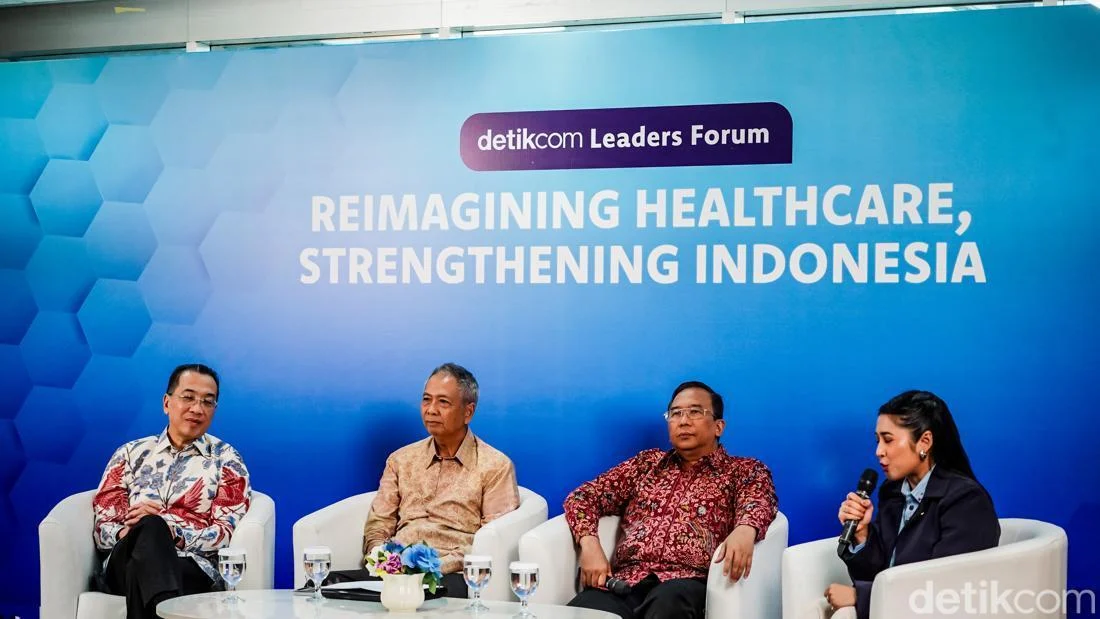
JAKARTA — In a decisive move to address structural challenges within the national healthcare ecosystem, PT Siloam International Hospitals Tbk has formally announced an ambitious, technology-driven transformation strategy centered on artificial intelligence (AI) and robotics. Unveiled during the high-profile detikcom Leaders Forum, the initiative seeks to confront persistent hurdles such as a nationwide shortage of medical specialists, escalating healthcare delivery costs, and the ongoing outflow of domestic capital to foreign medical institutions. By aggressively adopting modern technological frameworks, Indonesia’s largest private hospital network aims to redefine clinical delivery standards and position itself as a formidable competitor on the regional Southeast Asian stage.
The comprehensive digital overhaul represents more than a routine technological upgrade; it is a calculated effort to achieve a strategic "leapfrog" in healthcare efficiency and quality. For years, the Indonesian healthcare landscape has grappled with the dual pressures of limited specialist availability, particularly outside major urban centers, and rising operational costs that directly impact patient accessibility. According to company leadership, these vulnerabilities have historically driven affluent Indonesian patients to seek medical treatment abroad, severely impacting the domestic healthcare economy and hindering the development of local clinical expertise.
Addressing the Capital Outflow and Regional Competitiveness
Speaking before a gathering of industry leaders, policymakers, and economic experts, Siloam International Hospitals President Director David Utama emphasized the staggering economic toll of outbound medical tourism. Data presented during the forum highlighted that Indonesian citizens spend an estimated Rp 170 trillion annually on medical treatments overseas, traveling to neighboring destinations such as Singapore, Malaysia, and Thailand. This massive capital flight underscores a critical confidence gap in domestic healthcare capabilities that Siloam intends to bridge through aggressive technological integration.
"If we do not act decisively, we will inevitably fall further behind our regional neighbors," Utama stated during the forum discussion. "The fact that Indonesians spend Rp 170 trillion annually seeking medical treatment abroad is a clear indicator of the challenges we face. This is an immense figure that reflects not only a loss of capital but a profound need to elevate the standard, reliability, and perception of domestic healthcare services."
Utama further noted that addressing this disparity requires more than incremental improvements to existing hospital infrastructure. Without a fundamental reinvention of how medical services are delivered, managed, and scaled across the archipelago, Indonesian hospitals will struggle to retain patients who demand world-class medical precision and seamless patient experiences. The introduction of AI and robotics is thus viewed as an indispensable equalizer designed to eliminate inefficiencies, standardize clinical excellence, and build unshakeable public trust in local medical institutions.
The Chronology of Digital Transformation: From Cloud Migration to AI Foundations
Siloam’s journey toward becoming a digitally mature healthcare provider did not happen overnight. The current rollout of artificial intelligence and robotic systems is the culmination of a multi-year, meticulously planned infrastructural roadmap. Recognizing that advanced AI applications require immaculate, centralized data architecture to function effectively, Siloam initiated a comprehensive data overhaul beginning in the early stages of network modernization.
Over the past two years, the healthcare provider systematically centralized its vast repositories of medical and operational data. A critical milestone in this chronology was the migration of complex diagnostic imaging data—specifically Magnetic Resonance Imaging (MRI) scans—to secure, centralized cloud storage solutions. This foundational step ensured that patient records, diagnostic histories, and operational metrics across Siloam’s expansive network of 41 hospitals could be accessed, analyzed, and processed in real-time.
Building upon this robust data infrastructure, Siloam officially launched the development of its proprietary Enterprise AI Foundation in early 2026. Designed primarily as a data-structuring and integration engine, the Enterprise AI Foundation serves as the central nervous system for all subsequent technological deployments. Company engineers and data scientists have worked relentlessly to ensure the platform complies with stringent healthcare data privacy regulations while maximizing interoperability across diverse hospital departments.
The timeline for this foundational phase reaches a critical juncture in November 2026, the targeted completion date for the Enterprise AI Foundation. Once this core framework is fully operational, it will unlock the immediate deployment of three specialized AI application pillars, transforming how patients, physicians, and hospital administrators interact within the Siloam ecosystem.
The Three Pillars of Siloam’s Enterprise AI Framework
To systematically overhaul its operations, Siloam has structured its AI deployment strategy around three interconnected pillars: the Patient Digital Twin, the Doctor Digital Twin, and the Hospital Digital Twin. Each pillar targets a specific operational tier of the healthcare enterprise, ensuring comprehensive coverage from frontline patient care to back-end administrative management.
1. Patient Digital Twin: Personalized and Integrated Care
The first pillar focuses squarely on the patient experience, moving away from fragmented, transactional healthcare interactions toward a continuous, data-driven wellness journey. Unlike generic health applications readily available on consumer app stores, Siloam’s Patient Digital Twin is custom-built to integrate seamlessly with the hospital’s internal clinical systems. This digital framework creates a virtual profile of the patient, synthesizing real-time biometric data, historical medical records, lifestyle factors, and predictive health risks. By leveraging this comprehensive profile, physicians can deliver highly personalized preventive care plans, anticipate chronic disease flare-ups, and engage patients through intuitive digital touchpoints that reduce friction during hospital visits.
2. Doctor Digital Twin: Standardizing Clinical Excellence
Perhaps the most ambitious and complex component of the strategy is the Doctor Digital Twin. Developing this pillar requires deep collaboration and contributions from medical specialists across a wide spectrum of disciplines within Siloam’s network. The primary objective is to codify clinical best practices, diagnostic pathways, and treatment protocols into a standardized AI-assisted framework. With 41 hospitals operating under the Siloam banner, maintaining uniform standards of medical care has historically been a logistical challenge. The Doctor Digital Twin acts as an intelligent clinical co-pilot, assisting physicians in making evidence-based diagnoses, minimizing human error, and ensuring that a patient receives the exact same high standard of care whether they visit a facility in central Jakarta or a regional branch in outer islands.
3. Hospital Digital Twin: Optimizing Operational Efficiency
The third pillar addresses the complex administrative and logistical machinery required to run modern, multi-site healthcare institutions. The Hospital Digital Twin focuses on backend optimization, utilizing advanced algorithms and predictive analytics to streamline hospital operations. Key focus areas include intelligent staff rostering, patient appointment scheduling, asset and inventory management, and real-time monitoring of facility workflows. By automating and optimizing these resource-heavy processes, Siloam can significantly reduce overhead costs, minimize patient wait times, and ensure that medical personnel are deployed where they are needed most, thereby maximizing overall organizational productivity.
Redefining the "Hospital of the Future" Without Replacing Human Expertise
A central theme of Siloam’s technological rollout is the careful delineation between automation and human clinical judgment. Company executives have been careful to emphasize that the integration of artificial intelligence and robotics is not intended to displace human medical professionals. Rather, the technology is designed to augment human capabilities, lifting the burden of administrative fatigue and repetitive data processing off the shoulders of doctors and nurses.
In an era where medical burnout is a global concern, AI-driven diagnostic assistance and automated administrative workflows allow healthcare providers to dedicate more time and empathy to direct patient interactions. Utama firmly reiterated that human physicians remain the ultimate decision-makers in all clinical matters. The technology serves as a sophisticated advisory tool, providing data-driven insights that empower doctors to make faster, more accurate interventions.
This human-in-the-loop philosophy is foundational to Siloam’s vision of constructing the "Hospital of the Future." By harmonizing cutting-edge computational power with compassionate clinical expertise, Siloam hopes to create a sustainable model that can absorb the pressures of Indonesia’s growing healthcare demands without compromising the warmth and personalized attention inherent to the healing process.
Broader Economic and Sociological Implications for Indonesia
The implications of Siloam International Hospitals’ digital transformation extend far beyond corporate growth metrics; they represent a significant milestone for the broader Indonesian economy and public health sector. As Southeast Asia’s largest economy experiences rapid digital adoption across various sectors, healthcare has historically lagged due to heavy regulatory burdens, high capital intensity, and data fragmentation.
By pioneering an enterprise-grade AI foundation, Siloam is setting a new benchmark for private healthcare providers across the archipelago. The successful implementation of this strategy could prompt a wider industry shift, encouraging competing hospital networks to accelerate their own technological investments. Over the long term, this collective push toward modernization could dramatically improve national health indices, reduce maternal and infant mortality rates through better predictive tracking, and expand specialized care access to underserved regions via telemedicine and AI-assisted diagnostics.
Furthermore, retaining a portion of the Rp 170 trillion currently spent on foreign medical tourism would inject vital capital back into the domestic economy. This financial retention can be reinvested into local medical research, advanced clinical training programs, and infrastructure expansion, creating a virtuous cycle of improvement within Indonesia’s domestic life sciences sector.
Conclusion and Future Outlook
As Siloam International Hospitals approaches the final deployment phase of its Enterprise AI Foundation in late 2026, the organization stands at the vanguard of Indonesia’s medical modernization movement. By confronting head-on the realities of specialist shortages, rising operational costs, and regional competitive pressures, the healthcare provider is charting a pragmatic path forward through calculated technological innovation.
Through the synchronized deployment of the Patient, Doctor, and Hospital Digital Twins, supported by state-of-the-art data structuring and cloud infrastructure, Siloam is not merely updating its operational toolkit—it is fundamentally reshaping the future of healthcare delivery in Indonesia. As these advanced systems come online, they hold the promise of transforming domestic healthcare from a system plagued by geographical and economic disparities into an efficient, trustworthy, and globally competitive ecosystem capable of serving millions of Indonesians with world-class precision and care.