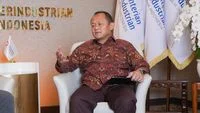
The Indonesian government has officially intensified its strategic pivot toward comprehensive commodity downstreaming, aiming to move beyond the traditional export of raw materials toward the creation of high-value industrial ecosystems. During the 2026 National Leadership Meeting (Rapimnas) of the Indonesian Chamber of Commerce and Industry (Kadin) held in Jakarta this Friday, October 30, Minister of Industry Muhammad Sarmuji outlined a roadmap to diversify the nation’s industrial base. This policy initiative focuses on transforming key agricultural and marine commodities—specifically palm oil, coconut, seaweed, and sago—into sophisticated consumer and industrial goods, thereby fostering regional economic equality and robust job creation.
The Shift from Extraction to Industrialization
For decades, Indonesia’s economic engine relied heavily on the export of raw commodities. However, the government’s current policy framework, characterized by the "hilirisasi" (downstreaming) mandate, seeks to capture more value-added benefits domestically. Minister Sarmuji emphasized that the industrialization process must not be truncated at the raw or semi-finished stage. Instead, he argued that the nation must establish a holistic chain that encompasses raw material processing, the production of finished goods, and the development of ancillary industries that support these primary sectors.
The blueprint for this transition is the success of the nickel industry. By banning the export of raw nickel ore and incentivizing domestic smelting and refining, Indonesia successfully integrated itself into the global electric vehicle (EV) battery supply chain. This trajectory—from ore to precursor, to battery cells, and finally to complete EV units—is the template the Ministry of Industry intends to apply to agricultural and marine sectors. According to the Ministry, successful industrialization is no longer measured solely by the total capital inflow (Foreign Direct Investment) but by the depth of technological integration, the volume of local employment, and the resilience of the domestic supply chain.
Strategic Commodities and Regional Development
The government has identified several key commodities that are deemed central to this economic transformation. Each sector is selected based on its potential to create industrial clusters outside of the traditional industrial hubs in Java, thus promoting regional economic distribution.
The Palm Oil Value Chain
Palm oil remains the cornerstone of Indonesia’s agricultural export sector. While the country is the world’s largest producer, the Ministry of Industry is pushing to move beyond Crude Palm Oil (CPO) exports. The strategy involves scaling up downstream facilities to produce high-value derivatives such as oleochemicals, specialized food ingredients, and biofuels. By incentivizing these secondary and tertiary industries, the government aims to insulate the national economy from the volatility of global commodity price swings.
Coconut and Seaweed: The Marine and Coastal Opportunity
Minister Sarmuji highlighted the coconut industry as a high-growth sector, noting that processed coconut products, such as coconut milk and cream, are witnessing a surge in international demand.
Simultaneously, the development of the seaweed industry is viewed as a "game-changer" for coastal communities. Indonesia possesses one of the longest coastlines in the world, yet many coastal regions remain economically marginalized. By establishing seaweed processing facilities near production sites, the government intends to provide these communities with the tools to produce raw materials for the pharmaceutical, cosmetic, and food processing industries. This approach is designed to democratize the benefits of industrialization, ensuring that the economic gains reach the grassroots level in remote areas.
The Sago Initiative in Maluku
A notable component of the government’s plan is the establishment of a dedicated sago industrial estate in the East Seram Regency of Maluku. Sago is a staple resource in eastern Indonesia, yet its commercialization has been hindered by a lack of processing infrastructure. By centralizing the industry in a dedicated zone, the Ministry expects to streamline the supply chain, standardize product quality, and create a sustainable export market for sago-based industrial products.
Contextual Background: The Kadin 2026 Rapimnas
The announcement comes at a pivotal time for the Indonesian economy. The 2026 Kadin Rapimnas serves as a forum for high-level policy dialogue between the government and the private sector. Given the current global geopolitical climate, which has seen increased protectionism and supply chain re-shoring, Indonesia’s focus on industrial self-sufficiency is a calculated response to external risks. Industry players at the conference expressed optimism that these policies, if implemented with consistent regulatory support, would reduce the country’s reliance on expensive imported finished goods.
Analytical Perspective: Challenges and Economic Implications
While the vision of a fully integrated industrial ecosystem is compelling, economists note that several challenges must be addressed to ensure success.
- Infrastructure Gap: The development of industrial estates in regions like Maluku requires significant investment in logistics, energy, and transportation. The "last mile" connectivity in eastern Indonesia remains a logistical hurdle that can inflate production costs.
- Human Capital Development: Moving up the value chain necessitates a skilled workforce. The government’s industrial policy will need to be matched by aggressive investments in vocational training and technical education to ensure the domestic labor force can operate advanced manufacturing equipment.
- Technological Sovereignty: To move from semi-finished to finished goods, Indonesia must acquire and develop advanced industrial technologies. Partnerships with international firms that facilitate technology transfer will be essential, as will the strengthening of local Research and Development (R&D) institutions.
- Environmental Sustainability: As the world moves toward green industrialization, the downstreaming process must align with global Environmental, Social, and Governance (ESG) standards. The palm oil and seaweed sectors, in particular, will need to prove that their expansion does not come at the cost of environmental degradation.
Official Stance and Future Outlook
The Ministry of Industry maintains that the "hilirisasi" agenda is not a closed-door policy but an invitation to both domestic and international investors to build value within Indonesian borders. Minister Sarmuji emphasized that the government is committed to providing a stable regulatory environment to encourage these long-term investments.
By prioritizing the development of ancillary industries—the "ecosystem" mentioned by the Minister—the government hopes to foster an environment where small and medium-sized enterprises (SMEs) can integrate into the broader supply chain of large-scale industries. This "multiplier effect" is anticipated to be the primary engine for sustainable job creation over the next decade.
As the administration continues to refine its industrial strategy, the focus remains on transforming Indonesia from a mere supplier of raw natural wealth into a sophisticated participant in the global manufacturing landscape. If the transition from nickel ore to electric vehicle components is any indication, the success of these new agricultural and marine downstreaming projects will depend on the government’s ability to sustain long-term policy consistency, mobilize private capital, and bridge the infrastructure divide between the western and eastern provinces.
The coming fiscal years will be critical in determining whether these targeted sectors can achieve the industrial maturity required to significantly increase Indonesia’s contribution to the global value chain. With the clear backing of the Ministry of Industry and the alignment of private sector stakeholders, the path toward a diversified, value-added economy appears to be a centerpiece of the national development agenda for the remainder of the decade.