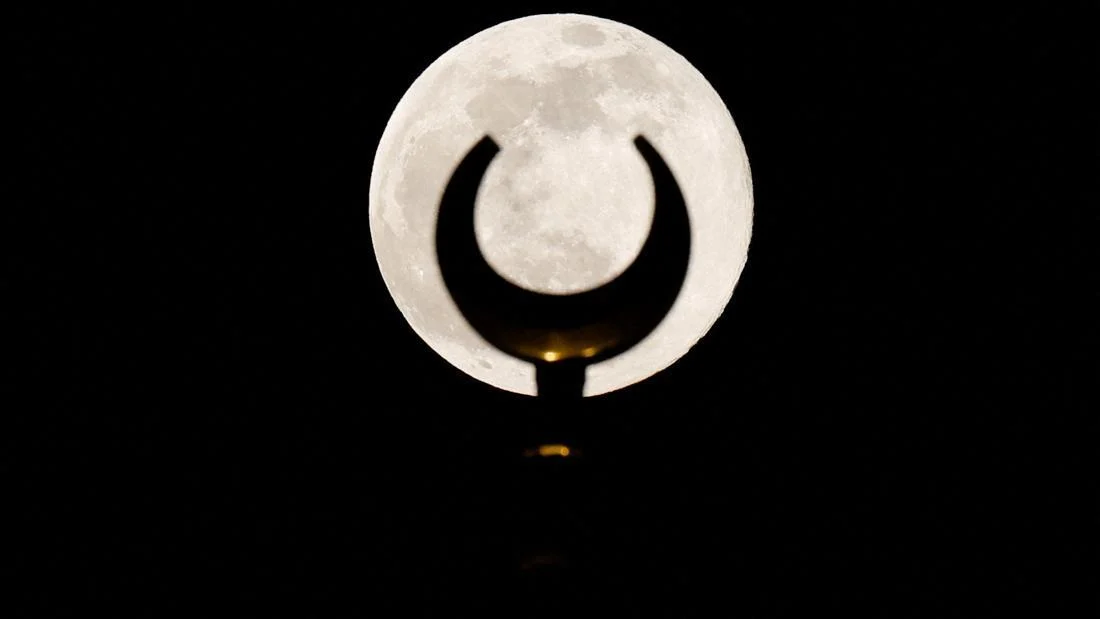
The celestial event known as the Beaver Supermoon graced the night skies across the globe on November 24 and 25, 2026, offering observers a rare and striking spectacle of lunar brilliance. From the historic spires of Athens and London to the modern, glass-paneled skylines of Dubai and New York, the moon appeared larger and brighter than a standard full moon, drawing millions of spectators to balconies, parks, and vantage points to witness the culmination of this astronomical phenomenon. The event, which occurs when the moon reaches its perigee—the point in its orbit closest to Earth—while in its full phase, provided a stark contrast against the silhouettes of some of the world’s most recognizable architectural landmarks.
The Mechanics of a Supermoon
A supermoon is not merely a visual trick of the atmosphere; it is a measurable astrophysical occurrence. The moon’s orbit around Earth is elliptical rather than perfectly circular. This orbital geometry means that the distance between our planet and its natural satellite varies significantly over the course of a month. When a full moon coincides with perigee, it can appear up to 14% larger and 30% brighter than a full moon at apogee, the point at which it is furthest from Earth.
The term "Beaver Moon" itself is steeped in cultural tradition, originating from the North American almanacs of the 1930s. Traditionally, Native American tribes and early colonial settlers associated the November full moon with the time of year when beavers became particularly active, preparing their dams and lodges for the impending winter. As the moon reaches its peak in late November, the alignment creates a visual intensity that has captured human fascination for centuries, blending ancient agricultural markers with modern observational science.
A Global Chronology of the Event
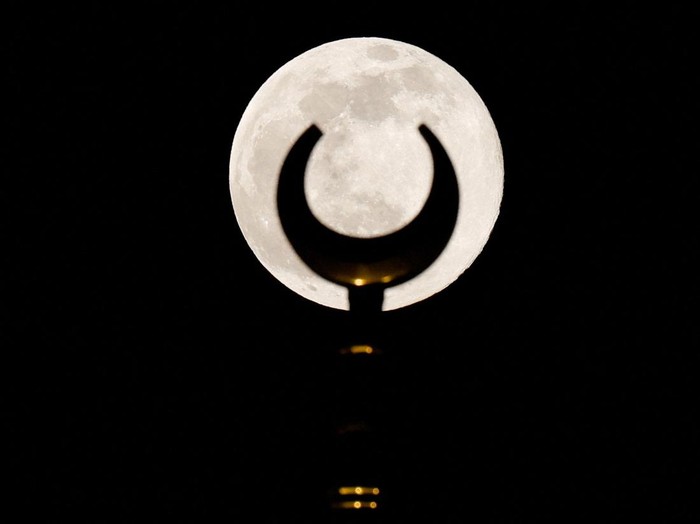
The visual narrative of the 2026 Beaver Supermoon began its journey across the longitudinal lines as the Earth rotated. In the Middle East, specifically in the holy city of Mecca, Saudi Arabia, observers captured the moon rising with ethereal clarity. Photographers documented the lunar orb suspended behind the ornate crescent fixtures of mosque minarets, creating a poignant juxtaposition between the ancient architectural tradition and the timeless nature of the cosmos.
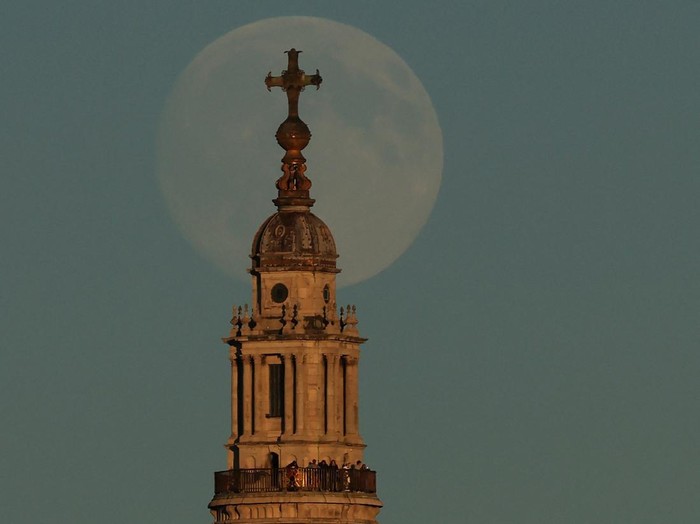
As the rotation of the Earth continued, the moon made its presence felt in the historic capitals of Europe. In London, the United Kingdom, the moon rose behind the iconic dome of St. Paul’s Cathedral. Tourists and residents gathered at designated observation galleries, witnessing the moon’s ascent, which seemed to amplify the scale of the cathedral’s architecture. Simultaneously, in Athens, Greece, the moon provided a dramatic backdrop to the Church of St. George, perched atop the rugged peak of Mount Lycabettus. The contrast between the bright, luminous sphere and the ancient stone structures underscored the enduring role of the moon as a silent witness to human civilization.
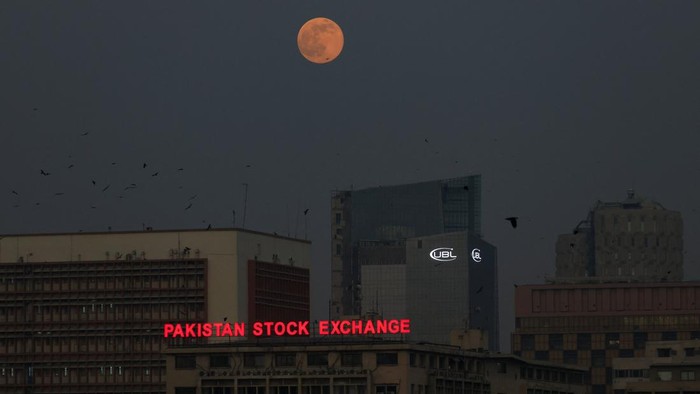
By the time the moon traversed the Atlantic to reach the North American continent, the spectacle had reached its zenith. In New York City, the moon rose over the Manhattan skyline, positioned precisely between the Empire State Building and the Chrysler Building. This "Manhattanhenge-style" alignment provided a rare photographic opportunity, as the ambient light of the city interacted with the heightened lunar luminosity. Further east, in the Asian markets of Karachi, Pakistan, the moon took on a distinct, warm, amber-to-orange hue as it ascended over the Pakistan Stock Exchange, a result of the light being filtered through a thicker layer of the Earth’s atmosphere near the horizon.
Scientific and Societal Implications
While the general public views the supermoon as an aesthetic wonder, the scientific community utilizes these events to monitor atmospheric conditions and orbital mechanics. Astronomers note that while the physical size of the moon does not change, the proximity allows for improved study of lunar surface features, such as the maria (dark plains) and the high-contrast craters that are more visible under the intense, direct light of a supermoon.
Beyond the scientific utility, the social impact of such events is profound. In an era dominated by digital screens and urban light pollution, the Beaver Supermoon serves as a rare, collective experience that transcends borders. Governments and local authorities in cities like Dubai, where urban lighting is notoriously bright, reported an increase in public engagement, with thousands of residents sharing high-resolution imagery on social media platforms. This shared global experience reinforces the cultural significance of astronomical events in fostering a sense of universal human connection.
Official Responses and Public Safety
While the event is primarily viewed as a benign and beautiful occurrence, astronomical events of this nature often lead to increased public activity in public spaces. Local authorities in major cities issued standard advisories regarding pedestrian safety and the management of crowds at popular viewing spots. In New York and London, park services remained open for extended hours to accommodate the influx of amateur astronomers and photographers.
NASA and other space agencies did not issue specific warnings, as the supermoon poses no threat to Earth. However, oceanographers noted the typical, albeit slightly more pronounced, gravitational influence on tidal patterns. Known as "perigean spring tides," the combined gravitational pull of the sun and the moon—at its closest proximity—can lead to higher-than-average high tides and lower-than-average low tides in coastal regions. Port authorities were advised to monitor these fluctuations, though they remained within the expected parameters of natural tidal cycles.
Analysis: The Evolution of Sky-Watching
The 2026 Beaver Supermoon also highlighted a shift in how the public interacts with the night sky. With the ubiquity of high-powered smartphone cameras and specialized telescopic lenses, the "democratization of astrophotography" was on full display. The images circulating from Karachi to New York were not limited to professional news agencies; they were supplemented by thousands of high-quality, user-generated images.
This evolution in public engagement suggests that while the scientific curiosity regarding space remains high, the primary driver of public interest in events like the Beaver Supermoon is increasingly experiential and social. The ability to instantly share a visual record of a celestial event creates a digital archive that, in retrospect, allows for a comprehensive documentation of the night sky from multiple vantage points simultaneously—a feat that would have been impossible just a few decades ago.
Conclusion and Future Outlook
The Beaver Supermoon of 2026 concluded its cycle as it set below the western horizon, leaving behind a wealth of data for scientists and a lasting memory for millions of observers. As the lunar cycle progresses, the moon will return to its standard distance and brightness, but the event serves as a reminder of the predictability and beauty of our solar system.
For those who missed the peak illumination, astronomical calendars indicate that the interplay of orbital perigee and full lunar phases will continue throughout the coming years, offering further opportunities for observation. As humanity continues to look toward the stars—whether for scientific exploration or simple, quiet contemplation—the recurring dance of the moon serves as a constant, rhythmic baseline in an ever-changing world. The 2026 display remains a benchmark for the decade, a testament to the fact that even in the most modern, technologically advanced societies, the natural world still holds the power to pause the clock and turn the collective gaze upward.