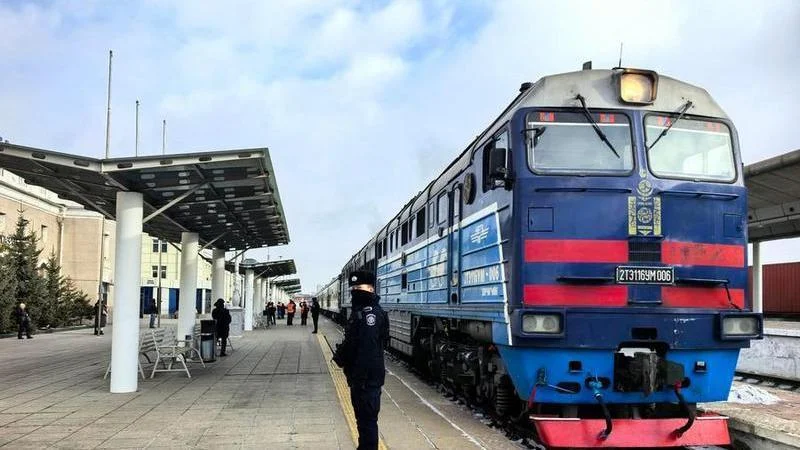
Beijing — A newly launched international passenger railway service connecting Beijing, China, and Irkutsk, Russia, has officially commenced operations, marking a significant milestone in cross-border transportation infrastructure across Northeast Asia. The pioneering rail link seamlessly connects three nations—China, Mongolia, and Russia—offering travelers a transcontinental journey that spans nearly three days and covers thousands of kilometers of diverse terrain.
According to reports from the state-run Xinhua news agency, the maiden voyage departed from the Chinese capital on Wednesday, November 25, 2026. This monumental route is expected to bolster tourism, enhance regional trade, and strengthen diplomatic and cultural ties between the three neighboring countries. By integrating modern rail amenities with historic Eurasian trade corridors, the service provides an alternative to air travel, catering to tourists, business travelers, and adventurers seeking a panoramic overland experience.
Route Specifications and Operational Details
The transnational railway covers a total distance of 2,666 kilometers, weaving through vast steppes, mountainous regions, and urban centers. The entire journey takes approximately 55 hours, translating to nearly three consecutive days on board.
To ensure passenger comfort throughout the lengthy expedition, the train is equipped with comprehensive, modern rolling stock. Every car features climate-controlled air conditioning, mitigating the extreme temperature variations typical of the Eurasian interior. The composition of the train is designed to accommodate various budgets and preferences, including standard-class sleeper cabins, luxury accommodations, a dedicated power-generation car to maintain uninterrupted utilities, and a dining carriage offering hot meals throughout the trip.
Operating on a strict weekly schedule, the train departs from Beijing Railway Station every Wednesday at 07:27 local time. Conversely, the return journey from Irkutsk to Beijing departs weekly on Saturdays at 06.58 local time, ensuring predictable planning for international travelers.
Chronology of the Inaugural Journey
The historic inaugural service departed Beijing on the morning of Wednesday, November 25, 2026, carrying its first cohort of international passengers. Maintaining a steady pace across the northern territories of China, the train reached the international border region before crossing into Mongolia.
On Thursday afternoon, at approximately 14:35 local time, the train pulled into the Ulan Bator Railway Station in Mongolia. Because the rail route traverses sovereign international boundaries, passengers and cargo must undergo mandatory border control, customs inspections, and immigration procedures at designated checkpoints along the way. These strategic border-crossing points include Erenhot on the Chinese side, Zamiin-Uud and Sukhbaatar within Mongolia, and Naushki upon entering Russian territory.
Despite the multi-jurisdictional nature of the journey, coordination between Chinese, Mongolian, and Russian railway authorities has streamlined the processing of passengers, minimizing unnecessary delays and ensuring the scheduled timetable is maintained as closely as possible.
Broader Context: The Boom in China’s Inbound Tourism
The inauguration of the Beijing-Irkutsk railway route coincides with a broader national strategy in China aimed at revitalizing and expanding its inbound tourism sector. In recent years, Beijing has actively pursued policies to ease travel restrictions, most notably through the expansion of unilateral and bilateral visa-free entry programs for citizens of numerous nations.
These measures have yielded measurable results across the tourism and immigration sectors. Data released by China’s National Immigration Administration highlights a substantial surge in foreign visitors. During the third quarter (Q3) of 2026, the administration recorded a 24.1 percent year-on-year increase in arrivals under visa-free policies, totaling nearly 9 million visitors.
Industry analysts note that the introduction of international rail links like the Beijing-Irkutsk route directly supports this tourism boom. Overland travel appeals heavily to a specific demographic of international tourists who prefer slow travel, cultural immersion, and scenic routes over rapid transit via commercial aviation. By facilitating seamless travel between China, Mongolia, and Russia, the new railway acts as a catalyst for multi-destination regional itineraries.
Infrastructure and Economic Implications
The establishment of a direct passenger rail link between China and Russia via Mongolia carries profound economic and geopolitical implications. From an economic perspective, the route reinforces regional connectivity, providing a reliable artery for human capital movement. While primarily designated for passenger transit, the integration of international rail infrastructure traditionally lays the groundwork for enhanced trade cooperation, supply chain diversification, and localized economic stimulation in border hub cities such as Erenhot and Naushki.
Furthermore, the project reflects ongoing investments in Eurasian connectivity frameworks. As global supply chains and transportation corridors adapt to geopolitical shifts, rail diplomacy and infrastructure development have emerged as vital tools for fostering regional stability. The ability to travel nearly 3,000 kilometers across three distinct nations aboard a single coordinated railway network demonstrates the technical feasibility and diplomatic alignment required to manage complex transcontinental transport projects.
Transport experts and tourism boards anticipate that the route will attract heightened interest as word spreads among global travelers. With its blend of modern amenities, historic significance, and breathtaking geographic vistas, the Beijing-Irkutsk railway is poised to become one of the premier overland journeys in the modern travel landscape, bridging cultures and economies across the vast expanse of the Eurasian continent.