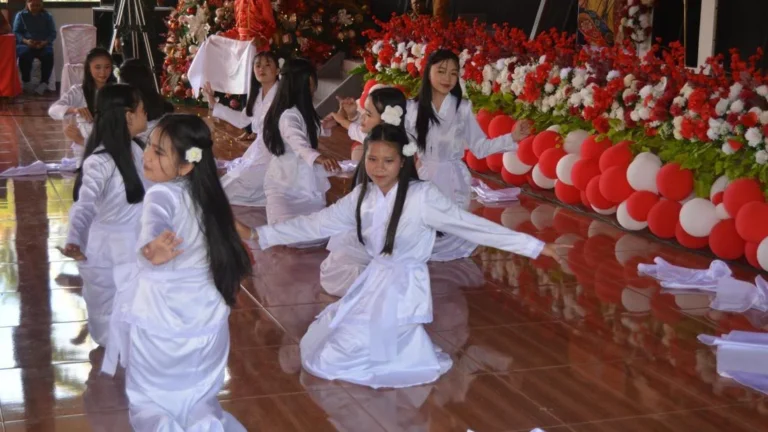
The sweltering afternoon heat beat down on the dirt alleys of Dusun Syam, a remote settlement nestled within Temiang Taba Village, Balai District, Sanggau Regency, West Kalimantan. Despite the oppressive tropical climate, a troupe of teenage girls danced with precise grace near the village hall’s open field. The rhythmic clatter of traditional gamelan instruments and percussion rang through the air on November 10, 2026, setting a vibrant backdrop for an uncommon cultural spectacle. As part of the welcoming ceremony for visiting delegations attending the sixth installment of Festival Lestari (Sustainability Festival), local hosts offered cups of tuak—a traditional fermented alcoholic beverage—to the guests. For Muslim participants who abstained from consuming alcohol, customary protocol allowed them to gracefully accept the cup with a light touch as a sign of mutual respect, honoring the deep-rooted hospitality of the Dayak Taba community.
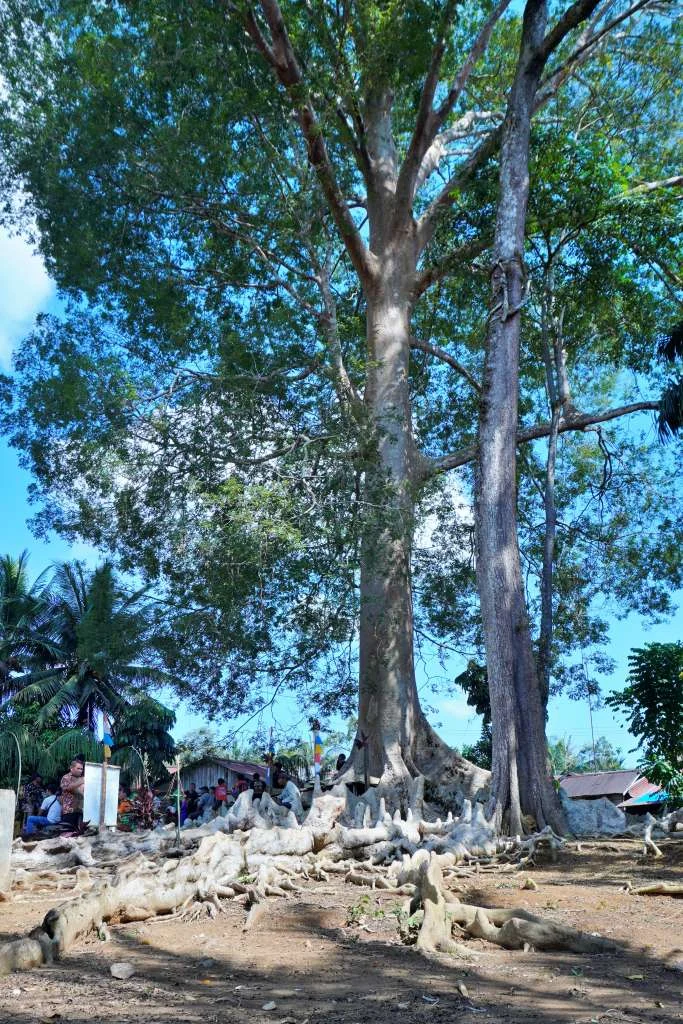
This dynamic cultural immersion marked the commencement of a series of deeply spiritual and ecological events designed to showcase how indigenous communities manage their relationship with both the spirit world and the natural environment. Led by a master of ceremonies attired in a traditional beaded vest and peci cap, the delegation of festival attendees proceeded toward a colossal tapang tree (Koompassia excelsa). This majestic rainforest giant, standing for centuries, functions as a pedagi—a sacred ancestral sanctuary within the spiritual framework of the Dayak Taba people. Beneath its sprawling canopy and massive buttress roots, the village temenggung (customary leader) and local ritual elders presided over an elaborate offering table. Prayers echoed through the humid air as ritual offerings comprising a sacrificial chicken, yellow rice, a few drops of animal blood, and a harvest of cucumbers, pumpkins, and yams were presented to the unseen guardians of the land.
The Sacred Mechanics of Nyeser Amoth
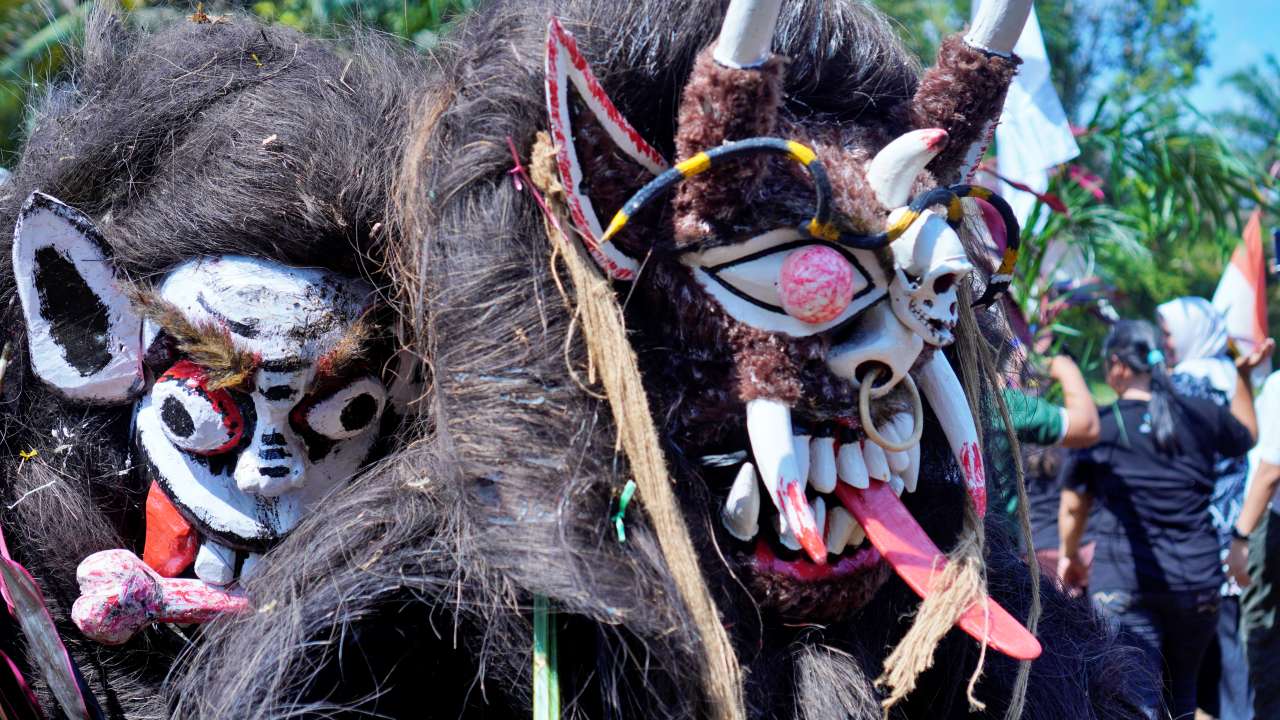
This sacred invocation served as the critical prologue to Nyeser Amoth, an ancient ritual specifically engineered to banish, or nyeser, lingering malevolent spirits and invisible entities known as amoth. According to Adenan, the 47-year-old chairman of the customary ceremony committee, these supernatural entities are historically believed to disrupt daily communal life, wreak havoc on upland rice cultivation, and jeopardize livestock breeding. The ritual performed beneath the sacred tapang tree acts as a formal protocol of notification, allowing the villagers to seek permission and spiritual clearance from their ancestors. In the local vernacular, this practice is referred to as bilang tahu—making it known that a significant spiritual cleansing is underway to safeguard the village from misfortune.
Within the cosmological framework of the Dayak Taba, the amoth are categorized into seven distinct archetypes, each representing a specific form of affliction or moral hazard. Amoth Samper is held responsible for introducing virulent epidemics and widespread diseases into the community. Amoth Beur embodies insatiable greed and financial recklessness, while Amoth Rangka’ personifies sheer gluttony. Amoth Dawak is a particularly dreaded entity that preys upon human vitality and mental well-being through malicious mischief. Amoth Reok targets domestic livestock, inflicting injury or sudden death upon village animals. Amoth Kekek manifests in forms resembling human phantoms, notably the kuntilanak, terrorizing travelers after dusk. Finally, Amoth Buah directly sabotages agricultural productivity, causing extensive crop failure in upland rice fields.
Oral history recounts that the tradition originated generations ago when these spectral entities routinely plundered the harvests of early Dusun Syam farmers. Distressed villagers petitioned their customary leadership for a sustainable solution to curb the supernatural harassment. Through a prophetic dream, the village temenggung received instructions from a mysterious elderly matriarch to fashion wooden masks and costumes utilizing ijuk—the coarse black fibers from the base of sugar palm fronds—to physically intimidate and expel the amoth. The intricate carvings and painted expressions on these masks mirror the distinct, menacing personalities of the seven spirits.
The Climax of the Procession and Pelarungan

Crucially, the Dayak Taba approach to conflict resolution extends beyond mere expulsion. Rather than attempting to brutally banish the unseen forces without recourse, the community provides provisions. Alongside prayers and esoteric incantations, villagers prepare an assortment of local delicacies and agricultural produce to serve as rations for the amoth. This dual approach of spiritual firmness and material appeasement aims to persuade the spirits to cease their disturbances and return voluntarily to their respective domains.
In the center of the village field, these provisions were meticulously arranged upon a lantik—a traditional miniature wooden boat constructed specifically to hold the ritual offerings. Both locals and visiting guests added supplementary items such as currency and tobacco to the vessel. Adenan emphasized that the lantik functions both as a sustenance carrier and a symbolic transport vehicle, ensuring the amoth depart smoothly without lingering to plague society.
As the morning rituals concluded, the ceremonial focus shifted to the culmination of Nyeser Amoth. Prompted by the master of ceremonies, performers portraying the amoth emerged from the four cardinal directions. These roles were brought to life by a diverse troupe encompassing elementary students, teenagers, and adult villagers, carefully vetted and authorized by the customary elders. Moving to the driving tempo of traditional gamelan music, the costumed figures danced wildly around the central lantik. Spectators and festival guests joined the movement, merging human celebration with spectral symbolism to encourage the spirits to leave.
Following the courtyard dances, the procession migrated from the village field to a small stream flanking the settlement boundary. The temenggung, ritual elders, and villagers carried the lantik down to the water, shepherding the swirling convoy of amoth toward the riverbank. The ritual concluded with the pelarungan—the ceremonial floating and release of the lantik downstream. This act visually enacted the final expulsion of the malevolent entities, carrying them away from human habitation and back to the wild expanses of the spirit realm.

Contextualizing Festival Lestari #6 and Indigenous Resilience
The staging of Nyeser Amoth at Dusun Syam directly aligned with the overarching theme of Festival Lestari #6, titled Merawat Arus, or "Nurturing the Current." Speaking at the opening ceremonies at Taman Sentana, the Regent of Sanggau underscored that the socioeconomic life and cultural identity of the region are intrinsically bound to natural waterways, epitomized by the mighty Kapuas River and its web of tributaries. Waterways serve as arterial networks of shared history, transporting ecological nutrients and ancestral wisdom across generations. In Dusun Syam, the local stream acted as the physical and metaphysical boundary where human civilization and spiritual wilderness intersected.
Marinus Gaya, the Temenggung of Dusun Syam, noted that the continuity of such traditions relies heavily on robust intergenerational collaboration. Despite the pressures of contemporary lifestyle shifts, the youth of Dusun Syam display unwavering enthusiasm for cultural preservation. According to Marinus, expressions of reluctance or absenteeism are virtually nonexistent among the younger cohorts, who view participation in customary events as a source of civic pride.
However, safeguarding ancestral heritage in the twenty-first century involves navigating complex socio-economic realities. Kiyang, the Head of Temiang Taba Village, acknowledged the inherent tension local communities face when balancing immediate financial survival with cultural conservation. He stressed that village administrations must actively collaborate with grassroots organizations, cultural practitioners, and indigenous leaders to formulate sustainable pathways forward. Crucially, Kiyang cautioned against the commercialization of sacred rituals, advocating instead for controlled, community-led cultural tourism that respects the sanctity of indigenous traditions.

Institutional Support and the Threat of Extractive Industries
At the regional level, local government bodies are stepping up efforts to document and safeguard indigenous knowledge systems. Christina Lisana Nuningsih, Head of the Education and Culture Office of Sanggau Regency, reported that her department is actively inventorying local Dayak traditions, with Nyeser Amoth standing out as a prime manifestation of Dayak Taba ecological philosophy. These documentation efforts are being integrated into official regional tourism and cultural calendars to bolster institutional support.
Nevertheless, Christina voiced profound concern over external threats facing indigenous ecosystems, particularly the rapid expansion of extractive industries and monoculture plantations. The conversion of traditional customary forests into commercial palm oil estates directly compromises the physical environment that sustains indigenous cultures. "When the forests vanish, our culture inevitably erodes and vanishes alongside them," Christina stated, linking environmental degradation directly to cultural extinction.
Reinforcing this perspective, Purwadi, Head of the Culture Division at the Sanggau Education and Culture Office, offered a compelling analogy. He likened cultural heritage to an individual’s official identity card (KTP), serving as an immutable marker of belonging for indigenous societies. Meanwhile, the ongoing formal registration of Nyeser Amoth as an intangible cultural heritage item under national frameworks functions similarly to an official birth certificate, securing legal and historical recognition for future generations. Through these concerted efforts by community elders, youth collectives, and local authorities, the Dayak Taba community continues to navigate the turbulent currents of modernization while firmly anchoring its identity in ancestral wisdom.